The Architect’s Retribution: Reclaiming the Foundation of Harmony Creek Through Tactical Precision and Moral Endurance
CHAPTER 1: The Threshold of Contempt
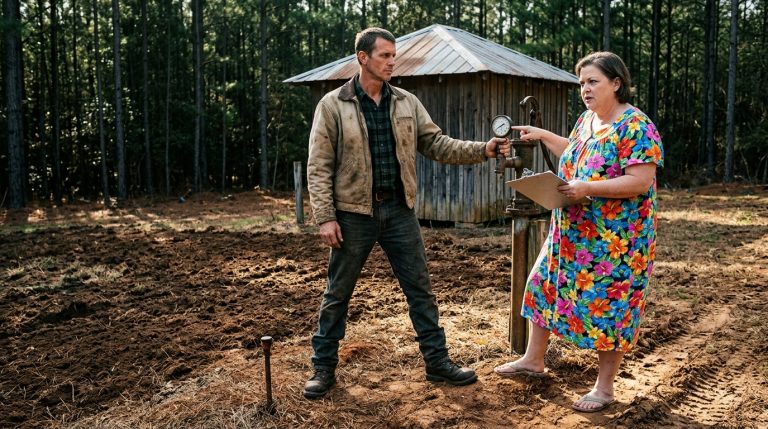
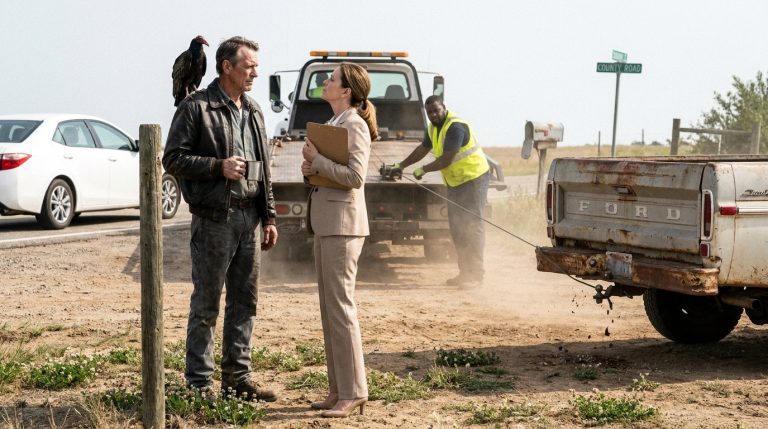
The afternoon air hung heavy, saturated with the smell of freshly cut fescue and the sharp, metallic tang of an incoming storm—or perhaps that was just the ozone radiating from Karen’s powder-blue pantsuit. She held her clipboard with a grip that turned her knuckles white, standing on the edge of my lawn like a sentry guarding a crumbling border. Beside her, Brenda hovered, a secondary shadow equipped with a digital camera, her posture mirroring the nervous energy of a bird expecting to be startled.
“Two thousand, five hundred dollars, Mr. Caldwell,” Karen announced. Her voice didn’t carry the warmth of a neighbor; it possessed the cold, transactional weight of a debt collector. “Consider this a tax on your negligence. Your disregard for Harmony Creek’s standards is not merely an eyesore; it is a liability.”
I didn’t look at the house immediately. I didn’t look at the paint, that soft, earthy taupe I had hand-mixed in the drafting room of my own firm years ago. Instead, I looked at her eyes—small, recessed, and filled with the frantic, predatory hunger of someone who had long ago traded community for the intoxication of control.
“Karen,” I said. The word felt like flint against steel. My pulse remained a steady, rhythmic thrum, the result of years spent navigating the erratic hazards of post-war reconstruction projects. I didn’t let the anger bloom. I categorized it. I labeled it. I filed it away under Risk Management. “There is a significant error in your assessment. That color is not only approved; it is the original designation for the model.”
She didn’t blink. She didn’t check her notes. She merely smiled, a thin, tight line of triumph. “The palette was retired, Mark. The board has the authority to refine our vision. We expect our residents to be team players, not architects of their own private kingdoms.”
She turned, the movement practiced and rehearsed, a battleship pivot designed to leave no room for rebuttal. “Brenda, document the violation. Every angle. We want the house number clearly visible.”
The shutter click of the camera was a sharp, staccato intrusion into the suburban quiet. It was the sound of a contract being breached. I watched them walk away, their silhouettes shrinking against the perfectly curated backdrop of the development I had designed to be a sanctuary.
I looked down at the fine notice in my hand, feeling the cheap, coarse texture of the paper. It was a flimsy thing, yet it carried the weight of a legal threat. As I glanced back toward the front of the house, I noticed something that hadn’t been there when I’d finished the landscaping earlier that morning: a small, dark red smudge on the stone pillar by the entryway, as if someone had deliberately marked the property. It was a physical discrepancy, a silent, mocking punctuation mark on the notice I held. The conflict wasn’t just about paint—it was about the very architecture of my life.
CHAPTER 2: The Command Center
I didn’t turn around to see if Karen and Brenda were still watching. The gaze of the petty tyrant had long since faded from my spine, replaced by the hardening resolve of a man who suddenly realizes his own blueprints have been used to construct a prison. I walked into the house, the front door closing with a solid, heavy thud that sealed off the suburban theater of the absurd and ushered me into the quiet, stagnant air of my own home.
The fine notice felt like a weight in my palm, the paper slightly damp from the humidity of the late afternoon. I moved through the foyer, past the perfectly arranged furniture that Sarah had spent months positioning, and headed straight for the basement stairs. Every footfall on the hardwood was deliberate. My mind was already in the draft room, cataloging variables, cross-referencing ordinances, and stripping away the veneer of neighborhood civility to find the mechanical gears grinding beneath.
I reached the bottom of the stairs and flipped the switch. The basement office bloomed into light, exposing the sprawling drafting table that occupied the center of the room like an altar. It was here that I had spent years of my life. This was the room where Harmony Creek had been conceived—the streets, the drainage, the zoning, the colors. I had treated every line drawn on those vellum sheets as a promise of order and stability. Now, looking at the pristine white surface, the lines felt like mistakes.
I sat in my chair and laid the fine notice down. Beside it, I spread out the original design binder, the heavy black leather cover cracked with age. It smelled of stored dust and dormant ambition. My hands, steady despite the adrenaline still humming in my system, moved with the precision of a surgeon. I didn’t reach for a pen; I reached for the magnifying glass I used to check the structural integrity of blueprints.
The discrepancy was immediate.
I pulled the official architectural palette—the document I had personally filed with the city—and compared it to the “amended” rulebook Karen had slapped on my door. The ink in her document was a slightly different shade, the font a generic sans-serif that lacked the professional weight of the original filings. It was a forgery, or at least a bastardization. But that wasn’t the detail that made the hair on my arms stand up.
It was the logic.
Karen’s “amended” code 7.14, the one cited on my notice, was supposedly an architectural restriction. But as I traced the reference number, I found it wasn’t even an architectural code. It was a cross-reference to a section of the bylaws regarding “common area maintenance fees.” She was mixing categories. It was a classic bureaucratic maneuver: bury the victim in jargon so thick they lose their ability to distinguish between a structural violation and a financial assessment. She wasn’t enforcing the rules; she was manufacturing an economy of conflict.
A strange, cold sensation crawled up my neck—a flicker of paranoia. I looked at the walls, at the framed certificates of my service and the structural integrity awards from my time with the Corps of Engineers. I had designed this entire ecosystem to be perfect. Too perfect. I had created a set of rules so rigid that I had left the gates wide open for someone with enough malice to seize them. I was the architect of my own current misery. The thought was nauseating. It wasn’t just that Karen was a tyrant; it was that I had built the machine that enabled her to function.
I stood up and began pacing the narrow aisles of the office, the friction of my shoes against the concrete floor the only sound in the suffocating silence. I needed to know if this was a one-time exploit or a systemic flaw. I pulled the archive box from the bottom shelf—the “Forgotten Files,” as I called them—containing the original developer correspondence.
Sarah appeared at the top of the stairs, her silhouette framed by the dim light of the basement entrance. She didn’t come down. She stood there, her hands clutching the railing, reading the tension in my shoulders. She knew that posture. She knew the way I gripped my elbows when I was solving a problem that defied standard engineering.
“Mark?” her voice was a soft, tentative probe. “Are you going to be long? Dinner is in twenty minutes.”
I didn’t look up. My eyes were locked on a document dated five years ago, an internal memo regarding the initial transfer of power from the developer to the homeowner’s association. The signature on the bottom wasn’t a corporate officer’s. It was a name I barely recognized, scrawled in an arrogant, looping script that perfectly matched the “notice” I held in my hand.
“Go ahead and eat, Sarah,” I said, my voice sounding hollow in the cramped space of the basement. “I need to map the foundation of this neighborhood. It appears the structural support is missing.”
She didn’t press. She knew the mission. I turned back to the table, and for the first time in my life, I felt the sharp, bitter taste of rust in my mouth. The war hadn’t started today on my lawn. It had started here, in this room, five years ago, with a stroke of a pen that I had ignored because I was too busy celebrating the completion of the project. I picked up my drafting compass, the cold steel biting into my palm, and began to outline the web of authority Karen was using to strangle the street. I was going to pull every thread until the entire cloth unraveled.
CHAPTER 3: The First Salvo
I didn’t leave the basement until the early hours of the morning. By the time I finally climbed the stairs, the house was submerged in that profound, pre-dawn stillness where the world feels stripped of its artificial color. My eyes were burning, the back of my neck stiff from hours hunched over the drafting table, but my mind was crystalline. I had cataloged the discrepancies, mapped the procedural illegality of the board’s “amendments,” and verified the timeline of the so-called architectural revisions. Karen hadn’t just changed a few aesthetic guidelines; she had effectively dismantled the legal framework of the neighborhood to create a closed loop of enforcement and extraction.
Sarah was asleep when I reached the bedroom, her breathing steady and rhythmic. I didn’t wake her. I showered, the hot water doing little to scrub away the sensation of grit that had settled in my pores since the confrontation yesterday, and dressed in a suit that hadn’t seen the light of day since my last consulting gig. It was a uniform of authority, a subtle psychological armor. If I was going to enter her arena, I wasn’t going to go in as a resident being fined; I was going in as an expert witness for the defense of the community.
The walk to the community clubhouse was short, but every step felt calibrated. The neighborhood was waking up. Sprinklers hissed across manicured lawns—lawns that were now nothing more than potential targets for petty infractions. I saw a neighbor pulling his trash bin to the curb, and as he noticed me, his gaze flickered with a mixture of recognition and fear. He hurried back inside, closing his front door with a sharp clack. The message was clear: the environment was under surveillance.
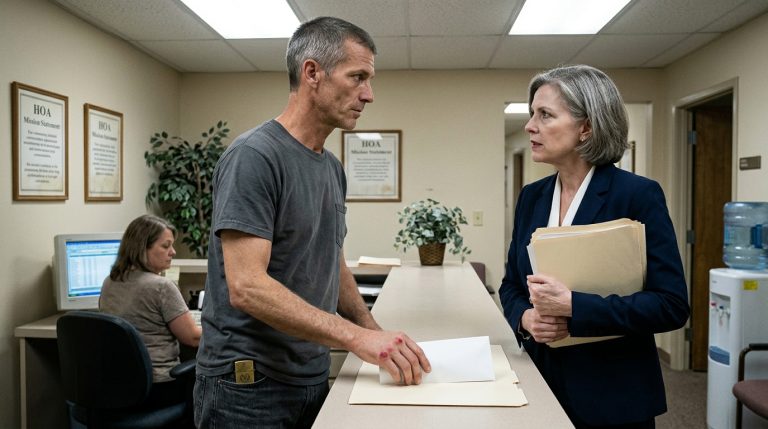
When I reached the clubhouse, the scent of industrial-grade lemon cleaner greeted me—a clinical, sterile aroma that masked the reality of the room’s decay. The folding chairs were already arranged in a semi-circle, facing the elevated table where Karen and her board sat. She looked impeccable in a sharp, structured blazer, her clipboard resting on the table like a loaded weapon. Beside her, Brenda was already adjusting a digital recorder, her nervous habit of picking at her fingernails betraying the veneer of bureaucratic competence.
I didn’t take a seat in the back. I walked straight to the front, the weight of the folder under my arm acting as a physical ballast. Karen tracked my progress, her eyes narrowing slightly as she realized I wasn’t there to plead for a reduction or offer an apology. Her smugness remained intact, but it was thinner now, stretched over a layer of mounting irritation.
The meeting began with a droning, rhythmic recitation of budget line items that seemed designed to put the room to sleep. Gary, the treasurer, mumbled through a series of “miscellaneous maintenance fees” that accounted for nearly half of the projected expenditures for the quarter. I leaned back, listening, my ears tuned not for the numbers, but for the cadence of his delivery. He was reciting, not reporting.
When the time for new business arrived, Karen didn’t wait. She moved immediately to her agenda. “We have one pressing matter regarding an ongoing aesthetic violation at 124 Willow Lane,” she said, her voice dripping with artificial regret. “Mr. Caldwell, I trust you have your checkbook?”
I stood up. I didn’t shout, and I didn’t scramble for words. I waited until the room had gone quiet, the kind of absolute silence that usually precedes a disaster. The memory of a failed inspection in Fallujah flickered through my mind—a moment where I’d underestimated the stability of a structure and nearly lost my team because of it. I had learned then that when the foundation is compromised, you don’t shore it up; you condemn it.
“Mrs. Fletcher,” I began, my voice steady, projecting to the back of the room. “The fine you’re discussing is a procedural impossibility.”
Karen laughed, a sharp, barking sound that didn’t reach her eyes. “The board’s decisions are final, Mr. Caldwell. You are welcome to submit an appeal in writing, which we will consider at our leisure.”
“This isn’t an appeal,” I countered, pulling the folder from under my arm and sliding it across the table toward her. “This is a notification of non-compliance with state statutes and the original, legally filed community charter.”
I saw her hand hover over the folder. She didn’t want to touch it, as if the paper itself were contaminated. She looked at Gary, whose face had suddenly turned a shade of gray that matched the industrial carpeting. She was trapped in the center of her own theatre, the audience waiting for a performance she was no longer prepared to give. I didn’t need to shout to win; I just needed to force her to acknowledge that the rules she used to control the room had just been revealed as fabrications. The air in the room grew heavy, the scent of the lemons suddenly replaced by the sharp, dry smell of friction.
CHAPTER 4: Reconnaissance
The silence in the clubhouse was not merely an absence of sound; it was a pressurized chamber of social anxiety. Karen stared at the folder I had deposited on the table, her fingers twitching as if she were tempted to sweep it away, but the eyes of the other homeowners, now wide and alert, kept her paralyzed. She was a performer whose stage had suddenly been flooded with harsh, unforgiving light.
“I will review this,” she finally managed, her voice tight, the confidence she had projected only moments ago now sounding like a fraying wire. “The board will address this through the proper internal channels. Meeting adjourned.”
She gathered the folder, but she didn’t look at me. She stood up with a jerky, disjointed motion and retreated into the small side office behind the dais, Gary scurrying after her like a shadow seeking refuge. The room erupted into a low-frequency hum of confusion and speculation. Neighbors who hadn’t spoken to each other in months were suddenly leaning into each other’s spaces, their voices hushed, their expressions shifting from boredom to sharp-edged curiosity.
I didn’t leave immediately. I stayed by the front, maintaining a neutral, almost observant posture. It was essential that I didn’t appear as a rogue agitator, but as a resident who had simply brought an inconvenient truth to the light. Arthur, the retired teacher, approached me slowly. He didn’t say anything at first, just stood beside me, his hands clasped behind his back, watching the side office door.
“You rattled the hive, Mark,” he said quietly, his voice dry. “But be careful. A rattled hive doesn’t just buzz; it stings.”
“I’m not looking for a fight, Arthur,” I replied, keeping my focus on the room. “I’m looking for the structural integrity of this place. If the foundations are rotting, we need to know before the whole thing collapses.”
“The rot isn’t just in the board,” Arthur said, his eyes darting toward the other residents. “It’s in the fear. Look at them. They’re scared of the HOA, but they’re more scared of what happens if they’re seen on the wrong side of Karen.”
As we stood there, I noticed Brenda, the secretary, emerging from the side office. She was carrying a bag of shredded documents toward the waste bin in the lobby. She didn’t look up, her movements frantic, almost panicked. I watched her drop the bag into the large, industrial bin and head for the exit without acknowledging anyone. My instincts, honed by years of assessing potential failures in infrastructure, triggered a sudden, cold clarity. Shredding, I thought. In the middle of an inquiry?
I waited until she had cleared the parking lot before I walked to the bin. The lid was heavy, smelling of stale coffee and damp paper. I reached in and pulled out the bag she had dumped. It hadn’t been fully sealed. I didn’t dig through it in the clubhouse; I simply tucked the bag under my arm, my heart rate steady, and walked out into the cool evening air.
The reconnaissance phase had officially begun. I needed to map the connections. I spent the next four hours walking the perimeter of Harmony Creek, not as a resident, but as a surveyor. I took mental notes of the vendors operating in the neighborhood, the frequency of the landscaping trucks, and the specific maintenance patterns that seemed designed to inflate costs rather than provide actual value.
On my way back, I stopped at the main trash collection area near the entrance. I found a stray invoice caught in the grate of a storm drain—a flimsy, yellowed sheet of paper that didn’t match any standard HOA letterhead I had designed. It was a receipt for “Consulting Services,” billed to a P.O. box in a neighboring town. The amount was obscene, and the signature was a shaky, illegible scrawl that reminded me of nothing so much as a nervous, poorly executed forgery.
I slipped it into my pocket, the cold paper pressing against my thigh like a hot coal. The discrepancy was growing, the layers of the mystery beginning to overlap. I wasn’t just dealing with a power-hungry HOA president anymore; I was holding the first threads of a financial puzzle that threatened to drag the entire community down. I didn’t head home. I walked back toward the garage, the Rusted Truth of the situation settling into my bones. The neighborhood I had built wasn’t just a place to live; it was a crime scene, and I was the only one with the blueprints to identify the body.
CHAPTER 5: The Data Bomb
The garage door rattled in its tracks as the wind picked up, a low, mournful sound that echoed the friction building inside my mind. I hurried inside, the storm breaking overhead with a sudden, violent intensity that turned the world outside into a blur of gray. I didn’t switch on the main lights immediately; I let the flashes of lightning illuminate the workspace, revealing the chaos of the papers spread across the folding tables—a mountain of fragmented authority that I was tasked with dismantling.
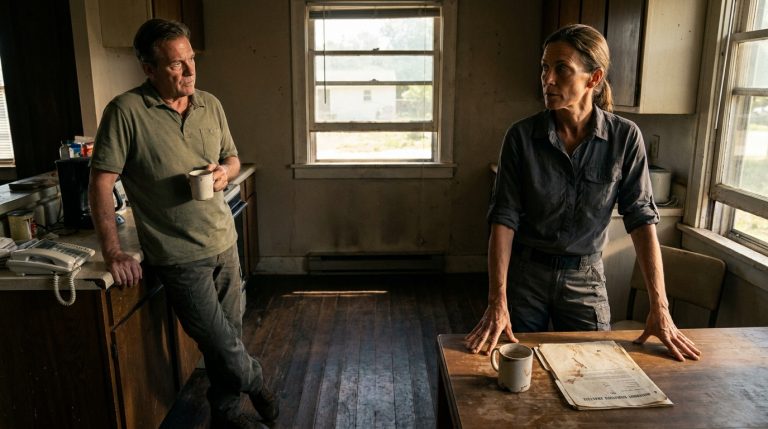
David was already there, his laptop screen casting a pale, sickly blue glow over his face. He looked exhausted, his hair disheveled, the skin beneath his eyes dark with the strain of three days spent chasing digital ghosts. “You’re late,” he said, not looking up from his keyboard. “And the weather’s gone to hell. The power flickered twice in the last ten minutes.”
“The streets were quiet,” I replied, pulling the damp invoice from my pocket and placing it on the table. “Too quiet. Karen knows something is moving. She’s not just sitting in her office anymore; she’s scrubbing the trail.”
I didn’t tell him about the shredding bin yet. I watched as he scanned the yellowed receipt I’d pulled from the drain. His eyes widened as the scanner’s light washed over the details. “This doesn’t match the standard requisition protocols for the maintenance fund,” he muttered, his fingers flying across the keys as he cross-referenced the vendor ID against the state database. “Mark, this isn’t just a separate account. This is a ghost entity. It’s billing for services that don’t exist in the HOA ledger.”
“Keep digging,” I said, moving to the scanner to help process the mountain of documents we’d retrieved from the board’s messy dump.
We worked in a rhythm born of necessity, the sound of the rain intensifying until it felt as though the garage were being bombarded. The air grew heavy and cold, the smell of damp earth and rusting iron permeating the room. I sorted through the board minutes, searching for the validation of the “emergency meetings” Karen had referenced. Page after page, the narrative was the same: quorum counts that didn’t add up, signatures that looked like carbon copies of each other, and vague references to “executive sessions” that were never recorded.
It was in the middle of a stack of landscaping invoices that the power finally gave out. The garage plunged into total darkness, the blue hum of David’s laptop dying instantly. The sudden silence, save for the roar of the rain, was jarring.
“Damn it,” David cursed in the dark.
I grabbed my flashlight, the beam cutting a harsh, narrow path through the swirling dust and paper. The atmosphere in the room shifted. It felt less like a workspace and more like a bunker. I looked at the table—the physical evidence of our case, the fragile, paper-thin proof of corruption—and realized how precarious our position was. If the HOA board panicked, if they decided to wipe the server or destroy the physical records, we would have nothing but our word against a woman who had spent years cementing her influence.
“David, get your hard drives,” I said, my voice sharp. “If the power is out, we have to assume the security systems for the community center might be reset or compromised. If we have the data, we have the leverage. But we need to move it out of here.”
“To where?” he asked, his voice strained.
“To a secure location. A physical one that isn’t connected to the neighborhood grid.”
I started packing the binders into waterproof cases, my movements efficient and practiced. The “data bomb” we were building wasn’t just a collection of facts; it was a weaponized account of a systematic failure. As I moved, a flash of lightning illuminated the far wall, reflecting off the glass of a framed map of Harmony Creek I had hung years ago. In the split second of brightness, I saw the neighborhood for what it truly was—a sprawling, intricate machine designed to keep its inhabitants in a state of perpetual, manageable friction.
The storm was more than just weather; it was an obstacle, a physical complication that mirrored the increasing difficulty of our mission. As I pushed the heavy garage door open just a few inches to check the path to my truck, a gust of wind caught a stack of files near the edge of the table. Papers flew, swirling into the darkness, the sound of their scattering like the rustle of dead leaves. I lunged for them, my hands clawing at the concrete, the frustration boiling over. This was the consequence loop—one step forward in the audit, two steps back into the chaos of the storm. Every scrap of paper I recovered was a piece of the architecture, a fragment of the truth that Karen was desperate to keep buried in the muck of her own manufactured history.
CHAPTER 6: The Smoking Gun
The morning light struggled to penetrate the grime on the garage windows, casting long, jaundiced shadows across the floor. My hands were stained with newsprint and the charcoal dust of the storm’s aftermath, a physical reminder of the hours spent piecing together the shredder-fodder and the water-logged invoices. David sat slumped in his folding chair, his laptop closed. The room felt smaller, tighter, as if the walls were constricting around the evidence we had finally corralled.
“I finished the trace,” David said, his voice flat and devoid of excitement. He slid a single sheet of paper across the table—a crisp, freshly printed summary of the final audit. “The ghost entity, ‘Harmony Landscaping LLC,’ isn’t just billing for mulch and planting. It’s a pass-through. They’re billing the HOA for ‘site infrastructure improvements’—specifically, for the maintenance of the very streetlights and drainage systems you designed, Mark.”
I stared at the paper. It was a masterpiece of circular logic. Karen’s board would approve an inflated fee for ‘consulting’ or ‘infrastructure repair,’ the check would be cut to Harmony Landscaping, and Gary, in his capacity as treasurer, would sign it. The money didn’t vanish; it moved from the community fund into a private account held by Robert Peters, whose wife was the sister of our HOA president. It was a closed loop, a perfectly efficient vacuum designed to suck the equity out of our homes and deposit it into the family coffers.
But there was something else, something hidden in the sub-text of the invoices that David had highlighted in red. The billing frequency spiked every time the community’s architectural review committee voted on a new restrictive rule. Every time a ‘violation’ was created, a corresponding ‘inspection fee’ was levied.
“She wasn’t just embezzling, David,” I realized, the implication hitting me with the force of a structural collapse. “She was monetizing the rules. The fines were the trigger for the landscaping fees. The more she fined, the more ‘upkeep’ she claimed was necessary to ‘restore the community standard.'”
It was a brilliant, predatory model. It wasn’t just incompetence; it was a calibrated engine of exploitation. I thought back to the color code 7.14, the one she had used to flag my house. It wasn’t an aesthetic choice; it was a search light. By forcing me to fight the fine, she was creating the ’emergency meeting’ she needed to record in the ledger as a billable event for the board. I was the engine that provided the friction she needed to generate heat.
“What do we do?” David asked, watching me closely. “If we take this to the police, it takes months. The audit trail is complex. She’ll have time to scrub the accounts or claim it was an ‘accounting error.'”
“We don’t go to the police yet,” I said, my gaze hardening as I looked at the maps on the wall—the blueprints of Harmony Creek that I had foolishly believed were the bedrock of a stable society. “We use her own infrastructure against her. If she wants a vote, we’ll give her one. If she wants a record of emergency meetings, we’ll provide the context.”
I started packing the files, not for a legal filing, but for a public briefing. The Rusted Truth was that my design had been used as a skeleton for a parasite, and the only way to kill it was to starve it of its procedural legitimacy. My tactical training kicked in, a cold, clinical detachment replacing the initial fury. This wasn’t a neighborhood dispute anymore; it was a systematic dismantling of an illegitimate regime.
“I need you to compile everything into a single, searchable archive,” I directed, my voice steady. “And then, I need you to find the broadcast address for the local investigative news channel. Not the general tip line—the lead producer’s contact.”
“Mark, this will blow the whole community up,” David warned, his eyes wide.
“No,” I corrected, walking to the door and throwing it open, letting the cold, crisp air of the morning rush into the stagnant garage. “The community is already blown up. She’s just been keeping the pieces in place with fear. It’s time we showed them what the foundation is actually made of.”
I stepped out onto the driveway. The sun was rising, casting a harsh, unforgiving light on the rows of houses. They looked different now—no longer a testament to harmony, but a grid of assets under siege. I walked to my truck, the weight of the evidence in the case file sitting on the passenger seat like a live grenade. The reconnaissance was over. It was time for the first, irreversible strike.
CHAPTER 7: The Mutiny
The drive to the local television station was not a journey; it was an extraction. I gripped the wheel until my knuckles ached, the truck’s engine a low, persistent growl that seemed to vibrate through my very bones. Every turn felt like a tactical decision, every red light a potential choke point. I hadn’t made it three miles when the soft, rhythmic pulsing of light caught my attention in the rearview mirror. A patrol car—not the usual neighborhood security patrol, but a county cruiser—was closing the distance.
Panic tried to bloom in my chest, the cold, sharp instinct to run, but I suppressed it, forcing the “sovereign protector” mask back into place. Karen hadn’t just been hoarding documents; she had been building a narrative of harassment, and now, it appeared, she had successfully weaponized the local law enforcement to intercept me.
I didn’t speed up. I pulled the truck into the gravel shoulder, the crunch of stone beneath the tires sounding unnaturally loud in the quiet morning air. I reached into the file case, sliding the most damning summary sheet—the one linking the shell company to the treasurer’s residence—under the seat, while leaving the rest of the disorganized pile visible. If they wanted a confrontation, I would give them the shell, but the core was already moving through a different channel. David was ten minutes ahead of me, carrying the encrypted drive.
The officer stepped out of the cruiser, his silhouette dark against the sunrise. He didn’t approach with the easy posture of a traffic stop; he had his hand near his belt, his movements calculated. “Mr. Caldwell,” he said, his voice clipped as he shone a light into the cabin, skipping over my face to scan the interior. “We’ve had reports of a disturbance and potential theft of private association records.”
“I am an HOA board member, Officer,” I lied, my voice steady, the calmest thing in the world. “I’m in the middle of a forensic audit authorized by the bylaws. My records are perfectly legal.”
“The president claims otherwise. She says you broke into the storage facility.”
I forced a dry, humorless laugh. “I have the keys, Officer. And I have the receipts. You’re being used as a courier for a local political squabble. I suggest you look at the board’s current financial filing for Robert Peters before you make an arrest you’ll have to explain to the DA.”
He paused, the tension shifting. I saw the doubt in his eyes—the hesitation of a man who suddenly realized he might be walking into a trap rather than a bust. He didn’t pull me out of the truck, but he kept his distance. “Stay right here,” he commanded.
As he walked back to his cruiser to call in the license plate, I checked my watch. David would be at the station by now. I had bought just enough time. The mutiny wasn’t happening in the clubhouse; it was happening in the public record.
When the officer returned, he wasn’t checking his sidearm. He looked tired, the bureaucracy of the morning already wearing him down. “We’ve got a call from the board—the other board members. They’re claiming you have authorization.” He looked at me, a flicker of professional curiosity piercing his mask. “You have ten minutes to clear this area, Caldwell. If I get another call from that woman, I’m not coming back to talk.”
I didn’t wait for him to change his mind. I pulled back onto the road, the truck’s transmission groaning as I pushed it toward the city limits. The mutiny had been successful, but the victory was hollow. The board members—the ones I had pressured—had acted, but only to save their own skins. They had opened the door, but it was up to me to kick it down. The television station appeared on the horizon, a monolithic block of concrete and steel, the final destination for the truth.
Inside the file case, the documents were no longer just paper; they were a roadmap to the rot. I wasn’t just exposing an embezzlement; I was tearing down the illusion that Harmony Creek was a sanctuary. As I pulled into the visitor’s lot, I saw the news van, the bright, reflective paint catching the morning light. The “Rusted Truth” was about to be broadcast to every living room in the county, and there would be nowhere left for the architectural ghosts of Harmony Creek to hide. The final confrontation wouldn’t be in a boardroom, but in the glaring, sterile light of the public record, where the only thing that mattered was the weight of the facts I was about to drop.
CHAPTER 8: The Restoration
The air in the television station’s control room was thick with the scent of ozone and cooling electronics. I watched from the periphery as Jessica Vale, the lead producer, stared at the monitor. On the screen, the proof of the shell company—the ledger, the bank signatures, the family connections—scrolled by, a relentless, unanswerable indictment. The “climax” wasn’t a shouting match; it was the clinical, cold execution of a truth that had been hidden in plain sight.
Karen didn’t crumble immediately. She appeared on a separate monitor, live at the clubhouse, attempting a final, desperate broadcast to her loyalists. She looked small, framed by the very walls she had used to intimidate the neighborhood, her voice cracking as she spoke of “agitators” and “outside interference.” But then, the feed shifted. Jessica cut the audio from the clubhouse and began the broadcast of our evidence. I watched Karen’s face on the monitor—the exact moment the realization hit her that the game was over. Her hand went to her throat, her eyes darting toward the back of the room as if expecting the consequences to manifest as physical shadows.
It was the “Cornered Beast Protocol” in real-time. She didn’t surrender; she snarled. She began to name-call, to accuse the station of bias, to claim the board had been “tricked.” But the rot of her own design had finally consumed her. The very community she had kept in a state of manufactured friction finally snapped. I saw Arthur, then Maria, and even the Hendersons standing up in the background of her feed, their faces illuminated by the harsh glow of her own cameras. The mutiny wasn’t loud; it was absolute.
The arrest was a quiet affair, a bureaucratic formality. By the time the police arrived at the clubhouse, the crowd had moved aside, leaving Karen and Gary isolated in the center of the room. It was the absolute, final defeat. Poetic justice: they were led out in the same quiet, controlled manner they had used to orchestrate their petty fines. The “Cool Down” began then. I stayed in the station, watching the final frames of the footage, feeling the adrenaline drain from my limbs, leaving behind a profound, hollow exhaustion.
Weeks later, the neighborhood felt different. The “Rusted Truth” had stripped away the superficial veneer of Harmony Creek. The physical restoration was a slow, deliberate process. I found myself in my own garage, repairing the very drafting table that had been the center of my war room. I sanded down the nicks, restained the wood, and tightened the brass joints—the symbolic closure of my own arc. I was an architect again, not a soldier.
The community audit was the final pillar. The forensic accountants took six months, but the result was a complete, documented record of the embezzlement. We had reached the “Absolute Clarity” phase; the shell companies were dissolved, the fraudulent rules were burned in a final, cathartic bonfire in the park, and the HOA was reorganized into a transparent, democratic entity.
I sat on my front porch as the sun dipped behind the rolling hills, casting long, peaceful shadows over the neighborhood. The taupe paint, once a target, now simply blended into the evening, a color that represented exactly what it was meant to—peace, stability, and belonging. Sarah sat beside me, the quiet hum of a lawnmower in the distance a soothing, domestic sound rather than a trigger for anxiety. Arthur walked over, his stone gargoyle now safely back on the fence, its fierce expression softened by time and a bit of moss.
“It’s quiet, Mark,” he said, handing me a glass of iced tea.
“It’s as it should be,” I replied, watching the neighbors—the real neighbors—chatting over the fence lines without the fear of a clipboard-wielding informant lurking in the shadows.
The growth was subtle. We hadn’t just removed a parasite; we had recognized that the community’s vulnerability was our own willingness to sacrifice our autonomy for the promise of artificial order. We were no longer “team players” in a rigged game; we were residents who knew the value of the ground beneath our feet. I looked at the house, at the lines I had once obsessively drawn, and realized I didn’t need them to be perfect anymore. I needed them to be real. The war was over, the system was reset, and the neighborhood had finally, finally started to breathe on its own.