The Concrete Boundary: How a Working Man Took Down a Rogue HOA President
CHAPTER 1: THE LAMINATED INTRUSION
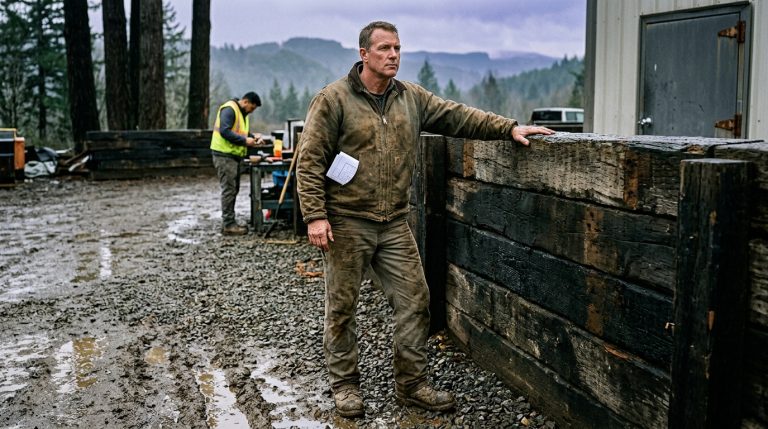
The morning humidity hung heavy over the damp gravel as I turned the brass dial of my gate latch.
It didn't lift.
A heavy, laminated sign was zip-tied directly across the iron mechanism, glowing with fresh red ink: EMERGENCY EXIT — DO NOT BLOCK — BY ORDER OF HARBOR CREST HOA.
I didn't yell. I didn't rush.
I pulled my pocket knife, sliced the plastic tie in one clean motion, and held the slick paper in my palm.
Across the treeline, past the oak drainage ditch that separated my two acres from the subdivision, a white crossover idling near the curb clicked its high beams once.
Tracy Harlo stepped out, smoothing the lapels of a navy blazer that looked entirely out of place against the dirt.
"That sign is official association property, Arthur," she said, her voice carrying across the gravel with practiced authority.
"My gate is private property, Tracy," I said, thumbing the rough edge of the brass caliper in my pocket. "My deed touches the county road. Your covenants stop at the tree line."
"Public safety doesn't care about your deed," she said, taking three measured steps onto my gravel. "The developer's secondary evacuation plan designates this lane for emergency egress. You're blocking a community route."
"Show me the recorded easement."
"We are formalizing the access this week," she replied, her smile tightening. "Consider that notice a courtesy."
I didn't argue. I turned my back, walked up the porch steps, and brought out a leather-bound binder and a fresh pad of certified mail slips.
I wrote her name, the association's legal title, and one sentence: I am not a member, and any attempt to alter or cross my property will be treated as unlawful trespass.
When I walked back down to the gate, Tracy was kneeling by the stone pillar, running a red tape measure along the base where an out-of-place streak of yellow utility paint marked the rock.
"Sign the green card, Tracy," I said, holding out the pen.
She looked at the paper, then up at my face, her posture rigid as she signed her initials with a aggressive flick of her wrist.
"This won't stop the county, Arthur," she whispered.
"It establishes notice," I said. "Now get off my dirt."
CHAPTER 2: MIDNIGHT CONCRETE
Two pickup trucks sat idling in the dark, headlights cut, amber running lights painting the wet gravel in a sickly orange glow.
Four men in reflective vests stepped out, their heavy boots crunching on the stone while a short, sharp voice cut through the hum of the idling V8s.
"Set the quick-mix right there by the stone pillar," Tracy Harlo said, her voice dropping into that practiced, low-register hush people use when they know they're breaking the law. "Focus on the anchor bolts first."
I didn't reach for a phone app or look at a monitor. I picked up my heavy flashlight, stepped off the porch, and let my boots hit the dirt with purposeful weight.
The floodlights above my garage snapped on, washing the driveway in blinding white light and catching Tracy right in the middle of pointing at my boundary post.
"Stop right there," I said, keeping my voice level as I stopped ten feet from the property line. "This is private property."
The foreman, a broad-shouldered man holding a heavy rotary hammer drill, froze and looked at Tracy.
Tracy didn't flinch; she smoothed her coat, stepped right up to the boundary line—careful not to cross her shoes over the property marker—and held her head high.
"Emergency compliance, Arthur," she said, nodding toward a box the size of a lunch cooler resting in the mud. "We're installing the Knox box for first responders. You can't interfere with fire safety access."
"Who hired you?" I asked the foreman directly, ignoring her completely.
The man shifted his weight, looking uncomfortable under the glare of the halogen lights. "We were told this was an authorized HOA infrastructure install."
"By the association," Tracy interjected smoothly, stepping in front of the worker. "You are functionally part of our safety grid, Arthur. We are formalizing your inclusion whether you sign the papers or not."
"Leave now," I said, thumbing the brass caliper in my pocket until the cold metal bit into my palm. "Or I call law enforcement for criminal trespass."
"Go ahead and call them," Tracy said, a thin, triumphant smile breaking across her face. "Tell them you're stopping the fire department from getting to eighty homes."
I reached into my jacket, pulled out my flip phone, and dialed three digits without taking my eyes off the foreman.
"911, state your emergency."
"I have an active trespass at 4102 Old Mill Road," I said into the receiver, speaking clearly over the idle of the trucks. "Four contractors under the direction of Tracy Harlo are currently drilling into my private gate pillar without a permit, easement, or consent."
"He's blocking an emergency egress route!" Tracy shouted toward my phone, her composure cracking just enough for her voice to pitch high and sharp.
"Start the drill, Mike," she ordered the worker. "We're covered under community safety statutes."
The worker hesitated, but under her sharp glare, he squeezed the trigger—the concrete bit grinding into my stone pillar with a deafening, bone-rattling whine that sent gray dust clouding into the night air.
I didn't try to tackle him, and I didn't grab the tool; I stood right beside the post, pulling a small pocket notebook and a pencil from my vest, writing down the time, the license plates of both trucks, and the company name painted on the foreman's door.
Twelve minutes later, red and blue lights swept through the trees as a county deputy pulled up, gravel spraying under her tires as she brought the cruiser to a halt.
Deputy Vance stepped out, her flashlight beam cutting through the dust cloud as the drill finally sputtered to a stop.
"Alright, what's the issue here?" Vance asked, her eyes scanning the four workers, the half-mixed bags of concrete, and Tracy standing with her arms folded.
"Deputy, I'm Tracy Harlo, president of the Harbor Crest HOA," Tracy announced, stepping forward with her hand extended as if greeting a guest at a luncheon. "This homeowner is illegally obstructing a vital secondary fire access route. We are installing standard emergency access hardware."
I pulled my thin leather binder from under my arm and handed the deputy my title deed alongside the green return receipt Tracy had signed earlier that day.
"No easement exists on this title," I said plainly. "No permit was pulled. I issued formal notice of trespass eight hours ago."
Deputy Vance shined her light on the signed receipt, then turned her gaze to the foreman. "Let me see your work order."
The foreman swallowed hard and pulled a clipboard from his truck cab, handing it over. Across the top line, written in sloppy red marker, were the words: Keyed Box Install — Authorized by T. Harlo — URGENT SAFETY.
"Where's the county permit stamp?" Vance asked, turning the paper over.
"It's an emergency installation," Tracy insisted, her voice tight. "The county process takes weeks, and our residents are exposed."
"Emergency or not, you don't drill into private stone without a permit or a court order," Deputy Vance said, her tone dropping into a flat, unyielding register. "Work stops right now. Put the tools back in the truck."
Tracy's jaw clenched, a tiny muscle twitching beneath her eye as she watched the workers immediately begin loading the heavy drill back onto the truck bed.
"This isn't over, Arthur," she whispered, leaning toward me while the deputy was writing on an incident card. "We have a walkthrough scheduled with the county fire marshal on Saturday. You won't be able to paper your way out of that one."
"Here's your case number," Deputy Vance said, handing me a white card stamped with the night's detail. "No one touches this gate tonight."
As the pickup trucks backed down my driveway, Tracy stood by her crossover across the road, watching me in the dark while the half-set concrete around the metal box sat stuck in my pillar like an open wound.
I picked up a flashlight, shined it directly on the fresh damage, and noticed something beneath the dust—a freshly painted yellow utility line mark running straight from my gate toward her property line, completely separate from the county water grid.
CHAPTER 3: THE PAPER WALL
Tracy Harlo stepped out of the lead sedan in a freshly pressed blazer, two HOA board members trailing her like bodyguards, while a small crowd of curious neighbors spilled into the street behind them.
Behind her came a county fire prevention vehicle and a second sheriff’s cruiser.
"Thank you for coming out, Marshal," Tracy announced, her voice ringing out across the gravel before her car door even shut. "This homeowner has intentionally locked an essential neighborhood safety corridor."
Fire Marshal Vance—a stocky man with graying hair and an unblinking gaze—didn't offer a greeting; he unclipped a heavy leather clipboard from his belt and looked at the gate post.
"Who installed this hardware?" the marshal asked, pointing a thick pen at the steel box still embedded in wet, cracked cement.
"We initiated emergency installation under community safety protocols," Tracy said, her chin held high as she swept a hand toward the crowd. "Eighty families depend on this egress path."
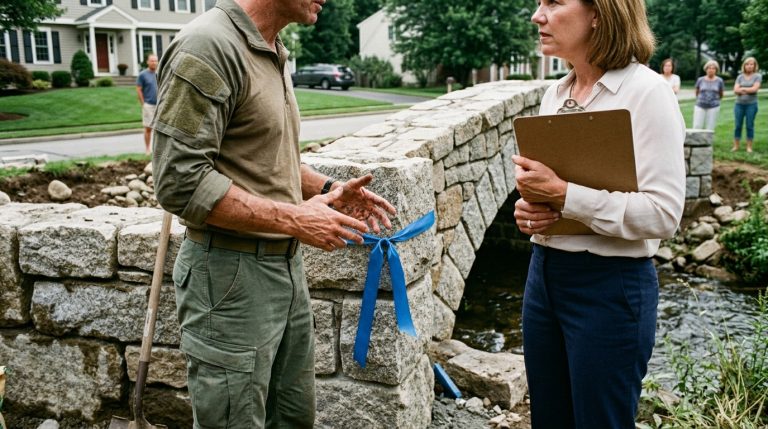
"Before we talk about eighty families," I said, stepping forward with my binder open, "let's talk about the deed."
I handed Marshal Vance my certified title record, along with the incident card Deputy Vance had filled out two nights ago.
"Work started at 2:13 AM without a permit, a court order, or my consent," I said, keeping my tone strictly conversational. "If this driveway is an approved county egress, show the recorded instrument."
Tracy stepped up to the line, her fingers twitching against her leather handbag. "The original developer's site layout designated secondary access—"
"A site layout is not a recorded easement," Marshal Vance interrupted cleanly, turning his head toward her. "Do you have a signed, recorded access right across this parcel?"
Tracy hesitated, her polished expression freezing for a fraction of a second. "We operated on historic reliance and immediate safety needs—"
"Did you file a complaint with my office claiming this was a recorded obstruction?" the marshal asked.
"We filed for an emergency access review—"
"Who signed the complaint?"
"I did," Tracy said, her throat tight. "To protect our homeowners."
"And did you disclose to my office that no recorded easement exists on this title?"
The silence stretched long across the driveway, broken only by the crunch of gravel as the deputy shifted his weight behind her.
I slid a single sheet of paper out from the front pouch of my binder—the first batch of public records released by the county clerk that very morning.
"She knew," I said, handing the printout directly to Marshal Vance. "This is an email from Tracy Harlo to county fire prevention sent three weeks ago."
The marshal looked down at the highlighted line.
No easement yet, Tracy had written, but we will install a keyed access box to achieve physical compliance before the audit.
Marshal Vance’s eyebrows pulled down tight as he read the text once, then twice, before slowly raising his eyes to Tracy.
"You filed a false obstruction claim," Vance said, his voice dropping into an icy register that made the board members behind her take a collective step back. "You knew there was no legal right of way, and you sent contractors onto private land at two in the morning anyway."
"We were securing the community!" Tracy snapped, her face flushing a deep crimson as she turned her glare onto me. "You're prioritizing a strip of gravel over human life!"
"You don't secure a community by committing trespass, ma'am," the marshal said, turning to the contractor foreman standing near the back of the crowd. "Did you pull a county permit for this masonry work?"
The foreman swallowed hard, pulling his cap off his head. "No, sir. Miss Harlo said the emergency waiver covered it."
"There is no emergency waiver for unpermitted structural work on private property," Marshal Vance said, pulling a red tag from his clipboard and slapping it directly across the face of the metal box. "Remove this box, chip out this concrete, and restore this pillar today."
"You can't do that!" Tracy voiced pitched high, her hands balling into tight fists. "Our residents—"
"Your residents need to follow the law," the marshal cut her off sharply. "And you need to stop representing someone else's land as your property."
I didn't smile, and I didn't say a word; I simply clicked my pen, noted the time in my notebook, and looked at the yellow utility mark on the stone post—the one Tracy was now staring at with sudden, sheer panic in her eyes.
CHAPTER 4: THE CHISEL AND THE COURT
The order was explicit: The Harbor Crest HOA, its board, and its agents must immediately cease all access attempts and refrain from depicting the property as a community route.
When I arrived back at my gate twenty minutes later, Deputy Vance was already waiting in her cruiser, alongside a county building inspector holding a digital video camera.
Across the public road, Tracy Harlo stood beside her car, arms crossed over her chest, watching two workers unload heavy cold chisels and a sledgehammer from a flatbed.
She didn't stay on her side of the road for long; as soon as the contractor stepped toward the stone pillar, Tracy marched across the asphalt, her heels clicking sharply against the gravel.
"This court order is a temporary misinterpretation," she declared, aiming her words at Deputy Vance while studiously avoiding my eyes. "Our legal counsel is already filing an emergency motion to stay this injunction."
"Unless that stay is in your hand right now, ma'am, step back across the road," Deputy Vance replied, resting her forearm casually over her belt line.
I handed a copy of the TRO directly to the county inspector, who filmed every page before focusing his lens on the damaged pillar.
"Start chipping," the inspector instructed the contractor. "Every piece of concrete comes out. The county needs full documentation of structural restoration."
The foreman set his chisel against the gray seam surrounding the metal box and swung his hammer—a loud, metallic CLANG echoing through the trees as a chunk of fresh cement shattered and tumbled to the dirt.
Tracy’s composure snapped; she took two aggressive steps toward the pillar, her voice escalating into a shrill tremor. "That hardware belongs to the association! You are damaging community infrastructure!"
"It’s an illegal fixture on private property, Tracy," I said, thumbing my brass caliper in my pocket as I watched the foreman pry the steel box free.
"You think you won?" she spat, turning on me with her eyes narrowed to slits, her mask of civic poise completely gone. "You think a piece of paper stops us? That yellow mark on your stone isn't a fire route, Arthur—it's a recorded utility easement for the neighborhood’s secondary drainage line that runs right under your driveway!"
I pulled a second document from my folder—the county utility survey I’d pulled that morning alongside the court filing.
"The county water and sewage lines run forty feet east under the main road, Tracy," I said softly, laying the map across the hood of Deputy Vance's cruiser so the inspector could capture it. "This yellow mark was painted three nights ago by your private contractor."
The inspector leaned in close, zooming his camera onto the fresh yellow paint on the rock, then down to the county map.
"This isn't a county mark," the inspector said, looking up at Tracy with a frown. "This is a private utility tap layout. Who authorized a private line through this parcel?"
Tracy's throat hitched, her mouth opening to speak, but no words came out as her gaze darted between the county inspector, the deputy, and the paper on the hood.
"You tried to force a fire access box here so the county wouldn't inspect the unpermitted drainage pipe you ran to your own lot expansion," I said.
"That's a lie!" Tracy screamed, her voice cracking as the foreman pulled the metal box completely out of the pillar, leaving a gaping, hollow socket in the stone. "You're ruining this community over a personal vendetta!"
"Pack your tools," Deputy Vance told the workers, stepping directly into Tracy's path. "Miss Harlo, if you cross this road again today, I will execute a warrant for civil contempt on the spot."
Tracy stood frozen on the asphalt as the workers loaded the ruined steel box into their truck bed, her posture trembling under the weight of her own collapsing leverage.
CHAPTER 5: THE UNBROKEN LINE
The heavy folder containing the final signed settlement lay on the porch table behind me, thick with court stamps and legal seals.
Under the terms of the agreement, the HOA had reimbursed every dollar of structural repair fees, replaced the damaged stone masonry, and covered my attorney's costs in full.
An official retraction had been mailed to every home in Harbor Crest, formally clarifying that my driveway was private property and not an emergency exit, neighborhood route, or association amenity.
Past the treeline, a blue sedan pulled up to the curb—not Tracy's crossover, but a vehicle belonging to the board's interim president.
He didn't step onto my gravel; he walked to the edge of the public pavement, paused, and handed a thin white envelope across the boundary line.
"The board voted unanimously last night," he said, his voice flat and weary. "Tracy Harlo has been removed as president and barred from holding a board seat again. We're sorry for the disruption."
I took the envelope without a word, opening it to find a signed written apology and a revised community map showing my land cleanly carved out from their boundaries.
"Communication stays strictly through counsel from here on out," I said, holding his gaze.
"Understood," he said, giving a single, solemn nod before turning back toward his car.
The paper trail had held. Without video feeds or live surveillance, the physical evidence—the certified receipts, the public record emails, and the court injunctions—had built an unassailable wall around my land.
Later that evening, two neighbors from down the road walked up the gravel lane holding a platter of grilled burgers and cold drinks.
We didn't throw a party, and we didn't raise our voices in victory; we sat on the porch steps in the quiet dusk air, watching the fireflies drift over the ditch.
"She kept saying her plans were always successful," one of them chuckled quietly, taking a drink. "Never saw someone collapse so fast when the state marshal looked at her paperwork."
"Confidence doesn't beat consent," I said, thumbing the smooth metal caliper in my pocket before setting it down on the wood railing. "Process does."
I walked down to the edge of the driveway, stepped up to the pillar where the concrete scar had been patched and smoothed to a seamless gray, and pulled the gate closed.
The iron latch dropped into place with a sharp, heavy thud.
The lock held. The boundary was intact.