The Tin Can Commander Who Stood Down an Empire’s Fleet
CHAPTER 1: CHARGING THE ARMADA
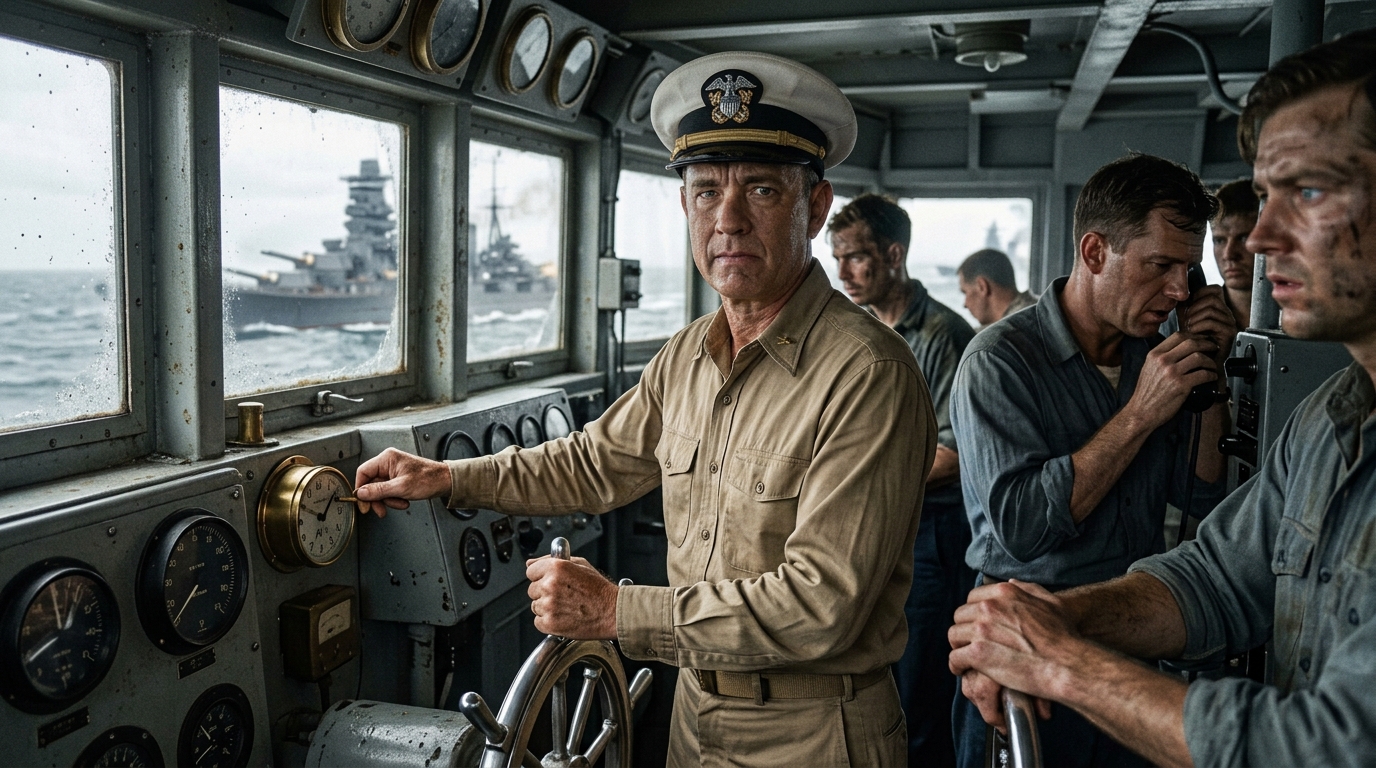
The brass chronometer key dug into the meat of my palm, cold and heavy, as the deck vibrated under thirty-five knots.
Through the salt-crusted glass of the bridge, colored geysers of ocean erupted three thousand yards ahead—red, green, yellow dye markers marking the fall of Japanese rangefinders.
“Left full rudder,” I said, keeping my voice level enough to cut through the hum of the blowers. “Flank speed, all ahead full.”
Quartermaster Miller didn’t hesitate, but his knuckles went stark white on the wheel as the deck listed hard to port.
“Captain?” Chief Hagen called out from the gunnery director, his hand hovering over the squawk box. “Fleet course is south-southeast. We’re turning north-northwest. Straight into them.”
“I know where we’re going, Chief,” I replied, rolling the brass key across my knuckles. “Set up a smoke screen. Heavy black oil. Lay it thick between those carriers and the main line.”
To our stern, the wooden-decked escort carriers of Taffy 3 were already turning away like startled geese, their merchant hulls straining to touch eighteen knots.
Behind the horizon, seventy-two thousand tons of enemy armor-plate was walking 18.1-inch shells closer with every salvo, each project weight matching a full-sized civilian automobile.
My ship, the USS Johnston, carried a quarter-inch of mild steel for a skin and five-inch guns that would merely scuff the paint on a heavy cruiser.
The first salvo of armor-piercing steel screamed overhead with the tearing sound of wet canvas, plunging into the swells two hundred yards off our starboard bow.
“Bridge, Plot!” the interior comms crackled with static. “Range to lead cruiser is twenty thousand yards. Out of our bracket!”
“Hold fire,” I said, leaning out the open bridge wing to watch the black smoke pour from our stacks, rolling flat over the chopping water. “We aren’t shooting yet. We’re closing.”
“They’re bracketing us, sir!” Miller yelled as a fountain of red-dyed water drenched the forward deck, stinging my eyes with brine. “They’ve got our speed!”
“Then give them a new number,” I called back, stepping back inside and turning the chronometer key twice around my thumb. “Zigzag pattern Alpha. Ten degrees left, hold for thirty seconds, twenty degrees right. Keep us in the squall line.”
The ship lurked into the heavy mist of a passing rain squall, the visibility dropping to zero in two heartbeats.
For three agonizing minutes, the world shrunk to the smell of hot turbine oil, wet wool, and the steady thrum of the screws under our feet.
When we broke through the other side of the gray curtain, the lead Japanese heavy cruiser, the Kamano, towered over the horizon at eighteen thousand yards, her ten eight-inch guns already swung in our direction.
“Gunnery, open fire,” I ordered. “Continuous rapid salvos. Target her bridge and fire control.”
The ship shook as all five five-inch mounts let fly at once, the acrid bite of cordite filling the bridge air.
Across the water, bright orange flashes blossomed along the Kamano’s superstructure as forty-five rapid hits tore through her unarmored rangefinders and exposed anti-aircraft mounts.
“She’s turning!” Hagen shouted from the director. “She’s trying to comb our line!”
“Target locked, range ten thousand yards!” Plot reported. “Torpedoes ready!”
“Fire all ten,” I said, the brass key clicking against my wedding ring. “Spread pattern. Clear the racks.”
Ten Mark 15 torpedoes splashed into the gray chop, their steam wakes carving white lines through the dark sea toward the cruiser’s bow.
I didn’t wait to watch them run.
“Hard right rudder,” I commanded, grabbing the bridge rail as the Johnston heeled over so far the port scuppers scooped sea water. “Get us back into the smoke before their battleships pick us up.”
Behind us, a dull, underwater thud rattled the rivets in our hull, followed a second later by a towering column of black water and metal debris rising where the Kamano’s bow used to be.
The heavy cruiser dead-stopped in the water, her forward deck torn open like a tin can, forcing her sister ship to break formation to avoid a collision.
“First blood!” a voice cheered from the helm.
“Keep your eyes open!” I barked, wiping grease and sea spray from my forehead. “That was just their screen. Look up.”
Emerging through the distant haze, three massive, pagoda-style superstructures rose like iron mountains against the morning sky.
The Yamato had found us.
CHAPTER 2: THE CRIPPLED COUNTERSTRIKE
The brass chronometer key was gone, blown into the gray sea along with half the forward fire-control station, but the pain kept my head clear.
Smoke rolled through the shattered superstructure in thick, acrid billows, smelling of burnt oil and fried insulation.
“Bridge is destroyed!” Quartermaster Miller screamed from the shattered hatchway, his forehead streaming crimson from shrapnel cuts. “Gyro-compass is dead! Engines are down to seventeen knots!”
“Get the pharmacist’s mate up here for the wounded,” I ordered, my voice raspy from the smoke. “And tell him I’m last on his list.”
“Sir, your hand—”
“I said last, Quartermaster.” I wiped a smear of soot and blood off my face with my uninjured right sleeve, turning toward the open air. “Pass the word down the hatches to aft steering. We’re steering by hand from the fantail.”
A three-thousand-pound armor-piercing shell from the Yamato had punched straight through our thin hull without detonating, leaving two jagged, daylight-bright holes below the waterline that sucked seawater into the port engine room.
The heavy torpedo racks sat utterly empty, their iron launching tubes bare after our ten Mark 15s had crippled the Kamano. We had no heavy weapons left. No fish in the water. No heavy belt armor to take another hit.
All we had left were four working five-inch guns and three thousand tons of sheer nerve.
“Captain!” Chief Hagen stumbled out from behind a buckled steel bulkhead, holding his shoulder. “Forward guns are back on manual power, but we’ve got no director! We’re aiming by eye!”
“Then aim for their glass,” I said. “If we can’t punch their armor, we take their vision.”
Ahead, the thirty-thousand-ton battleship Kongo loomed through a gap in the rain squall, seven thousand yards off our port beam, her massive secondary turrets pivoting toward us like cold iron levers.
“Commence firing,” I commanded, stepping over a tangle of severed communication cables. “Keep the pattern tight.”
The forward five-inch mount let out a deafening crack, the deck shivering beneath our boots as the shell struck the Kongo’s forward bridge structure, showering her rangefinders in white-hot sparks.
The massive battleship didn’t break stride, but her forward guns hesitated, her spotters blinded for three critical seconds by the sudden rain of shrapnel and high-explosive flash.
“Keep pouring it into her superstructure!” I yelled down the open hatch to the deck messengers below. “Every second she spends looking at us is a second she isn’t shelling those carriers!”
To our starboard, a second shell from a light cruiser slammed into our forward deckhouse, the sheer impact throwing me against the jagged remains of the starboard bridge rail.
The physical strain hit my spine like a sledgehammer, my legs trembling as the adrenaline began to bleed off, leaving only the raw, biological burn of exhaustion.
Through the thick haze, I caught sight of the hull plate beneath my boots—a clean, three-foot circle where a Japanese secondary round had punched through our plating, leaving smooth, unexploded edges.
They were still shooting armor-piercing rounds at a tin-can ship made of sheet metal, their command staff so thoroughly convinced they were fighting a fleet of heavy cruisers that they refused to load high-explosive shells.
Their own tactical rigidness was keeping us alive.
“Commander!” Hagen shouted over the roar of the fires. “The Gambia Bay is taking heavy fire to the north! A heavy cruiser’s got her locked in!”
I looked across the gray water at the defenseless escort carrier, her wooden flight deck listing heavily as geysers of water bracketed her stern.
“Left full rudder,” I ordered, my voice dead calm as I looked down at my bleeding hand. “Interpose this ship. Draw her fire.”
CHAPTER 3: THE CORNERED TRAP
“Five degrees left rudder!” I bellowed into the darkness of the aft steering compartment, my raw throat burning with sulfur smoke. “Hold her steady on ninety!”
Below decks, muscles groaned as four sailors heaved on the brass spokes, manually turning the massive iron linkage while salt water sloshed around their knees.
The Johnston shuddered as a five-ship Japanese destroyer squadron rounded the northern rain squall, closing at thirty knots to line up a fatal torpedo run on the fleeing carriers.
“Captain!” Chief Hagen shouted, scrambling along the scorched deck plates with a blood-soaked rag wrapped around his forearm. “No torpedoes left! Fire control is completely dead!”
“We don’t need torpedoes to make them turn,” I called back, gripping the hot steel of the fantail rail with my uninjured hand. “Tell mounts one and two to set manual elevation. Target the lead destroyer’s bridge!”
The lead enemy ship swung her bow toward us, her spotters clearly assuming our smoking, listing vessel was easy picking.
They didn’t expect a crippled tin can to turn straight into their charging column.
“Fire at will!” I yelled down the messenger line.
Our forward five-inch guns slammed in ragged succession, the shells skimming low across the water and ripping into the lead destroyer’s forward superstructure.
Sparks and black debris erupted from her bridge, forcing her helmsman to sheer wildly to port to avoid our continuous, unyielding barrage.
Behind her, the second destroyer in line panicked, over-correcting her turn to avoid a collision with her flagship.
“They think we’re the vanguard of a fast battleship division,” Hagen panted, ducking as a volley of six-inch shells from a trailing light cruiser whistled overhead and exploded two hundred yards wide. “Look at them—they’re dumping their torpedoes early!”
Through the spray, white foam trails hissed into the sea as the confused enemy squadron launched their full salvo from over twelve thousand yards out—far too distant to threaten the carriers.
Every single torpedo ran harmlessly past Taffy 3’s rear guard, splashing into open ocean.
A lone, battered destroyer had just bluffed an entire enemy squadron into throwing away their prime strike weapon.
“They’re circling back!” Quartermaster Miller shouted from the hatchway. “Cruiser Yahagi is closing on our port quarter! They’ve got us surrounded!”
The ocean around us turned into a cauldron of exploding steel as five ships opened fire on our single, dying frame.
A six-inch shell punched through our bow, knocking out mount one in a cloud of blinding white steam, while another tore through the remnants of our midship deckhouse.
“Engine room reporting steam pressure dropping to five knots, Captain!” Miller’s voice cracked. “The last boiler is going!”
I didn’t answer. I looked down through the torn plating beneath my feet at the gaping, clean holes where three thirty-thousand-ton battleship rounds had passed straight through us without exploding.
Their flagship was still paralyzed by its own rigid doctrine—convinced that no single, unarmored ship could display this much audacity unless an entire fleet was waiting behind the smoke.
“Keep firing whatever guns have rounds in the hoists,” I said, my voice dropping to a low, quiet rasp as the deck began to settle heavy into the sea. “Make them pay for every yard.”
CHAPTER 4: THE FINAL STAND AND COLLAPSE
The last boiler surrendered with a long, dying hiss of steam, the deck shuddering one final time before going completely dead under our feet.
“Pumps have failed, Captain!” Quartermaster Miller shouted up from the open hatch, water pouring over his shoulders as he scrambled onto the slanting metal plate. “She’s settling fast by the bow!”
Across the gray water, the Japanese cruiser division circled us like wolves, their heavy secondary batteries tearing open what remained of our forward superstructure.
Yet, despite our total lack of speed and silent guns, their destroyers kept a cautious five thousand yards of distance, firing frantic salvos into the smoke, still utterly convinced they were dealing with the advance guard of a massive American strike force.
“All hands,” I said, my voice quiet against the crackle of localized deck fires. “Pass the word down the line. Abandon ship.”
Chief Hagen hesitated, his face black with soot, gripping the bent railing. “Captain—”
“Get the wounded into the water first, Chief,” I ordered, stepping down the slanting deck to help lower a sea-soaked cork raft into the chop. “That’s an order. Move.”
The crew didn’t panic.
Men moved with steady, quiet efficiency, cutting away wooden staging, pulling injured deckhands over the lifelines, and slipping into the cold swells of the Philippine Sea without a single scream.
Behind us, the massive battle line of the Japanese Armada—the overwhelming force that should have swept Taffy 3 into the deep and crushed the troop transports at Leyte—began to execute an astonishing, frantic pivot to the north.
Sailing blind, terrified of phantom submarine screens and unseen carrier fleets that existed only in their own hyper-cautious command doctrine, Admiral Kurita’s heavy cruisers turned their sterns to the defenseless landing beaches and beat a full tactical retreat.
Their absolute, unearned audacity had collapsed under the weight of its own paranoia, broken by three hours of relentless, stubborn friction from a single tin can that refused to play by their rules.
Seawater rushed over the starboard rail as the Johnston rolled hard to port, her stern rising slow and heavy into the morning air.
I held onto the fantail frame, watching our single remaining battle flag flutter from the mainmast peak until the dark ocean rose up to meet it.
Across the narrow gap of water, the lead Japanese destroyer slowed her screws, her crew coming to attention along the deck rail as their captain raised a formal, silent salute to our sinking steel.
They had spent three hours trying to erase us, only to realize too late that no amount of heavy armor can overcome a quiet, unyielding refusal to bow down.
The ocean closed over the stern, leaving only white foam, floating oil, and the quiet thrum of a retreating enemy fleet fading into the horizon.
The sun beat down hot and dry on the yellow raft, the smell of salt spray replacing the sharp bite of cordite.
I sat back against the rubber tube, my uninjured right hand gently dipping a torn cotton strip into the seawater to wash the grease from my palm.
The ocean around us was still, the distant horizon empty of battleship smoke and heavy gunfire, leaving only the calm, rhythmic lap of water against rubber.
No alarms were ringing. No boilers were screaming. The water was quiet.