Cold Iron and Covenants: A Veteran’s Calculated Descent into the Architecture of Suburban War
CHAPTER 1: The Inciting Scar
The hiss of cooling slag had barely died away when she spoke, her voice carrying that polished, glass-edge cadence of someone who had never once faced a consequence she couldn’t delegate to a subordinate.
“That gate,” she said, her words dripping with a calculated, syrupy condescension, “is a flagrant violation of Article 7, Section 4, Paragraph B of the community bylaws. I’m enforcing the rules effective immediately.”
I didn’t answer right away. I kept my weight balanced on the balls of my boots, my eyes tracking the grotesque, bubbling scab of gray metal smeared across the hinge of my primary cattle gate. Beneath that crude weld, two thousand pounds of prime Angus muscle shifted against the fence line, a low, guttural vibration that hit the soles of my feet before it reached my ears. Titan knew something was wrong. Animals smelled panic long before humans gave it a name, but what hung in the air tonight wasn’t panic. It was malice. Thick, deliberate, and engineered.
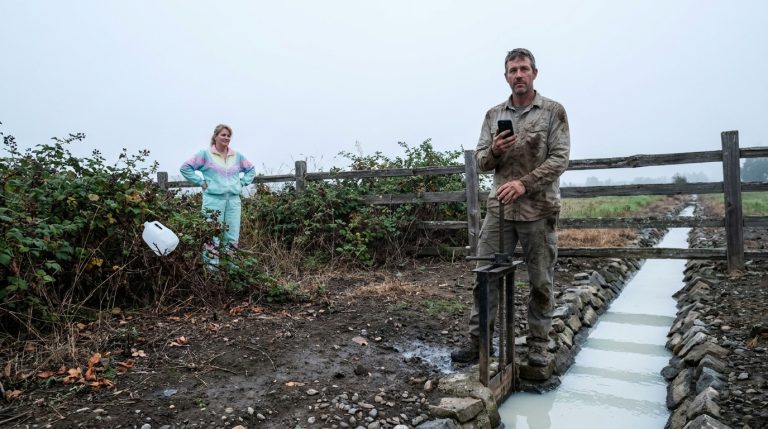
Her name was Karen. The Oak Meadows Homeowners Association wore her like a cheap, heavy-metal badge. She stood there clutching a laminated clipboard against her oversized floral muumuu as if it were a tactical breastplate, her chin tilted at an angle that invited a target.
“There is no Article 7, Section 4, Paragraph B,” I said. My voice didn’t rise. It dropped down into that flat, dead register my platoon sergeant used to use right before we breached a compound. “I’ve read the master covenants cover to cover. Agricultural properties over five acres are grandfathered in. This tract is forty. You know that.”
A microscopic twitch betrayed her—just a fraction of a second where her eyelids fluttered before she slammed the shutters down over her expression, retreating behind a wall of manufactured righteousness.
“The board held an emergency vote,” she snapped, adjusting her thick-rimmed glasses with a sharp, bird-like jerk of her wrist. “We amended the local clauses to preserve aesthetic harmony.”
I stared past her shoulder. Thirty feet away, sitting squarely in the middle of her manicured lawn, was a pair of violently pink plastic flamingos and a peeling resin garden gnome holding a fishing pole. The hypocrisy wasn’t just loud; it was structural. This wasn’t about aesthetics. It was about a potluck social I hadn’t attended three nights ago because I was out mending a broken wire on the south boundary. It was about independent variables refusing to bow to the machine.
“The storm’s coming in from the ridge, Karen,” I said quietly, pointing a finger toward the bruised, violet-black bruise swelling across the western sky. “That bull is trapped against the county road. If he bolts, the liability isn’t mine. The welds are fresh. My camera recorded the timestamp of your contractor’s truck ten minutes before you walked up.”
The silence that stretched between us was thin and brittle, smelling of ozone and wet dust. For a brief second, the iron-plated armor of her self-importance cracked, and I saw the cold, sharp calculation in her eyes—the realization that I wasn’t intimidated by her clipboard.
She turned on her heel without another word, her floral fabric snapping in the wind like a retreating flag, leaving me alone with the cooling metal and the low, rising rumble of the thunder.
CHAPTER 2: The Tactical Assessment
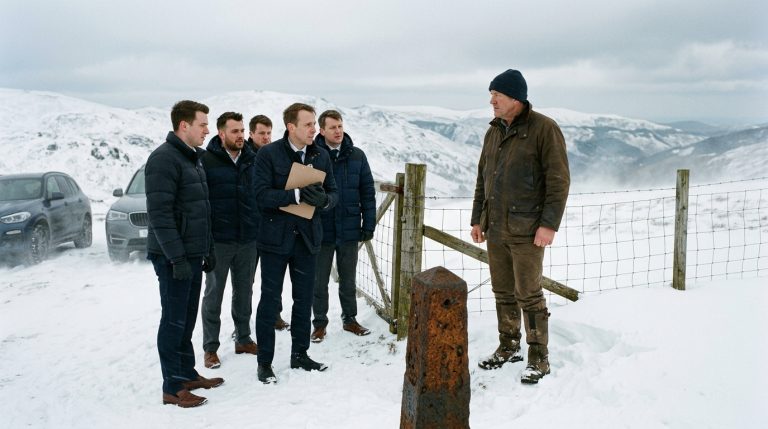
The sound of Karen’s footsteps died away against the wet asphalt, swallowed by the low, continuous growl of the storm rolling in from the western ridge. I didn’t move immediately. My hand stayed resting against the cold, corrugated steel of the paddock gate, feeling the sharp, jagged edges of the molten slag where her hired hands had burnt the metal shut. It was a crude job, sloppy and hurried, but it had achieved its primary objective: trapping a two-thousand-pound animal against an active county highway just as the skies broke open.
Behind me, Titan gave a deep, vibrating huff that rattled the loose boards of the shelter. The air grew heavy, smelling intensely of ozone, crushed clover, and the metallic tang of approaching lightning.
I pulled my phone from my pocket, the screen glowing harsh and blue in the gathering gloom. My thumb moved through the routine with mechanical precision, tapping the camera app. I didn’t rush. Speed bred mistakes, and in an operation like this, a missed angle or a blurry timestamp was a structural weakness the opposition would exploit. I knelt into the wet gravel, ignoring the way the cold soaked through the knees of my jeans, and brought the lens down to street level.
Flash. The white glare illuminated the fresh, unweathered gouges in the steel posts where the cutting torch had bitten deep. Flash. Another angle, capturing the distinct tire treads left in the softening mud by the contractor’s pickup—a dual-wheel track with a distinct chevron pattern on the outer left lug. I panned upward, framing the weld against the backdrop of the county road sign and the open expanse of the highway, proving beyond a shadow of a doubt that this wasn’t internal maintenance; it was a calculated blockade designed to endanger livestock on public right-of-ways.
A sudden, sharp memory cut through the rhythm of the photography—the dry, stifling heat of a dusty valley five thousand miles away, checking the perimeter wire before dark, knowing that an unaddressed vulnerability was an invitation for a coordinated strike. The parallel was absurd on its surface—a suburban homeowners association versus an insurgent cell—but the human mechanics were identical. Bullies operated on a fundamental assumption: that institutional friction would exhaust you before you ever reached their command center. They relied on fatigue, bureaucratic maze-running, and the weary compliance of decent people who just wanted a quiet evening.
“Jack?”
Sarah’s voice cut softly through the dark, coming from the shadowed lane behind the pasture. The twin headlights of our F-250 sliced through the rain, washing long, distorted shadows across the wet grass. She didn’t blare the horn or panic. She knew better than that. When she pulled up alongside the fence line, she cut the engine, the sudden silence broken only by the steady drum of fat raindrops hitting the truck’s metal roof.
I stood up, brushing the grit from my knees, and walked over to the passenger window as she rolled it down. The interior light cast a warm, pale glow over her face, etched with taut lines of worry that she was trying hard to keep hidden behind a mask of steady competence.
“He’s worked up,” she said, her eyes flicking past me toward the dark mass of the bull pacing behind the wire. “The lightning is starting to hit the ridge. If he tests the southern corner, the old strands aren’t going to hold him.”
“They won’t,” I agreed, my voice dropping to a low register that carried under the wind. “Which is why we aren’t using the main paddock. We’re moving him through the old service ravine on the west forty.”
Sarah’s fingers tightened on the steering wheel, her knuckles whitening slightly against the leather. “The ravine? Jack, the banks are pure slick clay tonight. With this downpour, it’s a sheer drop on the east side. One slip and—”
“I know,” I interrupted, cutting off the hesitation before it could take root. There was no room for second-guessing the physics of the terrain. “If we leave him here by the highway during a thunderstorm, a single semi blowing its air horn will put him through that welded gate or onto the asphalt. The ravine is a controlled risk. You bring the truck around with the floodlights mounted on the headache rack. Angle the beams down the slope so I have a clean sightline. I’ll go in on foot with the lead rope and the heavy halter.”
She didn’t argue. She gave a single, sharp nod, her jaw setting into a line that reminded me precisely why I trusted her more than anyone else I had ever served with. “Five minutes. I’ll get the generator and the chains in the bed just in case we need to pull a deadfall out of the path.”
“Keep your flashers on,” I added, stepping back as she shifted into gear. “Let her majesty across the street watch us work. Let her see that closing a gate doesn’t lock us in; it just forces us to build a better road.”
As the truck crept forward toward the western access road, its red taillights bleeding into the sheets of rain, I turned back one last time to look at the ugly, bubbled scar of metal binding my property shut. I reached out, my gloved fingers brushing the warm, vibrating surface of the post. The war didn’t start because I wanted a fight. It started because she thought my independence was something she could regulate out of existence.
I turned my back on the gate and walked into the dark toward the mud, my mind already calculating the grade of the slope, the exact weight of the animal, and the precise legal steps required to dismantle every single brick of the empire she thought she ruled.
CHAPTER 3: The Baited Hook
The kitchen table didn’t look like a place for family meals anymore; it looked like a forward operating post. The overhead fluorescent light hummed with a flat, industrial vibration, casting sharp highlights across the blue lines of a fresh legal pad. Outside, the storm had settled into a steady, rhythmic beating against the windowpanes, washing the glass in streaks of gray water.
I sat down, pulled my notebook closer, and opened the black binder where the digital photo files from the gate had already been cataloged, time-stamped, and backed up to an encrypted cloud drive. There was no room for sloppy documentation. If Karen wanted to play procedural warfare using the bylaws as a shield, every piece of counter-evidence had to withstand judicial scrutiny down to the second.
Sarah stepped quietly into the kitchen, setting a heavy ceramic mug of black coffee beside my elbow without a word. The steam curled upward, smelling of dark roast and chicory. She didn’t ask about the bull; she knew Titan was secure in the lower barn because she had locked the heavy wooden bolt herself.
“You’re drafting the records request tonight,” she said, leaning her hip against the edge of the counter, her eyes fixed on the blank lines of the paper.
“Right now,” I replied, my fingers already resting over the keyboard of my laptop. “Karen thinks she can bury the gate incident behind a wall of board confidentiality and committee votes. But state property code is specific. Any homeowner has an explicit statutory right to inspect foundational Covenants, Conditions, and Restrictions, along with unredacted meeting minutes for the past five years.”
I opened a clean document window, my fingers moving with methodical regularity. I didn’t type with anger. Anger was an inefficient fuel; it made punctuation sloppy and legal arguments emotional. Instead, I channeled the cold precision of a post-action report. I cited the exact state statute governing homeowners associations, requested certified copies of the original master tract map, and formally demanded the complete voting record regarding the emergency amendment she claimed gave her authority over agricultural boundaries.
When the draft was complete, I didn’t hit send immediately. I printed a physical copy, read it line by line under the harsh light, and checked every citation against the statutory reference manual sitting to my left. It was clean. It was bulletproof. It gave her an administrative window that she legally could not ignore without committing an explicit violation of state law.
“If she stonewalls this,” Sarah murmured, reading over my shoulder, her breath warm against the quiet air of the room, “she exposes the whole board.”
“That’s the point,” I said, leaning back into the wooden slats of the chair and wrapping both hands around the hot ceramic mug. “A tyrant doesn’t survive exposure to daylight. She counts on people being too tired, too busy, or too intimidated to look at the paperwork. We’re going to make the paperwork impossible to avoid.”
I hit send, routing the transmission to the official HOA board portal with a carbon copy directed straight to Karen’s personal address. A quiet, digital confirmation banner slid across the bottom of the screen: Delivered.
The trap was baited. Now it was just a matter of waiting to see how violently she would jerk the line.
CHAPTER 4: The Reconnaissance in the Shadows
The morning sun cut through the post-storm humidity, casting sharp, blinding glares off the wet asphalt of Oak Meadows Lane. While the rest of the neighborhood was waking up to dry out their yards, I was already walking the asphalt with a clear tactical objective. Building a case against a bureaucratic machine required more than a single email request; it required mapping out the human terrain.
My first stop was two houses down, where Arthur Miller’s petunia bed sat neat and precise behind a low wooden border. Arthur was out early, a heavy plastic watering can clutched in his trembling hands, splashing water onto the dark soil with nervous, jerky movements. When he heard the crunch of my boots on the gravel driveway, he stiffened, his shoulders pulling tight up toward his ears before he even turned around. His eyes darted instinctively across the street toward Karen’s house, checking for drawn curtains or a watching silhouette.
“Morning, Arthur,” I said, keeping my voice low and even, pitching it so it wouldn’t carry over the hedges.
Arthur flinched anyway, setting the watering can down with a dull plastic thud. “Jack,” he muttered, wiping his calloused palms against his denim trousers. “Rough storm last night. Heard about your gate. Everyone’s talking about it, but… well, people keep their heads down around here.”
“I know they do,” I said, stepping closer to the edge of the flower bed. “Which is why I’m here. You don’t have to keep your head down today, Arthur. You just need to talk about what’s actually happening on this block.”
It took twenty minutes of quiet, methodical conversation—steady, patient probing that mirrored the way I used to extract intelligence in the field—before the old man’s defensive wall began to crumble. He didn’t offer grand declarations; he offered receipts. He led me around to the side of his garage where a heavy metal lockbox sat tucked behind a spare bag of fertilizer. Inside were canceled checks, carbon copies of fines paid, and a stack of warning letters stamped with the official HOA seal.
Fifty dollars because a garden hose wasn’t coiled in a mathematically perfect circle. A hundred dollars because a holiday wreath remained on his front door three days past an arbitrary calendar deadline. Over a thousand dollars in total extracted over twelve months through pure, unadulterated intimidation.
“We just pay it,” Arthur whispered, his voice cracking slightly as he looked down at his worn boots. “It’s easier than fighting. She threatens liens on the property. My wife’s heart can’t take the stress.”
I skimmed the papers, my eyes locking onto the remittance addresses and the signature lines. The checks weren’t deposited into a general municipal account; they were routed through a secondary clearing house under an abbreviated corporate name. The physical trail was thin, but it pointed directly toward an outside entity—a shell designation that operated without standard oversight.
“Keep these safe, Arthur,” I instructed quietly, tapping the corner of the folder. “Don’t mail anything else, and don’t pay the next notice. Let her bring it to my desk.”
From there, I moved down to the Garcia house on the corner. Carlos Garcia was outside wrestling with a tangled bicycle chain, his hands blackened with grease. When he saw me approach, he didn’t look over his shoulder; he just stood up, wiped his hands on a rag, and gave a sharp, knowing nod.
“Heard she tried to hit you with a vehicle parking violation this morning,” Carlos said, a dry, humorless smile touching his lips. “My wife got one too. Apparently, our kids’ chalk drawings on the driveway constitute an unauthorized modification of common concrete surfaces.”
“She’s lashing out because the paper trail is moving faster than she can forge it,” I replied, leaning against the wooden post of his porch. “I need to know what you saw at the last annual budget meeting, Carlos. Specifically the landscaping allocation.”
Carlos’s expression hardened, the humor dropping away instantly. “That’s where things got weird. A year ago, we were paying a local outfit twenty-eight thousand flat. Out of nowhere, Karen canned them, brought in some new outfit called Evergreen Solutions, and the budget jumped to nearly sixty grand. When I stood up at the meeting and asked for the itemized breakdown, she slammed her binder shut and called for an immediate adjournment due to security concerns.”
The pieces clicked into place with the satisfying snap of a breach bolt sliding home. A doubled budget, an unvetted vendor, and an administrative firewall designed to protect it. I thanked Carlos, jotted the final notes into my pocket journal, and turned back toward my own property.
The decoy secret was unraveling. The petty fines and the aesthetic rulebook were just smoke. The real fire was burning deep inside the financial ledgers, and Karen had just handed me the match.
CHAPTER 5: The Public Arena
The kitchen counter felt colder than usual under my palms as I set the file folder down beside the laptop. The data gathered from the Millers and Carlos formed a jagged, interlocking puzzle, but a puzzle was useless if it stayed locked inside a private binder. Bureaucracies only felt pressure when their internal mechanics were dragged into the glaring, unfiltered light of public accountability.
My phone buzzed against the wood—a sudden, sharp notification sound that cut through the silence of the room. I picked it up. An automated alert from the HOA portal: Notice of Special Emergency Community Meeting, scheduled for 19:00 hours at the Oak Meadows Clubhouse.
The subject line was a masterpiece of passive-aggressive framing, dripping with capitalized urgency about community harmony and the reckless legal actions of an uncooperative resident threatening association reserves. Karen wasn’t waiting for our next legal maneuver. Her ego, bruised by the bounced records request and the quiet resistance of her neighbors, demanded an immediate show of force. She had called a public tribunal to try and isolate us before our filings could land.
Sarah walked in from the hallway, her expression tight as she glanced at the glowing screen. “She’s trying to flip the narrative,” she said, her voice measured but carrying a sharp edge of warning. “If she gets the room packed before we walk in, she’ll paint you as the sole reason everyone’s annual dues are about to skyrocket.”
“Let her try,” I said, my thumb swiping across the screen to clear the notification. “A public court only works if the jury is afraid. She’s spent three years making them afraid. Tonight, we change the variables.”
I spent the next several hours preparing for the confrontation, treating the community clubhouse session with the cold, meticulous discipline of a pre-deployment brief. I didn’t draft an emotional speech or rehearse grievances about my gate. Emotion was noise; facts were ammunition. I printed out concise bullet points tracking statutory disclosure laws, cross-referenced the illegal five-hundred-dollar administrative fee with state code, and slipped Arthur Miller’s box of receipts into a heavy leather folio.
By seven o’clock, the parking lot of the Oak Meadows Clubhouse was already packed with sedans and SUVs parked at awkward, crooked angles. The humid evening air carried a heavy, restless tension. When Sarah and I pushed open the double glass doors, the noise inside dropped instantly from a low, nervous murmur to a suffocating silence.
Karen sat at the head of a long, varnished mahogany table flanked by two board members—Stan, a retired corporate accountant whose eyes refused to meet mine, and a middle-aged woman who sold scented candles from her sunroom and nodded along to whatever rhythm Karen dictated. Karen wore a stiff, powder-blue blazer that looked like armor, her chin lifted high as she surveyed the room from her elevated perch.
We didn’t take seats in the back rows where the murmurs clustered. We walked straight down the center aisle, the rubber soles of my boots squeaking rhythmically against the polished linoleum floor, and took two empty chairs near the front, directly in her line of sight.
Karen’s upper lip twitched, just for a fraction of a second, before she forced a tight, brittle smile onto her face and tapped her gavel twice against the wood.
“Welcome, residents,” she began, her voice amplified by the cheap PA system, carrying that familiar, syrupy condescension that scraped against the room’s nerves. “We called this emergency session tonight to address unfortunate disruptions—actions taken by individuals who place personal grievances above the architectural harmony and financial stability of our shared community.”
She paused, expecting the customary ripple of supportive murmurs from her inner circle. Instead, the room remained dead silent, heavy with the weight of forty pairs of eyes staring fixedly at the back of her head.
I rested my forearms on my knees, my gaze locked onto hers, letting the silence stretch until it made her posture stiffen. The trap was set, and the walls of her fabricated arena were about to cave in.
CHAPTER 6: The Forensic Strike
The silence in the clubhouse didn’t break; it compressed. Karen’s powder-blue blazer seemed to tighten around her shoulders as she waited for the familiar ripple of agreement that never came. Her gavel rested against the wood, half-raised, as if she were debating whether to slam it down again just to manufacture a pulse in the dead air.
I didn’t blink. I reached down slowly, unzipping the mouth of the heavy leather folio resting against the linoleum floor. The subtle rasp of the brass zipper cut through the room like a dry branch snapping. I pulled out a single, neatly stapled set of documents—the financial summary pulled from the state corporate registry cross-referenced with Arthur Miller’s box of canceled checks and the doubled landscaping invoices.
“Karen,” I said, my voice cutting through the space with a flat, level weight that required no amplification from the PA system. I didn’t raise my tone. I didn’t need to. “You mentioned financial stability. Let’s talk about the landscaping contract.”
Her posture snapped upright, her fingers locking onto the edge of the mahogany table until the knuckles turned white. “This is an unauthorized interruption of an official board proceeding,” she shot back, her voice climbing half an octave, losing its polished edge. “Mr. Henderson, you are out of order. Sit down or security will escort you from the premises.”
“There is no security, Karen,” I replied smoothly, sliding my feet forward and standing up. “There’s just forty homeowners who want to know why a twenty-eight-thousand-dollar annual grounds contract doubled the exact month a shell corporation named Evergreen Solutions was registered to your brother-in-law.”
The room inhaled as one. The words hit the space like a physical blow. Stan, the retired accountant sitting to her left, flinched violently, his head snapping sideways to stare at Karen with sudden, unmasked horror. He hadn’t known about the family link. None of the rubber-stamp board members had. They had signed off on the budget increases under the banner of aesthetic harmony, trusting the paperwork because it came wrapped in a clipboard and a scowl.
“That’s a lie,” Karen hissed, her face flushing into a mottled, blotchy crimson that broke right through her composure. She stood up, her chair screeching backward against the linoleum floor with a sharp, metallic shriek. “Defamation! I will have liens placed on every acre you own before the week is out! You are a disruptive, hostile element—”
“I’m a property owner exercising statutory inspection rights,” I interrupted, stepping into the center aisle and holding the financial sheets out where the rows of seats could see the stark, unyielding numbers. “State code 720 governs fiduciary duty. When a board president routes association reserves through an unvetted family front, it stops being a civil dispute. It stops being about rules for grass length or parking colors.”
I took a slow step forward down the aisle, the heavy silence of the room pressing in from all sides. The psychological phantom of an old operational review flickered through my mind—the cold clarity of auditing a compromised supply chain where every inflated invoice pointed back to a single greedy hand at the center. Karen wasn’t defending a neighborhood. She was guarding a register.
“You built an empire on fifty-dollar fines for garden hoses,” I said, my eyes locked on hers across the twenty feet of open floor. “You thought people would pay to make the noise go away. But you left the financial ledger open, Karen. And the ink doesn’t care about your bylaws.”
Stan the accountant slowly closed his binder, his hands trembling as he pushed his chair back from the table. The candle seller to her right looked down at her lap, refusing to make eye contact. The structural integrity of her petty kingdom was fracturing right down the middle, and not a single gavel in the world could hammer it back together.
CHAPTER 7: The Unravelling Citadel
The fallout from the emergency meeting moved with the ruthless efficiency of a collapsing load-bearing wall. Within forty-eight hours, the physical mailboxes of Oak Meadows were flooded not with polite neighborhood newsletters, but with certified envelopes carrying the cold, formal letterhead of corporate insurance investigators and state regulatory bodies. Karen’s administrative fortress hadn’t just been breached; it had been dismantled from the inside out by the very board members she had treated as rubber stamps.
I sat at the kitchen desk, the morning sun cutting sharp, horizontal lines across the wooden surface, watching my phone screen light up with a text notification from David Chen. The message was concise: D&O carrier issued a full reservation of rights. Coverage denied due to willful bad faith and self-dealing. The board is exposed personally.
It was the strategic kill switch. Stan and the candle seller hadn’t waited for a formal subpoena; they had retained separate counsel immediately after the clubhouse confrontation, scrambling to distance themselves from the web of inflated landscaping invoices that pointed straight to Karen’s brother-in-law. They were terrified of losing their personal savings to a multi-party civil suit, and their panic was the crowbar that finally popped open the association’s inner vault.
A sharp rap on the front door pulled my attention away from the terminal. Sarah was already in the hallway, her hand resting on the latch before she turned it slowly.
Standing on the porch was Marcus Thorne, a high-priced corporate litigator from downtown whose tailored charcoal suit looked entirely out of place against our rustic cedar siding. He didn’t carry a briefcase; he carried the weighted posture of a man who had walked into a crossfire expecting a minor property dispute and discovered artillery.
“Mr. Henderson,” Thorne said, his voice dry, stripped of any professional varnish. He didn’t wait for an invitation; he stepped across the threshold into the entryway, his eyes flicking quickly around the room before locking onto mine as I walked out from the kitchen. “Can we talk?”
“You’re standing in my mudroom, Marcus,” I said, my voice flat, keeping my weight balanced on the balls of my feet. “That usually means your clients finally ran the numbers on what happens when the Attorney General’s office audits an unvetted shell vendor.”
Thorne swallowed hard, his jaw tightening as he reached inside his coat pocket and pulled out a thick, legal-backed folder bound with a red elastic band. “The board has authorized a complete capitulation,” he said, the words forced out through a tight throat. “They’ve formally suspended Karen Peterson from her duties as president and frozen all association accounts pending the state investigation. The insurance carrier has officially walked away from her defense.”
I didn’t move toward the folder. I let the silence stretch, letting the weight of his admission hang in the cool air of the hallway. “Suspended isn’t a resolution, Marcus. It’s a management reshuffle. My gate was welded shut, my livestock was endangered on a public highway, and a dozen families on this block have been shaken down under color of authority for over five years.”
“Four hundred thousand dollars,” Thorne blurted out, the corporate slickness entirely gone, replaced by the desperate cadence of a man negotiating under a burning bridge. “That’s the baseline settlement figure the remaining board members have agreed to scrape together through special assessments and remaining reserve liquidation. It covers your damages, the gate replacement, and a community restitution fund to refund every fine Karen ever levied.”
I kept my gaze locked on his eyes, seeing the exact moment he realized that no amount of legal framing could protect a tyrant who had forgotten that rules cut both ways. The decoy secret—the landscaping embezzlement—had done its work, cracking open the door to the inner chambers. But the core administrative rot of the subdivision still lay ticking beneath the surface, waiting for the final signature to lock the victory into place.
“That’s just the financial down payment,” I said quietly, stepping closer until the sharp crease of his tailored suit entered my peripheral vision. “We’re going to rewrite the bylaws from the ground up, Marcus. And your clients are going to sign every page.”
CHAPTER 8: The Silent Gate
The final settlement documents didn’t arrive via courier or dramatic hand-delivery; they came through a standard encrypted PDF transmission that took less than forty seconds to download. Yet when I opened the file on my kitchen laptop, the weight of what those pages represented was absolute.
Marcus Thorne’s four-hundred-thousand-dollar settlement was only the visible friction point—the immediate structural penalty for the embezzlement funneling through Evergreen Solutions. But buried deep within the certified master tract exhibits and the historical county development filings annexed to the settlement appendix lay Layer 2: the absolute, foundational reality of Oak Meadows. The original developer had never legally transferred the primary utility easements or the common-area road bonds to the association back when the tract was first platted twenty-five years ago. The entire homeowners association, down to its incorporation papers and its power to levy fines, was built on a legal vacuum—a hollow shell operating without lawful authority from day one.
Karen had weaponized a phantom empire because she didn’t even know her own scepter was made of hollow plastic.
“She’s selling,” Sarah murmured, stepping up beside me and looking out the kitchen window toward the street.
Through the clear glass, a large commercial moving van was idling curbside in front of Karen’s house. Two men in blue coveralls were hauling a heavy leather sofa down the walkway, their boots crunching against the manicured turf where the illegal pink flamingos had already been uprooted and tossed into a plastic bin. The criminal indictments for fraud and embezzlement handled by the state attorney general’s office had left her with no legal footing and no insurance safety net. Her house was being stripped to pay the debt.
I closed the laptop lid with a soft, decisive click, the sound flat and final in the quiet room. The administrative war was over, but the physical world still needed to be put back in order.
Ten minutes later, I walked out to the western perimeter where the primary cattle gate used to stand. The crew of professional fabricators I had hired was already at work. They hadn’t just cut away the ugly, bubbled gray slag of Karen’s spiteful weld; a small hydraulic crane was lifting the entire mangled section off its reinforced concrete posts, hoisting it onto the flatbed of a utility truck to be hauled away as scrap metal.
As the old iron swung clear of the earth, the space felt instantly larger, breathing out into the open air of the forty-acre pasture. Titan stood fifty yards back near the shelter, his massive head lowered as he watched the machinery with calm indifference, the threat of the highway boundary permanently erased.
The fabricators moved with quiet efficiency, setting the new hardware into place. This wasn’t a standard pipe-and-latch assembly; it was a heavy-duty, black powder-coated steel gate equipped with a silent, solar-powered hydraulic motor designed to handle heavy agricultural use without a squeak or a shudder. When the bolts were torqued down and the alignment sensors calibrated, the technician handed me the remote override clicker.
I pressed the button.
With a low, smooth hum that barely registered over the wind rustling through the grass, the heavy black steel swung open on its own, gliding effortlessly across the threshold. No friction. No resistance. Just engineered balance doing what it was built to do.
Across the asphalt, movement caught my eye. Arthur Miller was standing near his petunia bed, but he wasn’t holding a watering can or nervously scanning the street. He was kneeling in the dirt, carefully planting a row of bright, vibrant yellow roses—a shade explicitly non-compliant with the old, tyrannical aesthetic rules, blooming openly in the midday sun.
Arthur looked up, caught my eye across the pavement, and straightened his back. A wide, genuine smile broke across his weathered face, and he raised a hand in a slow, steady wave.
I raised my hand and waved back.
I slipped the remote into my pocket, turned away from the road, and walked back toward the house. The ground was solid beneath my boots, the air was clear, and the gate stood wide open. Justice hadn’t just been argued; it had been welded into place.