The Architect of Silence: A Battle for Autonomy Beneath a Frozen Neighborhood’s Collapsing Facade
CHAPTER 1: The Hammering
The wind didn’t just blow; it hunted. I stood in the entryway, the silence of my home acting as a sharp contrast to the violent, rhythmic battering against my storm door. It wasn’t just a knock. It was the desperate, frantic sound of someone who had run out of other options.
I kept the inner door latched. Through the reinforced glass of the storm door, I watched Clare Wells. She was shivering, but it wasn’t the natural tremor of the cold; it was the sharp, jagged jerk of someone whose composure had finally shattered. Her hair was a wild, frosted mess, and her skin had taken on the grey, translucent quality of marble.
“You shut it off,” she yelled, her voice barely audible over the wind’s howl. “Open the access, now. This is an emergency.”
I didn’t answer. I didn’t even move. I looked past her, toward the street. The houses, those identical, sterile boxes of the planned community, were going dark one by one. The light of civilization was literally being snuffed out, house by house, as the central heating system—the pride of the HOA board—finally hit the ceiling of its capacity.
My home remained warm, a singular island of defiance in a sea of encroaching ice.
“People are freezing,” she screamed, her fear now openly bleeding through her practiced, surgical tone. “You’re killing them!”
I stood still, letting the cold seep into my boots, keeping my breathing rhythmic and shallow. I remembered the sound of the welding torch two days ago. The smell of burning metal was still vivid in my mind—a sharp, acidic tang that had marked the moment they decided to cut me off. They hadn’t asked. They hadn’t warned. They had simply acted, convinced that their bylaws were as absolute as the laws of physics.
Clare took a step forward, her hand hitting the glass. “This is community property! You don’t have the right!”
I didn’t raise my voice. I didn’t need to. I reached for the lock on my inner door, my fingers brushing the cold, familiar metal of the secondary bolt. I looked at her, really looked at her—not as a neighbor or a president, but as a predator who had finally run out of prey.
The wind shrieked, a gust so violent it shook the house, and in that moment, I realized the house was not just a shelter. It was a barricade. I stared at the valve housing, half-buried in the snow near the fence line, and felt the weight of the key in my pocket.
“Listen closely,” I said, my voice cutting through the storm with a clinical edge that made her flinch. “Because you’re about to learn that taking something back isn’t the same as stealing.”
I reached for the handle, not to open the door, but to adjust the security shutter. Behind the veneer of her panic, I saw it—the flicker of something else. She wasn’t just cold; she was looking at my heat like a person dying of thirst looks at a well. Then, a new sound cut through the storm—the distant, muffled boom of a water main snapping somewhere deep beneath the frozen earth. The pressure in the street began to drop, and I knew the final collapse had begun.
CHAPTER 2: The Cold Appraisal
The sound of the water main bursting down the street didn’t just vibrate the glass; it traveled through the frozen soil and rattled my teeth. It was a deep, guttural moan of iron failing under the impossible stress of the cold. Beside me, Clare Wells flinched, her eyes widening as the reality of the infrastructure failure hit her. The game of control she had been playing was suddenly being dismantled by the very environment she claimed to be managing.
I didn’t give her time to recover. I stepped back, slamming the bolt home and sealing the house against the howling wind. The temperature inside was stable—a crisp, preserved sixty degrees—but the silence of the house felt heavy, charged with the sudden realization that the community’s “safety” was a myth that had just been shattered by a single, catastrophic pipe failure.
I didn’t wait for her to stop screaming at the door. I moved to the mudroom, shedding my outer coat to reveal the tactical vest I’d kept prepped for this exact scenario. My movements were methodical, honed by weeks of documenting every flaw in the HOA’s management. I grabbed the heavy-duty headlamp and a kit of specialized wrenches.
My plan hadn’t changed, but the urgency had spiked. I needed to see exactly how much damage had been done to the lines feeding my sector before the ice locked everything into an irreversible deep-freeze.
I exited through the rear garage door, keeping to the shadows of the fence line. The wind was a physical weight, a wall of jagged ice crystals that sought out every gap in my clothing. I pressed my back against the metal fence, the frost biting through my thermal layers, and focused on the valve housing.
Clink.
A faint, rhythmic metallic sound cut through the roar of the blizzard. It wasn’t the wind. It was coming from the pipe junction, a loose coupling vibrating against the mounting bracket. I knelt in the snow, my breath blooming in the beam of my headlamp. The Butterfly Detour: if this coupling gave way, the entire line would dump its pressure into the frozen mud, and my auxiliary system would be finished.
I set the headlamp on the ground, creating a tight circle of illumination in the blinding white. My fingers, thick with the cold, fumbled for the wrench. This was the reality of the “uniform standards” they had touted. A poorly secured line, vibrating to pieces in the freezing dark, while the HOA president stood on my porch demanding obedience to a plan that was actively falling apart.
I tightened the bolt, the metal shrieking in protest as it turned. The rattle stopped, but the heat bleed was already obvious; the ground beneath the housing was melting into a slushy, treacherous slurry. I was losing thermal energy to the ground.
I pulled out my phone, the screen sluggish in the near-zero temperature. I took three high-resolution photos of the coupling, the structural damage to the bracket, and the proximity of the line to the property boundary. I was building a paper trail that even the most corrupt board of directors couldn’t ignore, provided I lived long enough to present it.
As I worked, I caught a flicker of movement down the block. A flashlight beam, erratic and weak, darted across the street. Someone else was out. Not Clare—this was someone desperate, someone who had realized the HOA’s central heating was dead and was scavenging for a way to stay alive.
I watched them, invisible in the dark of my yard. They moved toward the clubhouse, the center of the HOA’s “emergency resources.” I remembered the fuel delivery truck from two days ago. If the clubhouse was the only place with stockpiled resources, why were the neighbors still freezing?
The pieces began to click together with a sickening, logical precision. The clubhouse wasn’t just a meeting place; it was a bunker. If Clare had centralized the resources, it wasn’t for the benefit of the community—it was to ensure that the people in charge could maintain their own temperature, their own life support, while the rest of the neighborhood slowly succumbed to the cold.
I finished securing the valve, my hands numb and raw. The heat began to flow back through the line, a faint vibration under my touch. It wasn’t enough to save the street, but it was enough to keep my sanctuary intact. I stood up, my knees popping, and stared toward the clubhouse. The light I had seen had vanished, but the intent remained.
I didn’t head back to the house. Instead, I crept along the fence line toward the perimeter of the clubhouse grounds. I needed to know if my suspicion about the fuel diversion was just paranoia or a tactical reality. The cold was a patient hunter, and I had to be just as methodical. If the HOA was hoarding the lifeblood of the community, then the battle had shifted from a property dispute to something far more dangerous.
I reached the tree line that bordered the clubhouse lot. The wind dropped for a heartbeat, and in that silence, I heard the faint, rhythmic drone of a generator—a sound that shouldn’t have been there, not with the main grid down. It was a steady, expensive, industrial hum.
I crouched, my chest heaving, the icy air burning my lungs. I was an architect of my own defense, but I was fast becoming a saboteur of theirs. I pulled my hood low and waited, my gaze fixed on the glowing, warm windows of the clubhouse, waiting to see who else would emerge from the dark to claim what was left.
CHAPTER 3: The False Compliance
The drone of the generator wasn’t just a mechanical hum; it was a rhythmic pulse that defied the absolute stillness of the blizzard. I flattened myself against the rough bark of a pine tree at the edge of the clubhouse lot. The cold was a living, breathing weight, leaching the warmth from my joints, but the sound—steady, expensive, and utterly illegal—was a beacon.
Memory, sharp and unwanted, cut through the chill. I remembered the winter of my tenth year, the sound of a similar engine dying in the middle of a blackout, and the silence that followed. It had been the sound of order collapsing. Here, in the heart of the clubhouse grounds, that same sound was being weaponized.
I checked the infrared setting on my handheld thermal scanner. The clubhouse didn’t just radiate heat; it leaked it. Bright, white hotspots bled from around the window frames and the oversized ventilation ducts. They weren’t conserving fuel for the community; they were running an environment designed for absolute comfort while the rest of us—the people they were sworn to protect—were left to measure our survival in degrees.
I shifted my position, the snow crunching with a sound that felt like a gunshot in the heavy, frozen air. I froze, my heart rate spiking, and forced myself to count to ten, keeping my breathing shallow. The protocol was clear: document, assess, extract. No engagement. I wasn’t here to be a hero; I was here to be an auditor of their corruption.
I pulled my phone out, shielding the screen with my glove. The camera app flickered, struggling with the contrast between the blinding snow and the stark, thermal glow of the clubhouse. I adjusted the exposure, frame by frame, capturing the exhaust vent, the fuel supply line snaking across the patio, and the way the shadows danced behind the curtains.
Clare Wells appeared in the frame.
She wasn’t shivering anymore. She was standing near the back entrance, a mug in her hand, her posture relaxed, almost casual. She leaned against the doorframe, talking to someone obscured by the darkness—likely the property manager I’d seen earlier. The image was grainy, distorted by the swirling snow, but the body language was unmistakable. This wasn’t a woman managing a disaster. This was a woman enjoying the warmth of a fire she had stolen.
My phone vibrated. A notification from the HOA board management software. I kept it open as a “dummy” screen in case I was spotted, but a new message had pinged from the president’s official account: Refusal noted. Violation proceeding. Final notice.
The irony was sharp enough to cut. She was sitting in a climate-controlled room, fueled by the very resource she had restricted, sending me automated threats of fines for the crime of having a functioning system.
I needed more than just visuals. I needed to know how the diversion was routed. I crawled forward, the snow turning into a slurry of ice and mud beneath me. My goal was the maintenance access hatch near the base of the clubhouse. It was a standard, mass-produced panel, probably secured with nothing more than a simple latch that the HOA presumed no one would ever touch.
Every muscle in my legs burned from the tension, the cold making every movement a deliberate, grueling exercise in physics. I reached the hatch, my gloved fingers finding the cold, unyielding edge of the metal. I listened, my ear pressed against the vibrating wall. Inside, the roar of the generator was deafening.
I slipped a flat-head screwdriver into the seam of the latch. It was frozen solid, held fast by a layer of ice. I applied pressure, steady and slow, resisting the urge to snap it open. If I broke the latch, I’d leave evidence of tampering. If I could pry it with patience, I could get in and out like a shadow.
The metal groaned. A hairline fracture appeared in the ice. I held my breath, watching the back entrance of the clubhouse. Clare had stepped away from the door, leaving it slightly ajar. A sliver of warm, orange light spilled onto the snow. I ducked lower, pressing my face into the dirt, feeling the grit and the bitter, frozen mud against my cheek.
The vibration of the generator suddenly spiked. The engine pitch deepened, a shift in load that meant something—or someone—had just been plugged in or cut off. I looked at the hatch. The panel moved, a fraction of an inch. I had the access. Now, I needed to see what they were hiding beneath the floorboards. I was no longer just an observer; I was a surgeon, and I was about to dissect the body of their lie.
CHAPTER 4: The Midpoint Reveal
The panel gave way with a hiss of escaping frost, the latch finally surrendering to the pressure of the screwdriver. I didn’t pull it away immediately. I waited, my heart drumming against my ribs, listening to the cacophony of the generator just feet away. The roar was all-encompassing, a mechanical beast that vibrated through the foundation of the clubhouse.
I slipped inside the crawlspace. The air here was shockingly dry and smelled of heavy, refined petroleum and ozone—the scent of an engine pushed to its absolute limit. My headlamp cut a sharp beam through the dark, reflecting off the underside of the floorboards and the massive, snaking supply lines that bypassed the building’s main boiler.
I traced the line. It didn’t go to the community heat exchange. It looped, hidden behind heavy insulation, directly into the clubhouse’s private, upgraded furnace unit—a commercial-grade system capable of heating a space ten times this size. My suspicion crystallized into cold, hard certainty. This wasn’t an emergency adjustment. This was a deliberate extraction.
I crawled deeper, the grit and fiberglass insulation clinging to my tactical jacket. Tucked away in a corner, shielded from casual sight, was a ledger—a physical logbook, forgotten or perhaps deemed too trivial to secure. I opened it, the pages brittle and cold.
The entries were meticulous. Dates, fuel volumes, and destination tags. “Sector 1: Distributed,” “Clubhouse: Primary Reserve,” “Reserved: Executive Access.” There was no mention of the rest of the neighborhood. The “shortage” wasn’t a resource failure; it was a scheduled starvation. Clare Wells and the board hadn’t just been managing the crisis—they had been farming it.
I pulled my phone out, the light of the screen harsh and intrusive in the gloom. I began to photograph every page, the shutter clicks feeling dangerously loud in the cramped, echoing space. My hands were steady, locked in a cold, tactical rhythm. Every page was a piece of evidence, a nail in the coffin of their manufactured authority.
As I reached for the final page, a floorboard directly above my head groaned. The muffled sound of footsteps—heavy, purposeful—vibrated through the joists.
I flattened myself against the concrete footing. Through the narrow gap between the floor joists, I saw the hem of a coat. Someone was pacing directly over me. The voice was unmistakable: Clare Wells.
“The pressure in the grid is failing faster than we projected,” she said, her tone devoid of the panic she displayed in public. It was cold, clinical, and chillingly detached. “If the sector doesn’t collapse by morning, we’ll have to trigger the emergency override on the secondary lines.”
“And if they notice the diversion?” a second voice asked—the property manager.
“They won’t,” Clare replied. “They’re too busy trying to keep their own pipes from bursting. By the time they realize the heat was never going to them, the audit will be months away. We’ll have the resources secured, and the HOA will have the ‘legal’ mandate to foreclose on every property that couldn’t survive the winter. It’s not just about the fuel; it’s about the land.”
The air in the crawlspace felt suddenly thin. It wasn’t just about hoarding heat. They were using the storm as a weapon to facilitate a massive, systematic land grab. The “emergency” was the foreclosure engine.
I didn’t move. I didn’t even breathe. I focused on the ledger, the photographic proof of their scheme now stored securely in my device. I had the “how,” but the “why” was far more sinister than I had ever dared to imagine.
I needed to extract. I had enough information to bury them, but if they caught me here, I wouldn’t just be an intruder—I’d be the first loose end they’d need to trim. I slowly began to back out, inch by agonizing inch, the sound of the generator now sounding less like a machine and more like the beating heart of their conspiracy. The sharp edge of the truth was beginning to cut deep, and for the first time, I realized that surviving the storm was only the beginning.
CHAPTER 5: The Siege Mentality
The floorboard groaned again, a sharp, splintering crack that sounded like a rifle shot in the small, insulated space beneath the clubhouse. My muscles locked. I became a statue of grit and sweat, pressing my face into the frozen concrete, my breath restricted to tiny, agonizing sips of air. Above me, the rhythm of pacing paused.
“Did you hear that?” The property manager’s voice was thin, nervous.
“It’s just the house settling,” Clare replied. Her voice was too calm, a predator’s stillness. “The temperature is dropping, and the timber is contracting. If you’re going to lose your nerve now, you’re useless to me.”
I waited for the sound of them moving toward the hatch, my hand hovering over the handle of my multi-tool. I was ready to strike, to burst out in a blur of violence if they opened the panel, but the pacing resumed, moving toward the far end of the room. The generator’s drone seemed to grow louder, the vibration rattling my teeth, and for a fleeting second, the world tilted. My vision blurred at the edges—the hallmark of the cold seeping through my defenses. Was that a shadow moving behind the ducting? Or was my brain finally surrendering to the creeping numbness of the floor?
I forced my focus back to the ledger in my lap. I had to move. If I stayed here, I was a trapped animal; if I moved too soon, I was a dead one. I began to drag myself backward, toward the maintenance hatch, my body moving with the slow, deliberate grace of a predator. Every inch was a negotiation with the physical environment—avoiding exposed wiring, staying clear of the heat-stressed copper piping, and keeping my center of gravity low.
As I reached the threshold, I risked one last look through the gap in the floorboards. Clare had stopped. She was staring directly at the spot where I lay. Her eyes, pale and searching, seemed to pierce through the dark. I held my breath, my skin prickling with an instinctual, animal terror.
She turned away, walking toward the generator. She didn’t look at the hatch again.
I didn’t wait for her to change her mind. I slipped through the opening, the frigid air of the night hitting my sweat-soaked skin like a slap. I didn’t stop to close the panel perfectly; I nudged it back into place with my heel and melted into the trees. My lungs burned. Every step in the deep snow felt like walking through concrete. The storm was worsening, the wind screaming with a renewed, violent intensity that obscured my tracks, but my head was swimming.
I stumbled, my shoulder clipping a cedar tree. I braced myself, panting, and looked back at the clubhouse. Was there a figure standing at the back door? Or was the wind just playing tricks on my exhausted eyes, twisting the falling snow into human shapes?
I couldn’t trust my senses anymore. The cold was a master of deception, whispering lies to the nerves. I needed to get back to the house, to the warmth, to the tactical map of the neighborhood I had pinned to the wall in my office. The truth I had uncovered was heavy—it had the weight of a death sentence for the HOA leadership—but it was also a shield. They were grabbing the land, they were hoarding the fuel, and they were killing the neighborhood to ensure their own survival.
I reached the fence line of my property, the familiar wire biting into my palm. I checked the valve housing. It was still holding, the pressure steady. I had the ledger, I had the photos, and I had the location of their primary reserve. But the siege had only just begun. The storm was a weapon, and now that they knew—or suspected—I was onto them, the “emergency” would shift from a passive starvation of the neighborhood to an active hunt for the one person who could expose them.
I entered the house, the door clicking shut behind me with a final, definitive sound. The silence of my home greeted me, but it felt different now. It wasn’t the silence of a shelter; it was the silence of a command post. I stripped off my frozen layers, my fingers stiff and blue, and walked to the wall. I drew a line through the clubhouse on my map. The game of patience was over. It was time to force their hand, before the cold forced mine.
CHAPTER 6: The Calculated Move
The house sighed around me, the cooling metal of the structure ticking as the interior warmth bled away. I had returned, but the sanctuary felt brittle. I moved to the wall map, my hands trembling—not from the cold, but from the adrenaline still surging through my veins like ice water. I reached for the light switch, a reflex ingrained from years of civilian comfort, and flicked it.
Nothing.
The air in the room didn’t just go dark; it seemed to thicken. The house, usually a bastion of controlled environment, was suddenly at the mercy of the elements. Somewhere in the crawlspace or the junction box, a surge had fried the primary circuit. The HOA hadn’t just been hoarding fuel; they were systematically destabilizing the individual systems of anyone who dared to show resistance.
I didn’t waste time cursing the darkness. My fingers, numb and stiff, navigated the familiar terrain of my gear bag. I pulled out my red-filtered flashlight, the dim beam cutting a thin, blood-colored path through the gloom. It was enough to see, but not enough to be seen from the street.
I moved to the furnace. I didn’t need the grid power to run the core, but the electronic ignition had been keyed into the main line—a clever, invasive “safety” update the HOA had forced on us last summer. I grabbed my tools. I was going to bypass the secondary grid and jumper the system directly to my backup battery. It was a risky, permanent modification, the kind of thing that would permanently void my warranty and mark me as an insurgent if anyone ever performed a real inspection, but it was the only way to stay alive.
The wrench bit into the casing, the sound of metal-on-metal screaming in the quiet house. I worked with a frantic, focused intensity. I bypassed the motherboard, re-routed the power, and bridged the connection. My breath came in sharp, ragged gasps. The house was already dropping in temperature; I could see my own exhaled mist swirling in the red light.
A heavy thud sounded against my front door.
I froze, the wrench held like a blade.
“Open up,” a voice called out. It wasn’t Clare. It was the property manager, his tone lacking the polish of her manufactured authority. It was laced with the jagged edge of pure, unadulterated menace. “We know you’re in there. We saw the lights go out.”
I didn’t answer. I stayed huddled by the furnace, the shadows stretching and warping against the wall. The house felt like a submarine taking on water. If they breached the door, they wouldn’t just be looking for heat; they’d be looking for the ledger. I had to create a distraction, something that would keep them on the perimeter long enough for me to finish the bypass.
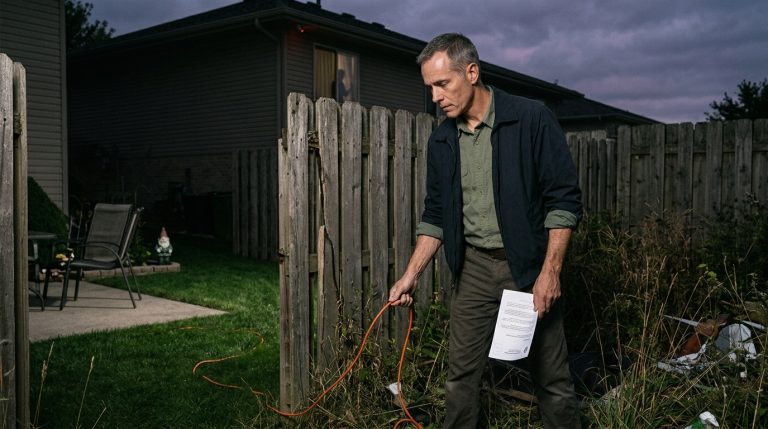
I grabbed a spare extension cord, stripped the ends, and rigged it to the exterior decorative lighting loop—a foolish, ornamental vanity that the HOA had insisted everyone install. I waited, listening to the pounding on the door grow more frantic. They weren’t just knocking anymore; they were testing the structural integrity of the frame.
I bridged the connection.
A blinding, electric arc sprayed from the exterior socket, showering the porch in a fountain of sparks. The property manager yelped, the sound of boots scrambling backward in the snow confirming he’d received a hell of a surprise.
I turned back to the furnace, my hands flying, stripping the final wire and connecting the jumper. The silence was absolute, save for the wind howling against the siding. I pressed the override button. A moment of agonizing tension—a mechanical click—and then, the deep, rhythmic thrum of the burner igniting. It was the sweetest sound I had ever heard. Heat began to bleed into the room, a ghostly, warming draft that chased away the biting, desperate cold.
I stood up, my back aching, and looked toward the door. The banging had stopped. They were regrouping. They had the numbers, they had the “authority,” but they didn’t have the one thing that mattered in a storm: the understanding that when you take everything from someone, you also take away their reason to obey.
I walked to the window and peeled back the curtain. The street was a graveyard of dark houses, but the clubhouse shone like a lighthouse in the blizzard. I watched the windows of their warm, stolen sanctuary and felt the last vestiges of my fear evaporate. I had a warm room, a ledger full of their crimes, and a burner that wouldn’t quit. They thought they were holding the leash, but they were about to find out that the dog had finally stopped biting the chain and started chewing through it. I checked my sidearm—legal, permitted, and loaded—and took a seat in the dark, waiting for them to make the next move.
CHAPTER 7: The Final Confrontation
The heat from the burner felt like a lie now. Even as the furnace hummed, a sharp, electronic chirp erupted from the wall-mounted thermostat—a device I had installed myself, independent of the neighborhood grid. I stared at it. The screen, which should have been blank, was flashing a steady, rhythmic blue. It was receiving a remote signal.
They weren’t just diverting the fuel; they were hacking my home’s local control network. The HOA president’s “emergency authority” wasn’t just a administrative threat—it was a digital kill-switch.
I didn’t think; I ripped the panel off the wall, exposing the nest of wires behind it. There, taped to the internal copper bracing, was a proprietary relay module I hadn’t installed. It was a bridge. Through this, they had been monitoring my usage, throttling my flow, and—if they chose—shutting me down entirely. I yanked the module free, the tiny leads snapping with a soft, plastic click. The thermostat went dark, but the furnace stayed on.
I grabbed my gear. There was no point in waiting for them to try the door again. They had shown their hand; the digital override was the smoking gun I needed. If they were that desperate to cut me off, they were terrified of what I had documented in that ledger.
I moved to the front door, my senses calibrated for the sharp, biting cold. I cracked the frame. The storm was absolute, a whiteout that swallowed the world, but I could see the glow of the clubhouse light reflecting off the low-hanging clouds. I stepped out, the wind slamming into me like a physical blow.
I didn’t head for the road. I tracked the path I’d cleared earlier, staying low, keeping my profile tight against the drift-lines. I wasn’t going to negotiate; I was going to force the confrontation on my own terms. I had the ledger, the relay module, and a clear, focused rage that was more effective than any tactical plan.
As I reached the clubhouse perimeter, the wind died down for a fraction of a second, leaving a pocket of eerie, unnatural silence. I heard voices.
“The system is offline,” the property manager said. His voice was clipped, bordering on panic. “He’s breached the relay. We’ve lost all telemetry to his unit.”
“Then we go in,” Clare’s voice followed, sounding as thin and brittle as dry ice. “If he has the ledger, the audit isn’t months away—it’s hours. Burn the unit if you have to. If he’s not there, he’s headed here. Lock the perimeter.”
I crept closer, the snow crunching softly beneath my boots. They were right. I was here. I reached the back entrance, the same door I’d watched them through hours ago. It was heavy, steel-reinforced, and undoubtedly locked. But I wasn’t there to pick the lock.
I pulled the relay module from my pocket. It was a proprietary bridge, designed to sync with the neighborhood’s master controller. If I could bridge it into the clubhouse’s own hub, I could dump a localized power surge directly into their server rack—the same tactic I’d used on my own house, but scaled to the entire building’s load.
I shoved the leads into the clubhouse’s exterior power distribution box. It was a massive, industrial-grade unit that hummed with the stolen current of a hundred homes. I didn’t need to be subtle. I needed a fuse-blow of catastrophic proportions.
I bypassed the grounding circuit, my hands moving with a fluid, terrifying precision born of desperation. I felt the surge build, the static electricity raising the hair on my arms, a buzzing tension that hummed in the very air around me. I shoved the jumper cable home.
The explosion of light was blinding—a brilliant, violent arc of white that turned the night into high noon. The clubhouse shuddered. The generator shrieked, a high-pitched metallic death rattle, and then the entire building groaned as the internal power lines shattered under the load.
The lights inside the clubhouse died in a single, synchronized heartbeat.
I didn’t wait to watch them panic. I pulled my hood up, drew my flashlight, and stepped toward the front door. The silence that followed the blackout was the most profound sound I had ever heard. The roar of the generator, the hum of the forced air, the rhythm of their control—all gone.
I reached the door, pushed it open, and stepped into the pitch-black lobby. The air was already cooling. The lie was over. I held the light steady, the beam cutting through the dark, and walked toward the main hall, where the sound of shifting furniture and panicked whispers marked the end of their reign.
CHAPTER 8: The Quiet Aftermath
The darkness inside the clubhouse was heavy, tasting of ozone and stale, expensive coffee. I didn’t move. I stood in the center of the lobby, my flashlight beam a singular, unwavering lance of white light that cut through the gloom. The panicked whispers had died instantly.
“Who’s there?” Clare’s voice was no longer clinical. It was frantic, stripped of its practiced, bureaucratic polish.
“The audit,” I said. My voice sounded unnervingly steady, amplified by the high ceilings of the hall.
I walked forward. The beam of my light swept across the room, illuminating them. Clare Wells stood by the central control console, her hand pressed against the dead screen. Beside her, the property manager was fumbling with a backup radio, his movements clumsy and uncoordinated. They looked small, stripped of their power, shivering in the sudden, biting cold as the clubhouse’s internal temperature plummeted.
I raised my phone, the screen still displaying the files I had extracted from the maintenance crawlspace. “The diversion logs, the unauthorized relay modules, the foreclosure schematics,” I listed them, my voice flat, matter-of-fact. “I have enough here to keep you in court until the next decade.”
Clare’s jaw worked. She took a step toward me, a flash of her old arrogance surfacing. “You don’t understand the scale of this. You’re one person against an entire governing body. You think you can break the rules and walk away?”
“I didn’t break the rules,” I said, stepping into the light. “I just stopped playing your game. The rules say we’re a community. You made us a resource.”
I moved past them to the central console. With a few keystrokes, I unlocked the override. I didn’t return control to the board; I broadcast the ledger, the photos, and the logs to every device in the neighborhood, a digital flood of truth that would be waiting for everyone the moment their power returned.
Clare lunged for the terminal, her fingers clawing at the keys, but she was too late. I slapped the manual release, and the system groaned as it reset to default, bypassing the proprietary HOA bridge.
The property manager bolted for the back exit. He didn’t get far. The door was frozen shut, the latch seized by the blizzard. He hammered against it, a hollow, desperate sound that underscored the absolute collapse of their plan. Clare watched him, her eyes finally fixed on me. The realization dawned on her—not that she had lost, but that she had never really been in control. She was just another victim of her own cold, manufactured fear.
“You’ve killed us,” she whispered.
“No,” I replied. “I just stopped the freezing.”
I turned and walked out. The blizzard was waiting, but it felt different now. The wind had dropped, and for the first time, the clouds overhead were beginning to break. I walked back to my house, the snow crunching with a satisfying, rhythmic stability.
I reached my property, unlocked the gate, and walked to the valve housing. I opened the lid and adjusted the wheel—not to close it, but to balance the flow, ensuring that every home on the street would receive the heat they were entitled to. The hum of the neighborhood’s returning life was a low, rising note of resilience.
I went inside, the house warm and silent. I walked to the wall and pulled the pins from the map. The lines, the photos, the warnings—they were irrelevant now. I sat in my chair, my muscles finally relaxing, and looked out the window.
Across the street, a porch light flickered on. Then another. The steady, warm glow of life returning to the neighborhood was the only victory I needed. I picked up the small, damaged relay module I’d pulled from the wall and set it on the table. It was just a piece of plastic and wire, a broken, empty thing. I thought about repairing the wall, about clearing the last of the snow from the drive, but those were tasks for tomorrow. For now, there was just the quiet, the warmth, and the long, slow exhale of a neighborhood that was finally, truly, awake. I closed my eyes, the cold finally a memory, and let the silence settle—not the heavy silence of an encroaching storm, but the peaceful, earned silence of the truth.