The Electric Architect: How a Quiet Neighborhood War Was Won Through a Game of Deception
CHAPTER 1: The Invisible Tax
The refrigerator hummed with an aggressive, metallic pitch that seemed to vibrate directly into my molars. I stood in the middle of the kitchen, the linoleum cold beneath my socks, reading the electric bill for the third time. The paper was crisp, the ink black and unflinching, but the total was impossible. It suggested I had been running a smelting plant out of my barn for the last thirty days.
I tapped the paper against the granite island. The silence of the house—usually a sanctuary—now felt suffocating, predatory. Outside, the property was bathed in the thin, unforgiving light of dusk. The crickets hadn’t started their symphony yet; the world was caught in that suspended breath before the night took over.
My finger traced the line item for usage. It was a jagged spike on a graph that had been flat for three years. I didn’t own a workshop. I didn’t have a server farm or a heated pool. My life was a series of predictable, low-energy habits: a pot of coffee at dawn, the occasional buzz of a power tool, the gentle flicker of reading lamps.
I stepped to the window. Across the fence, the neighbor’s property was a masterclass in aggressive order. Not a blade of grass was out of place; the patio chairs were arranged with surgical precision. It was Karen’s kingdom. She was likely inside, probably sipping her lemon water, unaware that I was currently staring at her perfectly manicured lawn with the sudden, cold clarity of a man who realized he was being played.
I checked the kitchen clock. It was 7:42 PM. I walked to the breaker box, the metal door cool to the touch. With a sharp, decisive flick, I killed the power to the barn.
I waited.
The silence that followed was heavy, expectant. I held my breath, listening. A moment later, I heard the faint, distinct click of a high-draw device cycling down somewhere beyond the fence line. It wasn’t a coincidence. My barn circuit didn’t just feed lights; it fed a specific, heavy-duty outlet near the property edge.
I didn’t feel rage yet. Rage was too messy, too loud. I felt the slow, steady rise of a predator realizing the perimeter had been breached. I grabbed my flashlight, its casing heavy and solid, and stepped out into the deepening shadows. The air smelled of dry earth and impending rain. My boots crunched on the gravel, a sound that seemed entirely too loud in the stillness. I wasn’t just checking my property; I was beginning a hunt.
And as I approached the fence line, I saw it—a bright orange extension cord, half-submerged in the weeds, snaking its way from my barn and disappearing through a gap in the slats, straight into the heart of Karen’s backyard.
The wire hummed. It was warm to the touch.
CHAPTER 2: The Perimeter Breach
The extension cord felt alive under my grip—a dull, rhythmic vibration of electricity siphoned straight from my barn into the dark, silent bowels of Karen’s property. The warmth was alarming. It wasn’t just a porch light; it was a hungry, consistent draw. I stood there, my boots sinking slightly into the soft, neglected earth of the fence line, staring at where the orange plastic disappeared through the slats.
I didn’t yank it. To pull it now would be a petty, reflexive act, and I had learned long ago that when you reveal your hand too early, you lose the ability to see the other player’s cards. I let go, the cord drooping back into the weeds with a soft, rubbery thud.
The air was cooling, thick with the scent of damp grass and the ozone tang of the line. I pulled my phone from my pocket, the screen’s light sharp and unforgiving in the darkness. I didn’t just take a photo of the connection; I knelt, framing the shot so the cord was visible against the backdrop of her perfectly manicured lawn. I zoomed in, the lens capturing the specific model of the outlet and the exact way the cord looped through the fence, a tether of suburban audacity.
Movement caught my eye—a flicker of infrared light near her back corner. I froze, my muscles tensing. A hidden camera, tucked under the eaves of her patio, its tiny red eye blinking rhythmically. She wasn’t just stealing power; she was monitoring the perimeter. I stayed low, retreating into the shadow of my own barn, my heart rate steady but elevated, a cool, tactical thrumming in my chest.
If she was watching, she had already seen me.
I didn’t rush back to the house. I walked the perimeter of the barn, keeping my back to her house, my eyes tracing the fence line. The weeds here were high—a natural barrier that had allowed her to hide the cord for weeks, maybe months. I looked for other signs, other connections, but the fence line was dark, save for the faint glow of her motion-sensor light as it shifted, triggered by something—or someone—moving near the fence.
I stopped by the corner of the barn and leaned against the siding, feeling the rough, splintered wood against my jacket. My mind began to map the reality of the situation. Karen was precise, obsessive about order and social standing. Stealing power wasn’t an act of necessity for her; it was an act of dominance. She believed she was entitled to the resources of those she deemed inferior.
My phone buzzed—a notification. I ignored it. I needed to document this properly, not just for the sake of petty revenge, but to build a case that would hold up when the time was right. I pulled out my digital recorder, switching it to voice-memo mode.
“Tuesday, 8:12 PM,” I whispered, the sound swallowed by the rustle of the wind. “Observation: Power draw confirmed. Connection traced to rear patio outlet. Surveillance presence noted at southwest corner. The drain is constant.”
I looked at the house again. The windows were dark, the curtains drawn tight. She was in there, protected by her velvet robes and her lemon water, probably convinced that no one would dare challenge her. She hadn’t accounted for the fact that I had the time, the tools, and, more importantly, the patience to watch her unravel.
I walked back toward my house, every step calculated. I kept to the shadows, avoiding the patches of moonlight that filtered through the trees. When I reached my porch, I stopped and looked at the electric meter one last time. It was still spinning, a slow, confident rotation that ticked away my money, cent by cent, watt by watt.
I stepped inside, the house feeling quieter, colder than it had ten minutes ago. I didn’t turn on the kitchen lights. I went straight to my desk in the office, the glow of my monitor lighting up the room in a dull, grey wash. I opened a spreadsheet, titled it simply: Infrastructure Audit.
I began to enter the data—dates, times, observations. I was no longer just a homeowner with a high electric bill; I was the architect of an investigation. I opened the folder on my desktop and dragged the photos from my phone into a new, sub-folder marked Evidence.
My gaze shifted to the window. Across the fence, her porch light flickered, then dimmed. She was still active. I leaned back, my chair creaking in the silence. The game had shifted. It was no longer about the money; it was about the principle, and for the first time in a long time, I felt the sharp, intoxicating clarity of a problem that had a clear, measurable solution.
I reached for my coffee mug, cold and bitter now, and took a slow, deliberate sip. The next move was mine.
CHAPTER 3: The First Official Correspondence
The blue light from the monitor hummed, a low-frequency static that seemed to vibrate in sync with the refrigerator’s distant, rhythmic throb. My eyes were grainy, fixed on the spreadsheet where I had begun to catalog the unauthorized draws. Each entry was a tiny act of defiance, a digital brick in the wall I was quietly constructing around Karen’s house.
I set the mug down, the ceramic clinking against the desk with a sharp, final sound. The silence in the office wasn’t empty; it was pressurized. My thoughts were no longer drifting; they were tethered to the orange cord still snaking through the weeds. To confront her directly now would be to play into the drama she clearly craved. She wanted a scene. She wanted an audience. I would give her a mandate.
I opened a blank document. My fingers hovered over the keyboard. I didn’t want to threaten; I wanted to institutionalize. If she lived by the book, if she worshipped the altar of HOA compliance and rigid social structures, I would become the highest authority in her world.
I spent an hour drafting the headers. I used a formal, stiff font—one that suggested government-issued weight. I adopted a tone of detached, bureaucratic coldness. Notice of Unauthorized Utility Redistribution. The words felt good on the screen, authoritative and sterile. I calculated the rates for “Infrastructure Interference,” “Unauthorized Line Extension,” and “Administrative Oversight.” I even added a disclaimer about “Regulatory Compliance” at the bottom, printed in a tiny, dense typeface.
It looked real. It looked inconvenient. And for someone like Karen, it would be the ultimate, stinging irritant.
I stood up, stretching the tightness out of my shoulders, and walked to the window. The neighbor’s house was dark, but the porch light was on, burning with a steady, defiant glow—my electricity, fueling her performance of suburban perfection. I grabbed a clean, professional-looking envelope from the drawer, slid the printed notice inside, and sealed it.
I didn’t head out the front door. I slipped out through the mudroom, the night air biting and sharp. The walk to her mailbox felt like an exercise in precision. My boots made no sound on the pavement. I reached her post—a pristine, freshly painted white structure—and slid the envelope inside, the sound of it hitting the bottom almost invisible in the chirping of the night.
As I walked back to my own porch, I didn’t look over at her house. I kept my gaze fixed on my own front door, my posture upright, purposeful. I was no longer just the victim of a power thief; I was the unseen observer, the silent architect of her coming frustration.
The next morning, the ritual began in earnest. I sat at my kitchen table, a fresh cup of coffee in hand, my position angled just enough to offer a clear, obscured view of her front yard. I didn’t have to wait long.
She stepped out, a silk robe wrapped tight around her frame, holding a glass of lemon water. She was moving with that practiced, rigid grace she always affected when she thought the neighborhood was watching. She checked her mail, her movements brisk and efficient. She pulled the envelope out, her brow furrowing slightly as she caught sight of the formal header.
I watched through the slight gap in my blinds. She didn’t open it immediately. She turned it over, examining the address, her head tilting in that sharp, avian way. Then, she pulled out the letter.
I counted the seconds.
She read it once, her expression shifting from irritation to confusion. Then, she read it again, her posture stiffening. She looked toward my house—a quick, suspicious glance—but I didn’t flinch. I kept my eyes on my mug, my expression neutral. She turned back to the letter, her thumb tracing the bottom line of the dense, official-looking disclaimer.
She retreated inside, the front door closing with a sharp, resonant thud.
I let out a breath I hadn’t realized I was holding. The seed was planted. It wasn’t a fight; it was a transformation. I wasn’t just a neighbor anymore; I was a bureaucracy. I leaned back, my chair catching the morning light, and felt a cold, sharp satisfaction. The cycle of entitlement was about to hit a very bureaucratic wall, and I was holding the sledgehammer.
I didn’t move for another twenty minutes. I simply watched the front door, waiting for the inevitable crack in her armor, the moment the doubt would finally override the ego. I saw her shadow flicker against the front window, moving with a jagged, irregular energy. She was pacing.
I finished my coffee, the last drop cold and bracing. I checked my own meter one last time before leaving for work. It was still spinning, but for the first time, it didn’t look like a robbery. It looked like a meter. And today, for the first time, I felt like the one in control of the circuit.
I packed my bag, the weight of the day ahead feeling light, manageable. I had a schedule to keep, tasks to complete, and a quiet, systematic project unfolding just across the fence line. The house felt less like a container and more like a base of operations. As I stepped out into the crisp, morning light, I didn’t look at the extension cord in the weeds. I didn’t have to. I already knew exactly how this played out, and for the first time in years, I was looking forward to the rest of the week.
CHAPTER 4: The Currency of Compliance
The morning stillness was brittle. I sat by the kitchen table, the silence in the house echoing the deliberate, calculated pause I had initiated. I wasn’t waiting for her to move; I was waiting for the internal dissonance to take hold. If the invoice had hit its mark—if it had successfully pierced the armor of her entitled indifference—she wouldn’t ignore it. She would try to quantify it, to fit it into her personal ledger of control.
I checked the clock. 9:00 AM. I stood and walked to the mudroom, glancing out the small window that faced her yard. The house looked quiet, almost aggressively so, but the porch light was off. That was the first sign. A small, almost imperceptible deviation from her usual pattern of suburban posturing. She was reacting.
I reached for my coat, my movements slow and deliberate. I had errands to run, but they were a screen. I needed to see if the payment showed up. I walked down the driveway, the gravel crunching under my boots—a sound I deliberately didn’t suppress. I wanted her to know I was moving through the world, unbothered, as if the invoice were just another piece of junk mail she had managed to process.
As I neared my mailbox, I paused. There, taped to the side—not inside—was a small, translucent Ziploc bag. Inside, three crinkled one-dollar bills. A sticky note was attached to the plastic, written in a hand so cramped it looked like it had been formed under extreme pressure. “Payment enclosed. Hope this clears things up.”
I stared at it. The absurdity of it—the sheer, bizarre formality of paying three dollars for stolen electricity—sent a jolt of cold, sharp amusement through me. She hadn’t protested. She hadn’t called the HOA. She had simply complied.
But the anomaly, the one that made the hair on the back of my neck stand up, was the timing of her porch light. I had been watching her house for the last week, and the cycle was absolute: 7:00 PM, the light flickered on. Every single night. Except tonight. The light hadn’t come on at all.
I picked up the bag, the plastic crinkling in my hand, and shoved it into my pocket. My mind began to churn. She was adjusting her consumption to avoid detection, but she wasn’t stopping. She was simply shifting her tactics. The server—or whatever was drawing that heavy, steady load—was likely still running, but she was finding ways to obfuscate the usage.
I didn’t head straight back inside. I walked toward the back of my barn, my path taking me through the thicket of weeds that separated our properties. I needed to see if the cord was still there.
I pushed through the tall, dry stalks, the friction against my jacket a constant, grounding sensation. I reached the fence slats and knelt, peering through the gap. The orange cord was still there, but it looked… different. It was pulled tighter, pinned down with heavy landscape staples I hadn’t noticed before. She was securing the line. She was doubling down.
I stayed there for a long moment, watching the way the sunlight caught the orange plastic, turning it into a vivid, burning streak against the brown, neglected earth. She was terrified of losing her grip on her environment, and she was doing everything in her power to maintain the status quo.
I turned and walked back to the house, my pace quickening. The invoice hadn’t just been an irritation; it had triggered a defensive mechanism. She was no longer just stealing power; she was actively managing the theft.
Once inside, I went straight to my office and pulled up the spreadsheet. I added a new column: Mitigation Tactics. I began to note the times, the changes in the light, the physical modifications to the line. I was observing a predator under pressure, and the patterns were becoming clearer by the hour.
My phone rang, vibrating against the desk. It was a local number, unknown. I didn’t answer. I watched it chime until it stopped, the screen darkening again. I knew who it was. The HOA secretary, likely calling to see if I had received any complaints about “utility interference.”
I didn’t answer because I didn’t want to explain. Not yet. I wanted to see how far she would take this. I wanted to see the moment she realized that every dollar she paid me, every change she made to that cord, was just another piece of evidence I was gathering for the final, irreversible moment of reckoning.
I leaned back, the leather of my chair creaking. The room felt smaller now, tighter, the air thick with the silent, unseen struggle happening just a few yards away. I looked at the three dollars on my desk. They weren’t just money. They were a confession.
I had the leverage. And now, I had the confirmation that the game had officially begun. I picked up the pen and began to outline the next set of charges, my hand steady, my mind sharp. I was the architect, and the structure of her life was starting to show the cracks.
CHAPTER 5: The Hum in the Walls
The urge to act was no longer a choice; it was a physical compulsion. I stood in my office, the evening light stretching long, jagged shadows across the floorboards. The rhythm of the electricity—that low-frequency vibration I had been tracking for weeks—had changed. It was no longer the steady, confident draw of a porch light or an extension cord. It was erratic, pulsing with a staccato intensity that mimicked the rapid, uneven beat of a human pulse.
It was a sound that got under the skin. It made the air in the room feel thin, electrically charged, and hostile.
I grabbed my flashlight and a small, nondescript notebook. The plan wasn’t just to observe anymore. I needed to see what was at the other end of that orange umbilical cord. I stepped out of the back door, the cooling night air hitting my face with a crisp, biting finality. The grass under my boots was damp with the early evening dew, and the silence of the neighborhood felt staged, as if everyone else were holding their breath, waiting for the inevitable crack in the veneer.
I moved along the fence line, the shadows of the trees masking my approach. My heart felt heavy, a dull, aching weight in my chest. I wasn’t just investigating a thief; I was dismantling a reality.
When I reached the spot where the orange cord snaked through the slats, I knelt. The hum was louder here—vibrating through the wood of the fence, a tangible, physical presence. I pressed my ear against the fence. Whir. Pulse. Whir-whir. Pulse.
It wasn’t a standard appliance. It was too fast, too complex.
I looked at the padlock on my barn gate, then back toward the dark, imposing silhouette of Karen’s garage. The weeds between our properties were thick, a tangle of neglect that served as the perfect cover. I didn’t think; I pushed through, the stalks whipping against my jacket, the thorns snagging the fabric. I reached the side of her garage, the structure looming over me like a tombstone.
There was a small, high window, obscured by a layer of grime. I pulled myself up, gripping the edge of the brickwork, the grit digging into my palms. I clicked the flashlight on, just for a fraction of a second, shielding the beam with my fingers.
The interior was illuminated in a flash of sterile, blinding white light.
It wasn’t a workshop. It wasn’t a storage space.
Floor-to-ceiling racks, glowing with a soft, pulsing blue light, were stacked against the walls. The air inside the garage was thick with the scent of hot plastic and ozone. Cables, hundreds of them, were braided together like a giant, synthetic root system, running from the main power feed straight into the center of the structure. It was a server farm—massive, powerful, and utterly out of place in a suburban garage.
I dropped back to the ground, my lungs burning. The reality of it hit me like a physical blow. She wasn’t just stealing power for her own comfort; she was running an operation. Something that required immense, constant, and untraceable energy.
I stood there in the dark, the sound of the servers reaching a fever pitch—a mechanical, screaming void of data processing. My hands were trembling, not from fear, but from the sudden, terrifying clarity of the stakes. This wasn’t about patio chairs or HOA compliance anymore. This was about something that had the potential to pull the entire neighborhood down with it.
I retreated, moving through the weeds with a reckless, frantic pace. I didn’t care about the noise, didn’t care if she heard me. The secret felt like a burning coal in my stomach. I reached my porch, gasping for breath, the silence of my own house suddenly feeling like a fragile, pathetic illusion.
I went to my desk and opened the folder, the evidence I had collected feeling hopelessly inadequate. I had been documenting a petty thief, and I had stumbled upon a parasite.
I looked at the spreadsheet, the columns and rows blurring. I realized then that my “invoice” strategy—the bureaucratic game I had been playing—was completely obsolete. I was playing by the rules of a world that didn’t exist, while she was operating in a reality that was entirely, brutally different.
The hum in my own house seemed to pick up, matching the frequency of the machines next door. I felt a sudden, sharp, and overwhelming urge to cut the power to the entire block, to stop the cycle, to force the truth into the light. But I stopped, my hand hovering over the main breaker. If I did that, if I exposed it now, I would lose the only leverage I had.
I sat back, the darkness of the office pressing in on me. I had to be smarter. I had to be faster. And for the first time, I realized that my own safety was no longer guaranteed.
The house wasn’t a sanctuary. It was a front-row seat to an unraveling, and the next act was going to be the most dangerous one yet.
CHAPTER 6: The Unmasking at the Gymnasium
The gymnasium smelled of floor wax and stale, recycled ambition. It was a space designed for middle-school basketball games, not for the systematic dismantling of a neighborhood tyrant, but here I was, standing in the back corner of a room filled with folding chairs and a sea of retirees clutching printed agendas. My coat felt heavy, the dampness of the night still clinging to the fabric. In my bag, the thick manila folder held the physical weight of my victory—or my folly.
I spotted Karen. She was in the front row, wrapped in a designer scarf that cost more than my first car, posture rigid, sipping from a glass bottle of mineral water. She looked like she was waiting for a curtain to rise. Her presence radiated a brittle, defiant heat.
The HOA president, a man named Henderson who treated his role with the gravity of a high court justice, tapped the microphone. “We will now open the floor for new business.”
My pulse hit a steady, thumping rhythm. Now.
I moved toward the aisle, my boots clicking sharply against the linoleum. Every eye in the room turned. Henderson blinked, adjusting his glasses. Karen didn’t turn around, but her shoulders squared. She recognized the cadence of my stride.
“Floor’s yours,” Henderson said, his voice echoing in the rafters.
I reached the podium. I didn’t reach for the microphone. I simply placed the manila folder on the table. It made a solid, final thwack that silenced the ambient murmur of the room. I looked out at them—the neighbors who lived in fear of patio chair infractions and mailbox aesthetics—and then I looked at Karen.
“I’d like to discuss the neighborhood’s recent electricity surge,” I began, my voice steady, stripped of any inflection. “Specifically, the hidden infrastructure that is currently draining our collective property values and potentially overloading the local grid.”
Karen spun around then, her face a pale mask of shock that quickly curdled into a tight, sneering smile. “Oh, please. Does he have a complaint about my outdoor lighting again? It’s truly pathetic.”
The room chuckled, a nervous, ripple-like sound. I didn’t join them. I opened the folder and pulled out the photograph—not the blurry one of the extension cord, but the high-resolution shot I had taken earlier that evening of the garage, the racks visible through the window, the blue light haloing the stacks. I held it up.
“This is what is currently running in the garage at 42 Maple Street,” I said.
The room went deathly quiet. Henderson leaned forward, squinting at the photo.
“What is that?” someone whispered from the back.
“That,” I said, my voice cutting through the silence like a blade, “is a high-performance server farm. It is illegal, it is unmetered, and it is currently siphoning thousands of dollars of electricity from the rest of us.”
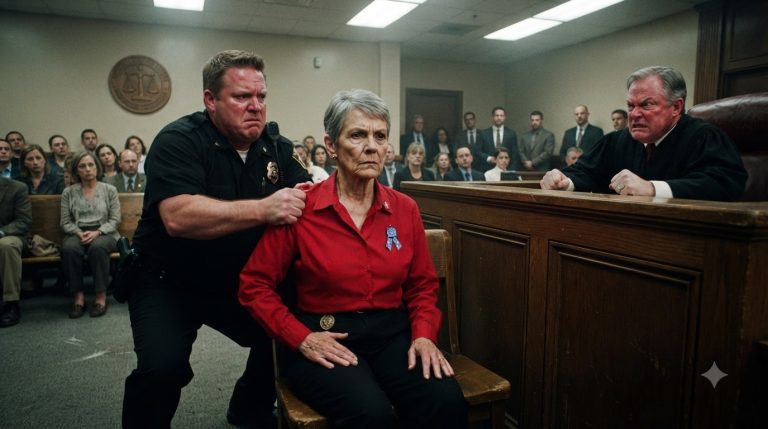
Karen stood up, her scarf trembling. “That’s a lie. That’s—that’s a private storage unit! You trespassed on my property to take that. He’s stalking me! Does anyone see this? He’s been harassing me with fake invoices for weeks!”
She was pivoting, turning the narrative, playing the victim with the same practiced precision she had used to terrorize the street. Her eyes were wild, darting around the room, searching for an ally. But the neighbors weren’t looking at her. They were looking at the folder. They were looking at the photos of the extension cord, the documentation of the usage, the receipts I had meticulously gathered.
“I have the logs,” I said, stepping closer to her, invading her space, forcing her to look at the evidence. “I have the time-stamped records of the draw. I have the footage of the cord connecting your home to my power source. You aren’t just an HOA leader, Karen. You’re a parasite.”
“You’re insane,” she hissed, her voice dropping to a tremor. She lunged for the folder, but Henderson moved, stepping between us, his face hardening as he looked at the photograph of the server racks.
“Sit down, Karen,” Henderson commanded, his voice devoid of the usual committee pleasantries.
She froze. The room was a pressure cooker, the air thick with the realization that the hierarchy they had built their lives around was, in this moment, effectively dead. The look on her face wasn’t anger anymore; it was the hollow, terrifying realization that she had been outplayed. She hadn’t accounted for the fact that someone would actually look. She had relied on the silence, the fear of confrontation, and the assumption that no one would dare pull the mask off.
I held her gaze. I didn’t feel triumph. I felt an exhausting, cold necessity.
“The vote,” I said, turning back to the board members. “We can settle this now, or we can let the utility company’s investigative team settle it for us in about three hours when they get the tip I already sent.”
The silence returned, heavier than before. The board members shifted, murmuring to one another. I didn’t move. I didn’t blink. I simply watched the light leave her eyes, replaced by a desperate, trapped shadow. The gym felt vast, cold, and entirely empty of anything but the truth.
CHAPTER 7: The Paperwork of Ruin
The silence in the gymnasium held its shape for a long, agonizing moment. It was a dense, physical weight, the kind that forces you to acknowledge that what has been said cannot be unsaid. Karen looked smaller now, the designer scarf suddenly appearing like a frayed rope around her neck. She stood frozen, her eyes darting between the photos and the faces of her peers—faces that were no longer deferential or cowed, but calculating and cold.
“Karen,” Henderson began, his voice surprisingly steady, “is that your garage?”
She opened her mouth to speak, but the words faltered. Her usual sharpness, the weaponized entitlement that had kept the street under her thumb for years, evaporated. She looked at me, and for a fleeting, jagged second, I saw a flicker of genuine, human terror. Not the anger of a woman scorned, but the absolute dread of someone who had built an entire architecture of status on a foundation of sand.
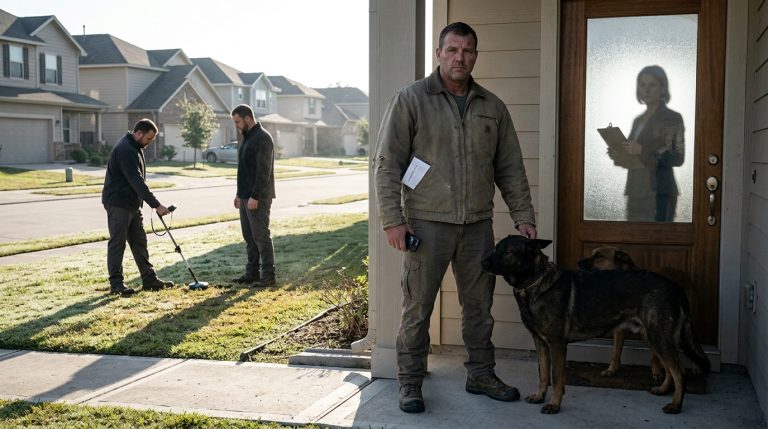
Before she could form a defense, the heavy double doors of the gymnasium groaned and swung open. A man in a high-visibility yellow vest, carrying a thick clipboard and a heavy-duty portable scanner, strode onto the hardwood. He didn’t look like he belonged in a community meeting. He looked like an invasive species.
“Utility inspection,” he announced, his voice booming with the unblinking authority of a municipal contractor. “We’ve got a report of a massive, unmetered draw on this block. We’re here to trace the illegal tap.”
The tension in the room snapped. Karen’s breath hitched, a sharp, ragged sound. She didn’t look at the inspector; she looked at the door. Her instinct was flight. She took a half-step back, her heels clicking a staccato rhythm on the floor, but the crowd of retirees had unconsciously closed the gap. She was contained.
“It’s not my fault,” she whispered, the statement almost lost in the sudden, frantic activity as the inspector began moving toward the side exit, his scanner already chirping—a high, piercing sound that cut through the room like an alarm. “The power… the system needed it. I was doing something important.”
“Something important,” I repeated, stepping closer, keeping my voice low so only she could hear. “You were stealing, Karen. And you didn’t even have the foresight to hide the drain.”
She looked up at me, her eyes brimming with a sudden, glassy sheen of unshed tears. “You don’t understand. If the data stops… if the sync breaks… they’ll know.”
She stopped herself, her jaw clamping shut, but the damage was done. They. The ambiguity of the word hung in the air, a final, chilling hint of a deeper truth.
The inspector reached the exit, but he paused, turning to the board. “I need the homeowner from 42 Maple Street to accompany me. Now.”
Karen didn’t move. Henderson sighed, a long, weary sound, and gestured toward the door. “Go, Karen. It’s over.”
She didn’t argue. She didn’t offer a final scathing remark or a threat. She just turned, her movements wooden, and walked toward the inspector. Her shadow, elongated by the gym’s overhead lights, stretched across the floor, crossing the path of the folding chairs as if she were a ghost passing through a graveyard of her own making.
I stood at the podium and watched her go. The inspector held the door open, the cool night air rushing in to replace the stifling heat of the room. She stepped out, not looking back. The door swung shut with a heavy, metallic finality.
The gym erupted into a chaotic, overlapping mess of voices. The HOA board was already scribbling on agendas, the veneer of civility shredded. Someone was talking about legal repercussions; another was calling the bank. They weren’t looking at me anymore. They were looking at their own agendas, their own finances, their own stake in the disaster she had left behind.
I walked out of the gym, leaving the folding chairs and the noise behind. Outside, the night was clear, the stars bright and uncaring. I could hear the inspector’s vehicle idling near the fence line, its headlights cutting through the weeds where the orange cord had been.
I walked to my own house, my steps feeling hollow. The “invoice” had been the trigger, but the collapse was inevitable. She was a woman who had tried to build a digital empire in a world of physical consequences, and the cost was finally coming due.
I sat on my porch, the air cold enough to see my breath, and listened. I could hear the inspectors, the muffled, urgent voices, the clatter of tools. They were tracing the line, the orange snake being pulled from the earth, the server farm being systematically dismantled, the secret being laid bare to the cold, hard logic of municipal regulation.
The hum was gone. The rhythmic, pulsing heartbeat of the machines had ceased, replaced by the natural, indifferent sounds of the neighborhood. A bird chirped in the distance; the wind rustled the leaves.
It was over. And in the sudden, deep silence that followed, I felt only a profound, hollow exhaustion. I had won, but the house, the neighborhood, and the street felt profoundly changed, stripped of the illusion that we were all living in the same, safe reality.
I looked at my own door, the keys heavy in my pocket. I had the truth, but the cost—the way the neighborhood was now frantically distancing itself, the way Karen had looked at the end—it left a stain. I stood up and walked toward the door, my final move completed. All that was left now was to see what remained in the wreckage.
CHAPTER 8: The Architecture of Silence
The final days were not marked by screaming or dramatic confrontations, but by the quiet, antiseptic efficiency of legal machinery. I stood on my porch, a lukewarm cup of coffee in my hand, watching the moving truck pull away from 42 Maple Street. It was early, the kind of gray, thin-aired morning that made everything feel fragile.
The truck rumbled down the street, its engine laboring, and Karen stood on the curb for a final moment. She was wearing that same velvet robe, looking thin and unmoored in the morning light. She didn’t look back at the house, or at the street, or at me. She just turned, climbed into the passenger seat, and was gone.
The utility company’s final assessment had arrived in the mail that morning—a thick, sobering document. The $60,000 in penalties hadn’t just been for the electricity. When they had dismantled the server racks, they had found something else: the reason for the massive, constant draw.
The “important data” she had been syncing was linked to a series of sophisticated, unauthorized financial mining bots—programs designed to exploit tiny, fractional discrepancies in automated high-frequency trading platforms. It was a digital shell game, one that required massive, consistent power to maintain its edge. And the invoices I had sent? My “HOA compliance” bluff had triggered a chain of automated, flag-raising audits.
The tax authorities, alerted by the suspicious, repetitive “infrastructure redistribution fees” I had invented, had cross-referenced the billing anomalies with her personal digital footprint. It wasn’t just the power company that had destroyed her. It was the fact that my petty, bureaucratic annoyance had forced her to leave a trail so bright that the regulators couldn’t miss it. She had been ruined by the very system of rules she had tried to subvert.
I finished my coffee. The house felt steady beneath my feet, the hum of the refrigerator no longer a trigger, but a simple, functional appliance. I walked to the edge of the fence line, where the weeds were already beginning to reclaim the space where the orange cord had once pulsed with stolen potential. I reached down and picked up a heavy landscape staple that the inspectors had missed. It was rusted, sharp, and felt like a tiny, physical artifact of the last few weeks.
I dropped it into my pocket.
The neighborhood was different. It wasn’t just quieter; it was lighter. As I turned back, I saw the patio chairs—the ones with the bright, cheerful patterns she had once tried to ban. They were sitting in the middle of a neighbor’s lawn, catching the sun. Someone had left a book on one, a forgotten, comfortable sight.
I sat on my own porch swing, the wood creaking in a familiar, comforting rhythm. My internal monologue, usually tuned to the frequency of risk and tactical calculation, had finally gone still. I had set out to reclaim a boundary, but I had ended up dismantling an entire, toxic architecture of control.
The cost had been high—the weeks of paranoia, the obsession, the way I had watched my own street through the lens of a detective—but as the sun fully crested the horizon, I felt a deep, resonant sense of peace. I had played the game she forced upon me, but I had played it by the rules of reality, not the rules of her ego.
I reached for my phone, then stopped. I didn’t need to check the logs. I didn’t need to audit the usage. I had nothing to protect, no one to outmaneuver, and no more invoices to draft. I was just a man in his home, drinking coffee on a Tuesday morning.
The realization settled over me, quiet and profound: justice didn’t require a podium or a public unmasking. Sometimes, it was just the absence of a parasite. I stood up and walked inside, the sound of the front door latching shut behind me, solid and secure. The air inside the house was fresh, clean, and entirely, beautifully, my own.