The Concrete Boundary: A Cold Calculation of Authority and the Methodical Destruction of a Tyrant
CHAPTER 1: THE FOUNDATION OF DEFIANCE
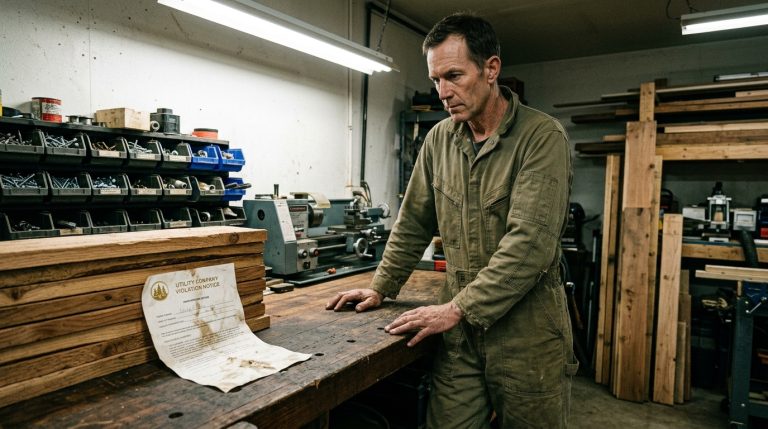
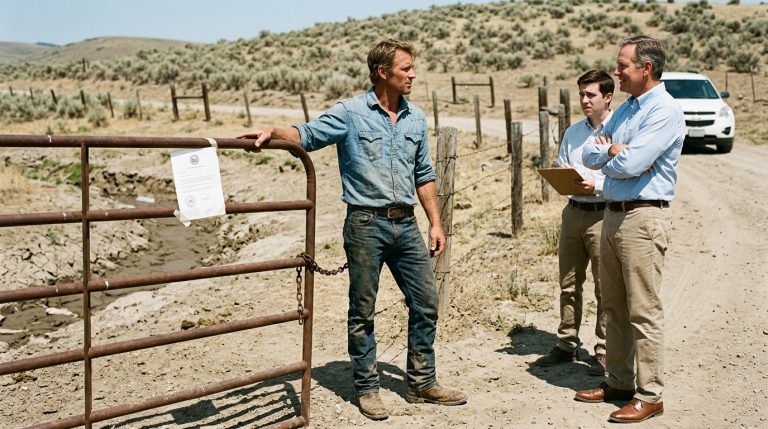
The silence of my land was usually a comfort, a reward for twenty years spent navigating the chaos of war-torn infrastructure. Now, it felt heavy, pressurized. The 10×10-foot square of concrete was not merely an eyesore; it was a physical manifestation of a psychological disease. Karen Johnson didn’t just want to manage an association; she wanted to curate a reality, and my well—my symbol of independence—was the flaw in her design.
I stepped closer, the gravel crunching under my work boots. My pulse remained steady, my breathing rhythmic. There was no hot, irrational flare of rage. That belonged to amateurs, to people who operated on impulse rather than outcome. When I had designed bridges in Iraq, I hadn’t looked at the structural load and cursed the physics; I had calculated the tension and found the bypass.
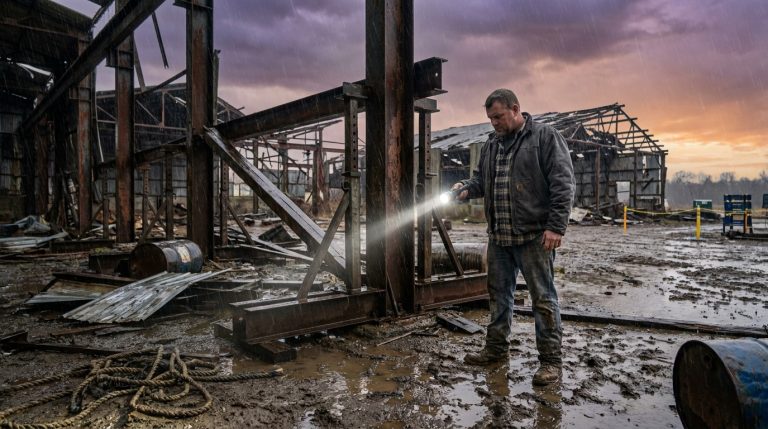
The concrete was still dark, damp to the touch, and the crude wooden framing was scattered around the site like discarded armor. I knelt, ignoring the damp grass soaking into my denim. My gaze fixed on the footprint near the corner. It was light, almost superficial, but it was there—a signature. She hadn’t hired a contractor and walked away; she had stood here, likely savoring the moment the steel cap vanished under the grey sludge. She had wanted to see the look on my face when I returned, which meant she was still waiting for the reaction.
I reached into my pocket, but I didn’t pull out a phone. I pulled out my digital camera. I didn’t need to report this to a local beat cop who would see a civil property dispute. I needed to document a crime scene. I circled the slab, the lens capturing the jagged edges of the pour, the tire tracks still visible in the soft loam near the fence line, and the stark contrast between the industrial gray and the organic green of my life.
The coaxial cable for my security camera hung from the fence post, a clean, intentional cut exposed by the morning light. She had planned this with the meticulousness of a petty general. She had cut the “eyes” of the property to ensure her secret act remained unobserved.
I stood up, the movement slow and deliberate. I knew how systems functioned, and I knew how they broke. Every structure had a load-bearing point. For the Whispering Pines HOA, that point was Karen herself. She was the nexus of the rules, the fines, and the irrationality. By trying to bury my water source, she hadn’t just committed a felony; she had introduced a volatility into her own hierarchy that I was now perfectly positioned to exploit.
I walked back to my truck, the cold calm in my mind clarifying into a singular, sharp trajectory. She had expected a scream. She had expected a tantrum. Instead, she was going to get a systematic, unyielding, and entirely factual destruction of the world she had built. I turned the key, the engine coming to life with a low growl that mirrored the resolve in my chest. The war for my land hadn’t ended; it had just officially shifted from a dispute over grass height to the total dismantling of an empire.
CHAPTER 2: THE PAPER TRAIL
The drive from my property into town was an exercise in systematic compartmentalization. I kept the truck at exactly the speed limit, the internal monologue a steady, ticking clock. Karen Johnson thought in terms of lawns, flowerbeds, and the intoxicating, hollow power of a committee vote. She did not think in terms of municipal codes, utility easements, or the crushing weight of bureaucratic liability. That was her blind spot. And I was going to turn that blind spot into her undoing.
I pulled into the gravel lot of a nondescript industrial park, the home of A1 Concrete. The building was a relic of the eighties—faded metal siding, rusted trim, and a yard filled with heavy, dust-caked machinery. It felt right. This was a place of work, not a place of manicured aesthetics, and Dave, the owner, likely operated with the same pragmatic, bottom-line logic that I had spent my entire career perfecting.
Inside, the office smelled of burnt coffee and diesel fumes. A receptionist sat behind a desk buried in carbon-copy forms and stained mugs. I didn’t announce myself as the angry victim. I kept my face neutral, my posture relaxed.
“I’m Mr. Peterson,” I lied, keeping my voice conversational, slightly weary, as if I were just another homeowner tired of the neighborhood politics. “I’m looking to get a slab poured for a generator in Whispering Pines. My neighbor, Karen Johnson, mentioned she used you guys for a job recently. Little ten-by-ten pad, I believe.”
The woman peered over her glasses, squinting. “Oh, Karen. Yes, she’s a regular. Always having something done.” She tapped a few keys on a computer that looked older than my truck. “Let me check the scheduling. We’ve been slammed.”
“I just wanted to see if you could match the price she got,” I added, leaning casually against the counter. “I’m hoping to avoid the hassle of shopping around.”
She wasn’t interested in the price, just the proof of a repeat customer. She scrolled through a list of addresses. “Hmm. I don’t see a recent ten-by-ten for the Johnson property, but there was a job for the HOA under her name last Saturday. On the adjacent farmland.”
“That’s the one,” I said, suppressing the surge of adrenaline that threatened to tighten my chest. “It looked like a tricky pour. I’d love to talk to Dave about how he handled the soil prep. Is he in?”
She buzzed a back office, and a moment later, a man stepped out. Dave looked like he spent more time in the mixer than at a desk. His hands were etched with concrete dust, his eyes hard and wary.
“Yeah?” he grunted, looking at me with the suspicion reserved for people who came in asking questions instead of cutting checks.
I stopped playing the role. The air in the office shifted as I locked eyes with him, abandoning the “Mr. Peterson” persona entirely. I leaned in, my voice dropping to that low, steady register I used to use when explaining a bridge failure to a commanding officer.
“Dave,” I said, my voice level. “My name is Mark Davies. I own the property where your crew poured that slab on Saturday. The one Karen Johnson authorized.”
His posture stiffened, his defensive walls going up instantly. “Look, mister, I don’t know anything about a dispute. We got a signed work order from the HOA president. That’s enough for us.”
“It’s not enough for a court, Dave,” I replied, my tone devoid of threat but heavy with consequence. “I have photos of the work, the location, and the property markers. I also have photos of my security camera cable—which was cut right before your guys arrived. That’s not a standard job. That’s a felony, and as the company that performed the work, your firm is currently a co-defendant in a lawsuit that is going to be very expensive.”
I paused, letting the silence do the work. Dave shifted, his gaze flickering toward his office door. He was calculating the cost of a legal battle against the cost of cutting his losses.
“I’m offering you a clean exit,” I continued, sliding a blank business card across the counter. “I don’t want to sue a contractor who was just following a bad order. But I need the paper trail. I need the work order, the specific instructions Karen gave, and the name of the crew leader who decided that cutting a security cable was part of the job description. If you provide that, I’ll sign an affidavit stating A1 Concrete was an unwitting party to her actions. If not, my lawyer will be filing the papers by noon tomorrow.”
Dave stared at me for a long time. He wasn’t looking at a disgruntled neighbor anymore; he was looking at a man who had already won the war and was just waiting for the paperwork to be filed. He exhaled a ragged breath, the fight draining out of his shoulders.
“She told my guys it was ‘unauthorized equipment’ on community land,” he muttered, his voice quiet. “Said the HOA had eminent domain. My foreman thought it was legit. When she told them to cut the wire, he thought it was a live utility line. He was just doing what he was told.”
“Then give me the proof,” I said, my voice calm, almost sympathetic. “Make it right, Dave. Don’t go down with her.”
He nodded once, sharp and quick, and turned back toward his office. “Wait here.”
As I stood in the stale air of the office, I felt the familiar, cold precision of the field. I had identified the first weakness—the contractor’s desire for self-preservation. When Dave returned with the paperwork, I knew I had the anchor for my trap. It was all there: the HOA’s letterhead, the directive to ‘remove the obstruction at all costs,’ and the authorization signature that would serve as the final nail in Karen’s coffin. But as I flipped through the pages, I noticed a discrepancy. There was a log entry for a ‘survey visit’ scheduled the day before the pour, but the name in the visitor log was blank, just a set of initials—K.J.—and a note in red ink: Verified.
The missing name wasn’t just a clerical error; it was a ghost. Who had verified the property line, and why wasn’t their professional registration listed? The decoy was already falling apart. I walked out to my truck, the paperwork tucked safely in my folder, and felt the sharp, exhilarating clarity of the path ahead. The system was moving, and I was the one pulling the levers.
CHAPTER 3: THE STRATEGIC LEVERAGE
The silence of the truck cab was not the absence of sound, but a vacuum of anticipation. My knuckles were white against the steering wheel, the residual feeling of the concrete’s rough, unfinished edge still prickling my fingertips—a tactile reminder that I was no longer an engineer of bridges, but an architect of a very specific, very precise ruin. I tried the ignition again. A dry, metallic click echoed through the dash. The starter, an aging unit I’d been meaning to replace for months, had chosen this exact, critical juncture to surrender.
I didn’t curse. I didn’t beat the wheel. I sat back, the air conditioning fading as the engine died, and I re-ran the logic. The truck’s failure was an annoyance, but in the grander architecture of my plan, it was merely an obstacle to be bypassed. I had a phone, a destination, and a schedule that I could no longer dictate by gear-shift.
I stepped out of the truck, the heat of the industrial park rising to meet me. My first move was simple: call the tow, then clear the air. I walked back toward the office, but paused at the edge of the lot, noticing a payphone bolted to the exterior wall—a relic of a different era. I didn’t reach for my cell. My cell had a GPS footprint, and I didn’t need the metadata linked to my location today. I used the payphone to contact my former colleague from the J.A.G. office, a man who understood the utility of a well-placed, professional inquiry.
“It’s Mark,” I said when he answered. “I’m moving to Phase Two. I have the signed work order from the contractor. It names the HOA president as the authorizing party. I need you to draft a formal notification, not just to the board, but to their specific insurance underwriters. We need to frame this as an active liability issue, not a dispute.”
“That’s a heavy play, Mark,” he responded, his voice low. “If you link this to their fire safety underwriters, you’re putting them in a corner they can’t talk their way out of.”
“That’s the intent,” I said. “Send the certified copies to every board member at their home addresses. Force them to acknowledge the risk before they can pretend they don’t know what’s happening.”
I hung up, feeling the gears of the legal apparatus start to grind into motion. My truck was being loaded onto a flatbed, but I had already secured a rental. By the time the sun began to dip, I was back on the road, the legal documents sealed in envelopes, and my resolve crystallized. I wasn’t just reacting to Karen anymore; I was building the walls around her.
My next stop was the county records office, just as the sun turned the sky a bruised, metallic purple. I needed the final piece of the puzzle: the fire hydrant easement. I moved through the stacks with the muscle memory of a man who spent his life reviewing blueprints. The files were dusty, neglected, and held the forgotten history of the Magnolia Circle development.
I found the easement in a file marked Phase One Utilities. It was a thin, yellowed sheet of carbon paper, but it held the power of a thousand-pound bomb. It required that the secondary pump—my well—be maintained in active, operational status to ensure adequate pressure for fire suppression on the circle. It was a technical requirement, a box checked thirty years ago to pass a safety inspection that nobody remembered.
I sat in the dim light of the records office, reading the legalese. It was explicit. The obstruction of this source was a violation of state fire code. My mind raced, calculating the timing. If I presented this to the Fire Marshal, he wouldn’t just be interested in property rights; he would be legally compelled to investigate the safety failure. It was the “Checkmate” move, but it had to be played at the absolute peak of tension.
As I left the building, the air was cooling, the sharp, crisp edges of the night setting in. I saw a black sedan idling near my rental, the windows tinted, the driver stationary. I didn’t look at it directly. I walked to my car, maintained a steady pace, and watched the reflection in the side mirror. The sedan didn’t move. She was watching me, keeping tabs, believing that her surveillance was an act of dominance.
She had no idea that she was playing against a man who spent his career building for permanence, while she was building on a foundation of sand. She was monitoring a man who was already two steps ahead of her next thought. I pulled out of the lot, the path to the community meeting tonight already mapped in my mind. The decoy was holding—she still believed this was about a “hazard” in my yard—but the truth, the absolute, crushing reality of her liability, was waiting in the silence of my briefcase.
I drove toward the clubhouse, the streetlights flickering overhead. I was ready. The logic was sound, the evidence was gathered, and the stage was set for a performance that would end with her authority stripped away, one factual, devastating slide at a time. I felt no triumph yet—only the cold, necessary focus of a professional finishing a job. The concrete was just a mistake. The fallout would be the consequence.
CHAPTER 4: THE CLUBHOUSE SIEGE
The air inside the Whispering Pines clubhouse was a thick, stagnant mixture of floor wax, stale coffee, and the cloying perfume Karen Johnson wore like a suit of armor. I stood at the back of the room, my bag heavy with the projector and the laptop, and listened to her voice. It was a practiced, melodious drone, the kind designed to soothe an audience into accepting a reality they hadn’t chosen. She was painting me as a phantom, an “outsider” whose very existence was a threat to the neighborhood’s fragile perfection.
“He refuses to comply,” she said, her hands tracing the air with a practiced grace. “He hides behind lawyers because he knows his equipment is a hazard to your children. We acted to secure our future.”
The murmurs in the room were a predictable current. She had them swaying. She was using the “Us vs. Them” narrative—the oldest, most effective tool in the kit of a petty tyrant.
I didn’t wait for her to finish. I began to move. My pace was deliberate, measured—not the quick stride of a man looking for a fight, but the steady, inevitable movement of a gear engaging its counterpart. As I navigated the rows of folding chairs, I watched the faces of the residents. They weren’t looking at me with hatred; they were looking at me with the weary suspicion of people who had been told exactly what to fear.
Karen stopped mid-sentence as I reached the side wall near the front. Her smile didn’t falter, but her eyes narrowed, searching for a trace of the “extortionist” she had described. She didn’t find him. She found someone who was not looking at her at all, but at the blank, white wall.
I placed the projector on the small, scarred side table. The silence in the room had shifted, sharpening into a razor-thin tension.
“What is this?” she asked, her voice dipping into that patronizing, saccharine tone. “Mr. Davies, this is a private board session, and you are not—”
“I’m an interested party,” I said, my voice quiet, cutting through the room without raising the volume. I clicked the remote. The first slide hit the wall: the property survey, the red line of the boundary blazing in the dark. “And since my name has been invoked for the last ten minutes, I thought it only fair to provide some visual aids to clarify the geography.”
The projector’s light was cold and unforgiving. It caught the dust motes in the air, creating a shimmering, spectral bridge between me and the room. I didn’t look at Karen. I looked at the wall, the data, the facts. As I clicked through the photos of the concrete, the well, and the signed work order from A1 Concrete, the room’s atmosphere underwent a brutal, mechanical transformation.
The murmurs died. People leaned forward. The slide of the work order, with Karen’s signature clearly visible at the bottom, was the turning point. It wasn’t just a document; it was a physical blow to the narrative she had constructed. I watched the realization move across the room—the way a man in the third row suddenly straightened, the way a woman near the front clutched her handbag, her knuckles whitening.
Karen was still at the podium, but the gravity of the room had shifted away from her. She was trying to interject, her voice rising, but it lacked the resonance of the truth I was projecting.
“This is slander!” she shouted, but the word landed flat, a hollow sound in a room filled with documented evidence.
I felt the projector’s heat radiating against my side. It was a tangible thing—the weight of the information, the cold, hard logic of the timeline. Every time I pressed the button, I was stripping away another layer of her power, leaving her exposed not as a protector, but as an architect of her own ruin. I saw her hand grip the edge of the podium so hard her nails went white. She was realizing the mistake wasn’t the concrete; the mistake was assuming I would play by the rules she had invented.
The final slide, the $12,000 estimate for the repair and re-certification, was the denouement. I turned the projector off, plunging the room into the dim, fluorescent flicker of the clubhouse lights. The silence that followed was absolute.
I looked at the board members—Arthur and Dr. Albright. They were sitting at the front, their faces gray, their eyes fixed on the floor. They knew now. They knew they had been used as tools, and they knew the bill was coming due. Karen stood alone at the front, the red of her power blazer suddenly looking like a target. I didn’t say a word. I simply began to pack my gear, the rhythmic clicking of the latches on my bag the only sound in the room. The transition to the next phase had begun, and the silence was no longer heavy with her narrative—it was heavy with the impending weight of the truth.
CHAPTER 5: THE COLLAPSE
The silence was a living thing now, thick and unyielding. I didn’t rush. I didn’t offer a parting jab. I simply hoisted the bag onto my shoulder, the weight a grounding reality against the rising heat in the room. As I turned toward the exit, the clubhouse felt like a pressure cooker that had just been punctured. The collective shock of the homeowners was transitioning into something much more dangerous: indignation.
Karen Johnson remained at the podium, a solitary figure in a sea of shifting allegiances. Her red power blazer, once a symbol of dominance, now looked like a costume from a production that had been abruptly canceled. She was trying to speak, her lips moving, but the sound was thin, swallowed by the sudden, intense focus of her neighbors.
I walked toward the double doors, the soles of my boots making little sound on the industrial carpet. I didn’t turn back, but I heard the shift. It started with a whisper—the soft, rapid-fire chatter of people realizing they had been played. Then, it grew.
“Karen, is that true?” someone called out from the middle rows.
“Did you use our funds for that?” another voice added, sharper, more insistent.
I pushed the doors open and stepped out into the night air. The contrast was jarring. The street was dark, the only light coming from the amber glow of the neighborhood lamps. My truck was gone, the rental car sat alone in the asphalt expanse, but I didn’t move toward it. I stood there, taking in the oxygen, my mind looping back to the desert—to the silence after a controlled demolition, the way the air would shimmer before the dust settled. The heat back then had been a physical weight, but here, the cold night air felt just as heavy. It was the weight of consequence.
I heard the clubhouse doors bang open. A small group of residents spilled out, their voices overlapping in a chaotic, angry rhythm. They weren’t looking for me; they were looking for answers, and they were looking for the person who had sold them a lie. I saw Arthur, the accountant, walking with his head down, clutching his phone like a lifeline, his face drained of all color.
I turned the ignition of my rental, the engine’s purr a sharp, clean sound in the stillness. I had done my part. The mechanical pieces were in motion. The Fire Marshal’s arrival in the morning was the next gear, and it would turn with the momentum I had already provided. I didn’t need to stay for the aftermath.
I drove slowly through the subdivision. It was a manicured, beige paradise, a monument to the very control Karen had obsessed over. But tonight, the order felt different. It felt brittle. I could see the lights flicking on in windows, the shadows moving as people called each other, verifying the information, sharing the documents, dismantling the myth of Karen’s infallibility.
My phone vibrated in the cup holder—a text from my lawyer. The insurance underwriters have been notified. They aren’t happy.
I smiled, a thin, tight expression. The financial machinery of the HOA was now officially engaged. By morning, the board would be scrambling to distance themselves from the liability, and Karen would be finding that her “empire” was nothing more than a series of contracts and statutes that were now working against her.
I pulled into my own driveway, the sight of my pasture—dark, rolling, and entirely mine—a sudden relief. I stood by the fence for a long time, listening to the wind in the oak trees. The concrete slab, still sitting there like a scar on the land, no longer bothered me. It was a relic of a dying regime. I reached out and touched the steel post of my gate, the metal cold and firm under my hand. It was an anchor. I was home, and the system I had engineered to dismantle Karen was now operating on its own momentum. She was the one who had brought the fire; she was just beginning to realize that it was now burning at her own front door.
CHAPTER 6: THE RESTORATION
The rumble of the heavy equipment was not the chaotic noise of destruction, but the steady, percussive heartbeat of order being restored. The demolition crew worked with a surgical detachment that mirrored my own. They didn’t approach the concrete slab with anger; they approached it as a mass of matter to be reduced to its constituent parts. I stood on my porch, a lukewarm cup of coffee in my hand, watching the jackhammer strike the grey, hardened tombstone of the well. Each impact sent a shockwave through the ground, a rhythmic release of tension that had been building for months.
Karen Johnson was not there to witness it. She was, according to the latest neighborhood scuttlebutt, already packing the contents of her life into cardboard boxes, a frantic exodus from a neighborhood that now viewed her name as an epithet. She hadn’t surrendered; she had simply ceased to be a factor in the system. The leverage I had applied—the Fire Marshal’s threat, the insurance underwriters’ audit, the personal lawsuits—had stripped away the architecture of her influence until there was nothing left to support the weight of her ego.
The foreman, a man whose face was mapped with the lines of decades of physical labor, signaled for a pause. The pneumatic roar died, leaving a ringing silence that felt like peace. He stepped over the rubble, his boots crunching on the fragmented grey chunks. “Well-casing looks clear, Mr. Davies,” he called out, wiping sweat from his forehead with a grease-stained rag. “We’ve exposed the head. It’s intact. No structural failure to the feed.”
I walked down from the porch, my steps firm on the earth. This was the payoff. The antagonist hadn’t been defeated by a grand, cinematic revelation, but by the relentless, grinding pressure of objective reality. She had tried to force the world into a shape that fit her own small, fearful psyche, and the world had simply pushed back.
As I reached the site, I saw it: the polished steel cap, gleaming with a defiant, industrial luster under the morning sun. It wasn’t just a piece of hardware. It was the physical proof that boundaries mattered, that truth was not something one could pave over with enough concrete and a sufficient amount of self-righteousness.
The hydrogeologist, a soft-spoken man with a clipboard, moved in to conduct the final certification. He ran his sensors, listened to the rhythmic purr of the pump as it pulled water from the aquifer, and checked the pressure gauges. The needle sat steady, rock-solid, exactly where it needed to be. He looked up, a small, tired smile on his face. “You’re back in business, Mr. Davies. Pressure is nominal. Everything is code-compliant.”
It was a quiet victory, one that wouldn’t make the headlines of the local paper, but it was absolute. I walked back to my porch, the symbolic closure of this chapter taking root. The repair was done. The system—my well, my property, my independence—was fully operational.
Later that afternoon, the quiet was broken by the crunch of tires on my gravel. I expected a bill, or perhaps a final, desperate plea from the remnants of the HOA board. Instead, it was Dr. Albright, the man who had been forced to step into the wreckage Karen left behind. He looked older, his face etched with the exhaustion of someone who had spent the last week apologizing for things he hadn’t done.
He didn’t speak immediately. He just looked at the patch of disturbed earth where the concrete had been. “I’ve spent the last forty-eight hours explaining to the fire department why we allowed a hazard to persist,” he said, his voice flat. “It’s been a lesson in humility, Mr. Davies. We thought we had a leader. We had a hostage-taker.”
He handed me a final envelope—the settlement, the complete and total acknowledgment of the liability. I took it, not with pride, but with a sense of closure. The conflict had been an intrusion, an infection of petty, irrational control that had threatened the integrity of my life, but it had been excised.
I watched him drive away, the dust settling back onto the gravel. I went to the garage and retrieved the can of rustic red spray paint. I walked to the end of the driveway, to the mailbox that had been the subject of her first, pathetic violation notice. I held the can, the cool metal steady in my hand, and applied a fresh, vibrant coat. The red was deep, saturated, and completely unapologetic.
I stood back, observing the mailbox. It was a small act, but in the context of the last few months, it was a proclamation. The chaos had been filtered out. The system was balanced. I turned back toward the house, the oak trees casting long, gentle shadows across the pasture. I wasn’t fighting an enemy anymore; I was simply existing in the peace I had earned, my life moving forward in the steady, rhythmic pulse of a man who knew exactly where his boundaries lay and had the strength to defend them.