The Weight of the Latch: A Quiet Reclamation of Land, Liberty, and the Hard Truth of Property
CHAPTER 1: The Threshold of Iron
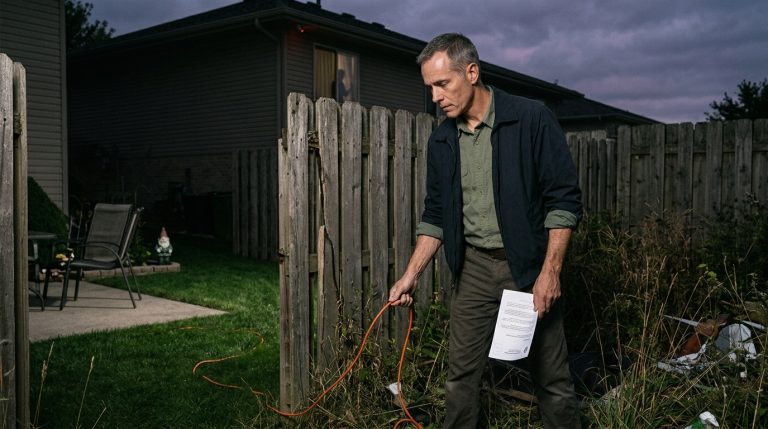
The dust in the air tasted of dry earth and impending friction. I stood where the packed gravel of my driveway met the overgrown fescue of the pasture—the exact point where my property line became a defensive calculation.
The HOA president’s son wasn’t alone. He had brought three men, their presence marked by the synchronized way they scanned my armory shed. One of them, a man with a heavy jaw and eyes that skipped over details, pressed the muzzle of his pistol into the soft space between my ribs. It wasn’t a threat of intent; it was a rhythmic reminder of their misplaced authority.
“Vault code,” he said. His voice was too thin for the weight of the moment. “Now.”
Behind me, the bison herd shifted. It was a low, guttural sound—the shifting of two-thousand-pound bodies through the tall grass. They weren’t reacting to me; they were reacting to the sudden, sharp scent of ozone and the frantic, jagged movements of the men blocking the gate.
I kept my gaze fixed on the son. He was checking his phone again, his thumb hovering over the screen, looking for a signal that wasn’t there. He thought this was a transaction. He thought if he provided enough pressure, the resistance would simply dissolve like sugar in hot water.
“You’re trespassing,” I said, my voice steady, stripped of any inflection that might suggest fear.
The man with the gun pushed harder. I felt the metal bite into my shirt. “This is an emergency security directive, you stubborn old man. We have a mandate.”
“You have a piece of printed paper,” I replied, ignoring the gun. I looked past him, toward the rusted hinges of the armory door. The paint was peeling in long, silver ribbons, revealing the stubborn iron beneath. “And you have no quorum, no vote, and no legal standing. This isn’t a neighborhood meeting. This is a felony.”
The son stepped forward, his face flushed, a vein pulsing in his temple. He was the one who had brought the zip cuffs. He was the one who had promised his mother he could secure the assets. He was currently realizing that the man standing in front of him wasn’t going to blink.
“We don’t need a vote,” the son snapped, his bravado fraying at the edges. “We have the authorization of the HOA board. You’re a liability to the community.”
The air grew heavy. A warning shot cracked the silence—a sharp, violent pop that shattered the stillness of the farm. The sound was swallowed by the pasture, but the reaction was instantaneous.
The gate behind me groaned under the weight of a massive shoulder. A low, furious bellow vibrated through the ground, vibrating right up through the soles of my boots. The bison didn’t just move; they surged, a wall of muscle and survival instinct, and for the first time that night, I saw the exact moment the intruders realized they had fundamentally miscalculated the price of their intrusion.
CHAPTER 2: The Paper Trail of Ghost Assets
The ground beneath my boots was still vibrating. The herd had retreated, pulled back by the instinctive gravitational tug of the pasture, but the energy remained, humming in the air like a high-tension line waiting to snap.
I stood in the center of the churned-up gravel. The men were gone, scattered by the sudden, terrifying mass of two thousand pounds of muscle, but they had left behind a mess that went beyond just flattened dirt. One of the men—the one with the zip cuffs—had dropped a heavy, plastic-bound file folder during the stampede.
I didn’t pick it up immediately. I waited, listening. The only sound was the distant, rhythmic snort of a bison and the frantic, ticking sound of a cooling engine from a truck left idling too close to the fence.
When I finally knelt to retrieve the folder, the weight of it felt wrong. It wasn’t standard HOA stationery. The paper was heavy, cream-colored, and smelled faintly of chemical office toner. I flipped it open. It wasn’t a compliance report. It was a digital inventory ledger, meticulously itemized with serial numbers for rifles I hadn’t even finished registering yet.
My stomach tightened. A specific memory surfaced—a phantom, really—from a town hall meeting three months ago. Marjgerie Klene had stood at the front, her voice smooth and polished, lecturing us on “communal inventory management.” At the time, I’d dismissed it as the usual petty HOA grandstanding. Now, the phrase hit me with a sickening clarity: Communal inventory management. It hadn’t been about safety; it had been a soft launch for a redistribution scheme. They had been counting my assets before they’d even decided how to take them.
I didn’t head for the house. I walked to the shed, the metal of the latch cold and unforgiving under my grip. The shed was safe, but the vulnerability lay in the ink on the pages I held.
I sat at the workbench, the single overhead bulb casting harsh, long shadows against the walls. The ledger was a roadmap of theft. There were names listed in the margins—shell entities, most of them—and a series of timestamps that correlated exactly with the nights I’d heard the SUV idling by my fence line.
They weren’t just after my armory. They were building a liquidation pipeline, and I was merely the first, most accessible shipment.
The silence of the shed felt different now. It wasn’t the silence of solitude; it was the silence of a hunting blind. Every creak of the shed’s foundation, every gust of wind against the siding, felt like a potential intruder. I pulled out my phone and dialed my attorney. My thumb hovered over the screen, my pulse drumming against the edge of my wrist. I needed to move, but I needed to move with the precision of a clockmaker. If I went to the authorities now, without the full context of this ledger, I’d just be another angry resident. But with the ledger? I had the blueprint of their intent.
I looked at the photos of the inventory. They had cataloged every single item, down to the last box of ammunition. They weren’t just guessing. Someone had been inside this shed.
The realization washed over me, cold and deliberate. I stood up, moving to the corner of the workspace where I kept the hidden interface for the security cameras. I needed to see the timestamps. I needed to know exactly when they had been here, and more importantly, who had let them in.
The screen flickered to life. I scrubbed back through the weeks, skipping the boring, empty hours, until I found the gap. Three days ago, 3:00 AM. A shadow, familiar in its gait, had unlocked the secondary latch—the one only I and the previous property owner had known about.
The air in the shed seemed to vanish. I sat back, the light of the monitor reflecting in my eyes. The person in the frame didn’t look like an intruder; they looked like they belonged. They moved with a casual, practiced ease, their face obscured by a hood, but the way they turned their head—a specific, clipped motion—was unmistakable.
My focus shifted from the ledger to the screen, and the gravity of the situation reorganized itself. This wasn’t just an HOA dispute. It was a betrayal from within the foundation of my own property’s history. I gripped the edge of the table, the rust flaking off under my fingertips, and took a slow, deliberate breath. I didn’t need to shout. I didn’t need to run. I needed to track every ghost that had walked through this shed, and then, I needed to make sure they couldn’t find their way back.
CHAPTER 3: The Ghost in the Frame
The screen of the security console hummed, a low-frequency vibration that seemed to match the thrumming in my own temples. I stared at the frozen image of the hooded figure, but my eyes weren’t focused on the person anymore. They were locked on a faint, silvery distortion in the corner of the armory’s reinforced glass pane.
In the reflection of the glass, there was a secondary light source. Not the ambient moonlight filtering through the shed’s high windows, but a precise, rhythmic pulse of amber—the distinct signal of an industrial key fob.
My hand moved to the mouse, dragging the timeline forward, frame by agonizing frame. The figure in the hood reached out, not to the main keypad, but to a small, secondary lock I had installed three years ago—a lock that required a key, not a code. The figure didn’t hesitate. They pulled the key from their pocket, inserted it, and turned. The motion was fluid, practiced, and devastatingly intimate.
This wasn’t a brute-force hack by a desperate HOA operative. This was an insider with a master key.
The cold in the shed seemed to deepen, settling into the marrow of my bones. I leaned back, the plastic of the chair groaning under the weight of my exhaustion. If someone had the key to the secondary lock, then the security of the armory was a fiction I had been telling myself for years. The HOA didn’t need to break in because they already held the keys to the kingdom.
I stood up and walked to the wall where I kept the old logbook—a physical record of every person who had ever stepped foot inside this shed. There were only four names. The original builder, the former owner, myself, and one other—a local contractor named Elias who had helped me install the reinforced shelving back when I first moved here. Elias was a quiet man, someone who kept his head down and his tools sharp. I hadn’t seen him in two years.
I grabbed my coat, the heavy canvas stiff with age and oil. I needed to see Elias. I needed to know if his key was still in his possession, or if he, like everyone else in this neighborhood, had found that the HOA’s pressure was more lucrative than his own integrity.
The walk from the shed to the house felt longer than usual. The yard was a battlefield of churned earth and broken promise, but I moved across it with a deliberate, measured gait. I didn’t look at the fence line. I didn’t look for the SUV. I kept my eyes on the path, my mind stripping away the noise of the HOA’s “compliance” notices to focus on the reality of the breach.
When I reached the back door, I stopped. The porch light was off, just as it should have been, but there was a faint, metallic scrape near the doorframe. I knelt. A small, blue-tinted scrap of plastic caught the light—a shard of a key fob casing, snapped off during a struggle or a hurried exit. I picked it up. It matched the exact amber color I had seen reflected in the armory glass.
The HOA hadn’t just been testing my resolve; they had been performing a systematic inventory of my defenses. The “emergency security directive” wasn’t a command; it was a smokescreen to keep me distracted while they mapped every vulnerability I had.
I entered the kitchen, the warmth of the house hitting me like a physical blow after the chill of the shed. I didn’t turn on the lights. I walked to the counter, pulled out a notepad, and started to write. Not a formal list, but a map of associations. Marjgerie’s name went at the center, then the son, then the shell company, and finally, floating on the edge, the name Elias.
The room was silent, save for the ticking of the wall clock. I caught my reflection in the window—a ghost in my own kitchen, standing amidst the life I had built, watching it be dismantled from the shadows. I picked up my phone and opened the local contractor registry. Elias had moved his shop to a warehouse on the edge of town, a place that dealt in bulk supplies.
If I wanted the truth, I had to stop waiting for the HOA to make their next move. I had to stop defending the perimeter and start dismantling the infrastructure that made their game possible. I shoved the notepad into my pocket and grabbed my keys. The house felt too small, too contained.
I stepped back out into the night. The air was crisp, the scent of damp earth heavy with the promise of rain. I walked to my truck, my movements sharp, clinical, and devoid of the hesitation that had plagued me only a day ago. The HOA thought they were playing a game of intimidation, but they had fundamentally misunderstood the landscape. They had come onto my land to take something, but in doing so, they had given me the one thing they couldn’t afford: a reason to pull the thread.
I started the engine, the low rumble of the diesel echoing against the barn. The headlights cut through the darkness, illuminating the path out of the yard. I shifted into gear, the metal sliding into place with a satisfying, resolute click. I wasn’t just leaving the property; I was initiating a counter-move, and for the first time, I knew exactly where the next strike needed to land.
CHAPTER 4: The Friction of Truth
The sound wasn’t a pop; it was a rhythmic, guttural thrashing of rubber against asphalt, followed by the truck listing sharply to the right. I wrestled the steering wheel, my forearms corded with tension, coaxing the vehicle to a halt on the shoulder of the county access road. The engine ticked as it cooled—a sharp, metallic counterpoint to the distant, rising wind.
I stepped out, the air smelling of ozone and burning rubber. I didn’t reach for a jack; I reached for the light at the edge of the horizon. The delay was a variable I hadn’t calculated, and in this game of shadow-boxing with the HOA, a variable was just another word for a vulnerability.
I opened the bed of the truck to retrieve the spare, my movements stripped of all unnecessary motion. The jack clattered against the frame, a stark, lonely sound in the middle of the empty, wind-swept pass. My phone buzzed in my pocket—a notification from the security console I’d left running back at the shed.
I glanced at the screen: Movement detected: Perimeter Gate.
The HOA wasn’t waiting for the morning. They were back, and this time, they weren’t sending the son. The footage showed a heavy-duty transport vehicle, its plates obscured by mud, idling just outside the pasture gate. They weren’t there for an inspection. They were there to clear the site.
I worked faster, the lug wrench biting into the rusted bolts of the wheel. My hands were stained with grease, a dark, permanent reminder of the work I was doing to protect the only thing they hadn’t yet managed to touch. If I didn’t get to Elias, the information I needed—the confirmation of the key—would be buried under the wreckage of my own property.
The tire was changed in six minutes. I didn’t wipe my hands. I climbed back into the cab, the smell of dust and oil thick in the confined space, and turned the key. The engine roared, a deep, aggressive sound that seemed to challenge the silence of the night. I didn’t accelerate toward Elias’s shop anymore; I surged, the truck fishtailing as I hit the gravel, the tires searching for grip on the loose surface.
The drive to the outskirts of town was a blur of shadows and sharp, jagged turns. Elias’s warehouse was tucked behind a line of rusted silos, a place where business was conducted in the corners of the light. I saw his truck parked near the bay, and I pulled in, killing my lights before I came to a full stop.
I didn’t call out. I approached the side entrance, my boots making no sound on the oil-stained concrete. The warehouse was quiet, but a thin sliver of yellow light bled from beneath the roll-up door. I leaned in, listening, my heartbeat a steady, rhythmic pulse in my ears.
“The inventory is clear,” a voice said—a voice I recognized instantly. It was Elias. “But he’s tracking the keys. The logs are synced to his personal console.”
“That doesn’t matter,” a second voice replied. It was Marjgerie Klene. “We clear the site tonight. If he’s not there to witness the removal, the legal narrative is simple: he abandoned the property, and the HOA assumed custodial control of the assets.”
The blood in my veins seemed to freeze, then ignite. The betrayal wasn’t a ghost; it was a cold, calculated transaction. Elias wasn’t just a contractor; he was a silent partner in the HOA’s liquidation pipeline.
I didn’t step into the light. I stepped back, my boots retreating into the safety of the shadows. My hand went to my side, touching the cold metal of my phone. I didn’t call my attorney. I didn’t call the police. I pulled up the encrypted feed I had mirrored to the cloud, the one containing the footage of the secondary lock, and I hit send.
I sent it to the county investigator, the one person whose interest in the case wasn’t tied to the HOA’s inflated property values.
I stood in the dark, watching the warehouse door, the weight of the moment pressing down on me. I had forced their hand, but in doing so, I had lost the element of surprise. The warehouse door creaked open, and Elias stepped out, scanning the lot with a flashlight. I ducked behind the cab of my truck, my breathing held in a tight, controlled rhythm.
This was the pivot point. The decoy secret—that the HOA was just a bunch of overreaching bureaucrats—had disintegrated, replaced by the ugly, visceral truth of a criminal conspiracy. They weren’t just taking my guns; they were planning to erase me from the history of my own land.
I looked at the warehouse, then at the road leading back to my property. The HOA was going back to my farm, and I was standing in the dark, miles away, with nothing but a truck and a resolve that had been forged in the crucible of their own greed. I wasn’t going to outrun them. I was going to beat them to the gate.
CHAPTER 5: The Collapse of Authority
The return drive was a blur of high-beam lights and the frantic rhythm of my own heartbeat. Every curve in the road felt like a tightening noose. I didn’t care about speeding or the erratic way the truck handled on the slick gravel; the only thing that existed was the gate at the end of the access road. If they were already inside, if they had already dismantled the security layers, there would be nothing left to defend.
As the farmhouse finally came into view, I didn’t slow down. The scene wasn’t what I had expected. It was worse.
Floodlights, portable and piercingly bright, had been set up along the perimeter of the armory shed. A transport truck—the same one from the grainy footage—sat with its rear doors gaping open like the maw of a predatory beast. Men in nondescript uniforms were moving with calculated, efficient speed, loading crates labeled with the inventory numbers I had seen in Elias’s ledger. Marjgerie Klene was standing near the transport, holding a tablet, her posture not that of a concerned neighbor, but of a general overseeing a battlefield.
I didn’t stop at the main gate. I drove the truck straight through the secondary pasture entry, the heavy wooden posts splintering with a sickening crack. The truck lurched, tires digging deep into the soft, wet earth of the pasture, but I didn’t brake. I plowed through the brush, heading straight for the floodlit staging area.
The men froze. Marjgerie turned, her expression shifting from cold satisfaction to a fleeting, predatory shock before she regained her composure. She stepped forward, her hand raised as if to command a stop.
“You’re making a mistake!” she shouted, her voice thin and reedy against the roar of my engine.
I hit the brakes twenty feet from the transport truck, the momentum throwing me against the seatbelt. I killed the engine, and the sudden silence was more deafening than the chaos. I stepped out, the cool night air biting at my skin. I didn’t look at the men—I looked at the crates. They were stacked with a precision that betrayed a deeper intent.
“The investigation is already here, Marjgerie,” I said, my voice quiet, cutting through the hum of the portable generator.
She laughed, a harsh, brittle sound. “You think a few phone calls to a local investigator will stop this? This isn’t just about your armory. This is about the neighborhood. The HOA board authorized this. The community supports this. You are an outlier in a system that has decided you are no longer welcome.”
I walked toward her, my pace slow and deliberate. Every step was a testament to the fact that I wasn’t the one who had cracked. I looked at the transport truck, then back to the crate nearest to me. I kicked the side of it, the impact echoing like a drum. “Is this the ‘community safety’ you were bragging about? Or is this the retirement fund you’ve been siphoning off for the last five years?”
Her face went pale. The tablet slipped from her hand, hitting the dirt with a muffled thud. The men around the truck paused, their eyes darting between us.
“You don’t know what you’re talking about,” she hissed, her voice dropping, the public façade finally fracturing.
“I know about the shell companies,” I continued, closing the distance until I was standing directly in front of her. “I know about the inventory lists being sold before the assets were even seized. You aren’t liquidating weapons for safety, Marjgerie. You’re liquidating them because you’ve drained the HOA’s actual treasury, and you need a cover story to explain where the millions in communal dues went. The armory was just the final piece of the puzzle. You needed a high-value, controversial target that the neighbors would be too afraid to defend.”
The realization settled over the yard like a shroud. One of the men in uniform dropped the crate he was carrying; the sound of metal scraping against wood was sharp and final. Marjgerie looked around, desperate for an ally, but there was nothing—only the cold, unyielding light of the floodlamps and the encroaching darkness of the fields.
“It’s over,” I said, my voice devoid of triumph, filled only with the heavy, rusted weight of the truth.
Before she could speak, a line of headlights crested the rise of the access road—not one vehicle, but four. The county investigator, flanked by deputies, swept into the yard with the disciplined, calm motion of a force that had been waiting for the exact moment of exposure.
The yard, which had been a staging ground for a robbery, transformed instantly into a scene of methodical, bureaucratic reclamation. There was no shouting, no struggle. Marjgerie stood frozen as the investigator walked up to her, his hand extended for her device. This time, there was no posture to hide behind. The fraud was laid bare, and the structural integrity of the entire operation simply collapsed.
I turned away, my job done, the tension in my muscles finally beginning to slacken. I walked toward the barn, the sound of the bison stirring in the dark, and for the first time in weeks, I breathed.
CHAPTER 6: The Quiet After the Click
The sirens didn’t vanish so much as they bled out, fading into the rhythmic, low-frequency hum of the night. I stood by the barn, the cold air settling into my lungs, and watched the taillights of the final cruiser disappear over the rise. Marjgerie Klene was gone, carted away in the back of an unmarked vehicle, her silence in those final minutes far more telling than any speech she could have manufactured.
The yard looked like a war zone. Deep, muddy ruts scarred the pasture, and the transport truck sat abandoned near the gate, its cargo bay yawning open—a hollow monument to an ambition that had collapsed under the weight of its own rot.
I walked toward the gate, my boots crunching on the gravel. The work wasn’t finished, but the frantic pace of the last few days had finally broken. I stopped at the pasture gate, the rusted hinges whining in the wind. I reached out, my fingers brushing the cold, iron metal. It was covered in the grit of the intrusion, but it was still here. I pulled the gate shut, the latch sliding into place with a definitive, solid click that seemed to echo across the entire valley.
I didn’t head back to the shed. I walked to the porch and sat down on the bottom step, the wood groaning slightly under my weight. My hands were still shaking, just a little, the adrenaline slowly leaving my body like water draining from a vessel.
The front door opened, and a neighbor—the same woman who had stood at the fence earlier—stepped onto the porch. She didn’t say anything for a long time. She just sat down on the step beside me, her gaze fixed on the dark fields.
“They’re talking,” she said finally, her voice soft. “Everyone on the block. The PDF from the investigator hit the main group chat ten minutes ago. No one’s defending her.”
I nodded, the silence between us comfortable. “The truth has a way of doing that,” I said. “It doesn’t need a campaign. It just needs the space to exist.”
We sat there until the first light of dawn began to bleed over the eastern hills, painting the horizon in shades of bruised purple and grey. The recovery would be long. The forensic teams would be here for days to sift through the digital paper trail of the embezzlement, documenting every missing cent and every shell company Marjgerie had used to bury her failures. The neighborhood would have to reckon with the reality of what had been happening right under their noses, and I would have to deal with the damage to my own land.
But those were problems for the daylight. For now, there was only the peace of a boundary restored.
I stood up and walked over to the armory shed. I pulled a rag from my pocket and began to wipe away the mud and grease that had been smeared across the door during the raid. The metal underneath was cold and firm. I checked the lock—the one Elias had compromised—and replaced it with a heavy, industrial deadbolt I’d kept in storage for years. The sound of the key turning was sharp, a testament to the fact that I was the only one who held the mechanism now.
I went back to the house, the light increasing enough that I could see the path clearly. The bison were grazing in the distance, their silhouettes dark against the brightening sky. They were quiet, the herd restored to its natural state.
I reached the doorway and paused, looking back at the yard. The evidence of the collapse was everywhere—the ruts, the debris, the marks of the struggle—but the land itself was holding fast. I leaned against the doorframe, feeling the weight of the last week finally lift. I had done more than just defend a shed; I had dismantled a system that relied on the idea that we were all too tired, or too afraid, to look closely at the cost of our silence.
I stepped inside and locked the door behind me. The house was quiet, the air still and clean. I walked to the kitchen and put a kettle on the stove, the sound of the flame igniting a small, precise victory. I sat down at the table and opened my logbook, pulling out the pages I had filled with the map of their conspiracy.
I didn’t need the map anymore. I took the pages, folded them once, and dropped them into the wastebasket.
The house wasn’t just a place to live; it was an anchor, and tonight, it felt like one again. I looked out the window at the morning sun. The rust on the gate would be there tomorrow, and the repairs would take months, but the land was settled. The cycle of fear had been broken, replaced by a quiet, steady resolve. I wasn’t waiting for the next directive or the next notice. I was finally, after so long, just standing on my own ground.