The Echo of the Ridge: A Soldier’s Journey from Forgotten Shadows to Shared Human Healing
CHAPTER 1: THE WEIGHT OF THE STEEL
The laughter wasn’t loud—just a sharp, jagged sound that pierced the room’s low hum. It originated from the refreshment table, where four young soldiers in crisp, pressed uniforms stood with the effortless confidence of those who hadn’t yet learned that the world can turn on a single heartbeat.
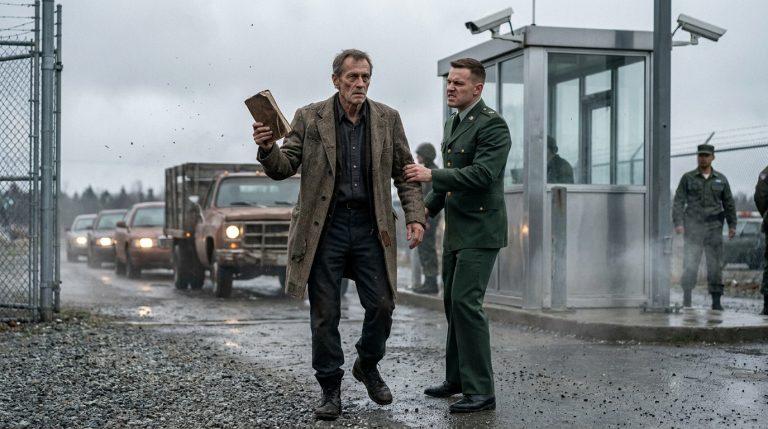
Walter Briggs sat in the corner, his hands resting on the cold, plastic surface of the folding table. His fingers trembled, a rhythmic, maddening flutter that made his styrofoam cup rattle. It was a sound he’d learned to ignore, a persistent background noise to his life that reminded him of cold ridges and long-dead silences.
“Look at him,” one of the soldiers, a tall kid with a fresh buzz cut, murmured. His buddy, a specialist named Donovan, let out a soft, dismissive huff. “Probably had a few too many before he even walked through the door. It’s pathetic, really.”
Walter took a slow, deliberate sip of lukewarm coffee. He didn’t feel the sting of their words; he felt only the dampness of his own palms. He had spent his life becoming invisible, a ghost in the machine of global conflict. He was here for the free meal, not the judgment. He adjusted his posture, the slight hunch in his shoulders a heavy inheritance from years spent curled into the freezing earth of an Afghan ridge, staring through a scope until his world narrowed down to the heartbeat of a target.
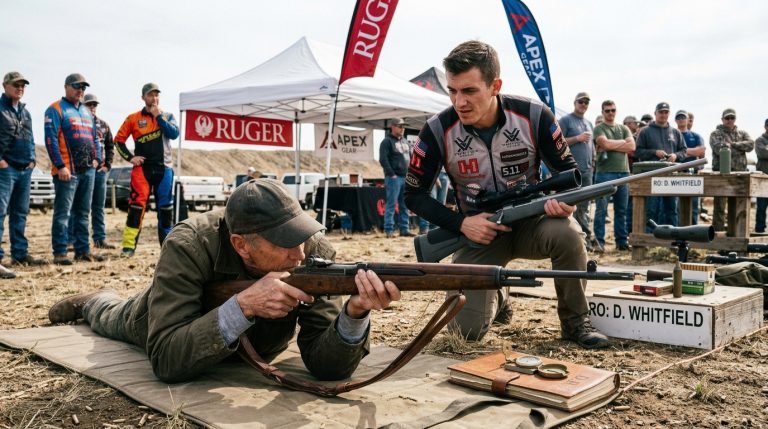
Near the center of the hall, a display table held the anatomy of an M24. It was disassembled, its parts laid out with clinical precision: the Remington 700 action, the stock, the bolt, the scope. To the civilians, it was a piece of history. To Walter, it was a mirror.
He watched Donovan move to the table, his swagger palpable. The young armorer began to assemble the rifle, his movements practiced but rigid. He was playing a part, performing for the nearby crowd, and every time the bolt clicked, he looked around for validation.
Walter felt a tug in his chest—a sudden, sharp memory of the 2008 mission. He remembered the smell of ozone and wet stone. He remembered the decision he had made, the choice to spare the life of a bystander that had forever altered the trajectory of his service. It was a secret he carried like lead in his gut.
Donovan finished the assembly, thrusting his hands into the air with a smug, triumphant grin. He caught Walter’s gaze in the corner and signaled him over.
“Hey, old-timer,” Donovan called out, his voice echoing in the rafters. “Why don’t you show us if you can remember how a real weapon works? Or is your coffee the only thing you can handle today?”
The room fell into a heavy, suffocating silence. Walter set his cup down. His hands were shaking harder now, not from the cold, but from a sudden, sharp realization that dawned on him as he looked at the ledger sitting behind the refreshment table—a ledger he had noticed earlier, the one that seemed to be missing the most recent entries of veterans who had sought aid.
He stood up, his knees popping, and began the long walk toward the center of the room. He felt the eyes of every person in the VFW on him, a heavy weight that felt like an incoming round.
CHAPTER 2: THE ANATOMY OF SILENCE
Walter’s boots moved across the polished linoleum, each step a soft, rhythmic thud that seemed louder in the sudden vacuum of the hall. He kept his eyes on the disassembled M24. The barrel lay nestled against a foam-lined tray, its matte finish catching the amber light of the low-hanging lamps. He could feel the eyes of the young soldiers—Donovan’s smug grin now replaced by a flickering uncertainty—as they watched the old man approach.
He wasn’t thinking about the assembly. He wasn’t thinking about the mockery. His mind had locked onto the ledger sitting open at the end of the demonstration table. It was a thick, leather-bound volume, its edges frayed, pages yellowed with the scent of basement damp and stagnant time. His eyes, trained by years of scanning horizons for the slight flicker of movement that meant life or death, caught a discrepancy. The spine of the ledger was uneven. The pages from the last six months—the period when he had first visited the VFW seeking aid, only to be turned away—looked strangely clean, as if they had been excised and re-inserted with careful, calculated haste.
“Well?” Donovan’s voice was sharper now, the bravado struggling to stay afloat against the gravity of the room. “We’re waiting, old-timer. Or do you need someone to hold your hand while you figure out which end of the barrel the bullet comes out of?”
Walter didn’t respond. He reached the table, the proximity to the weapon grounding him. The tremor in his hands was a dull, persistent vibration, a ghost of the sub-zero wind that had once numbed his extremities until they were no longer part of him. He looked at the disassembled parts.
He didn’t touch them yet. Instead, he leaned slightly to the left, his gaze drifting back to the ledger. He noticed a small, torn corner of a document protruding from beneath the heavy cover—a fragment of a VA benefit authorization form, stamped and dated three months ago. A form that should have been processed, yet it lay hidden here, buried under the weight of the VFW’s organizational archives.
Why would a veteran’s organization hide an authorization for aid? The question sat in his mind, cold and sharp.
“Take your time,” one of the other soldiers snickered, though the sound was hollow. “We’ve got all night.”
Walter took a breath, the air in the hall thick with the smell of old coffee and floor wax. He felt the weight of the room shifting. Harrison, the Vietnam veteran near the wall, had gone still. He was watching Walter, not with mockery, but with a sudden, dawning recognition that transcended the uniform.
Walter placed his hands on the table. The tremor was there, a visible agitation of his skin and muscle. He looked at Donovan, not as an antagonist, but as a young man who lived in a world of surfaces, completely oblivious to the depth of the ice beneath him.
“You want me to assemble it?” Walter asked. His voice was steady, a low, gravelly hum that seemed to cut through the chatter of the crowd.
“That was the bet,” Donovan replied, crossing his arms.
Walter nodded. He looked down at the M24, the familiar components speaking to him in a language of friction, metal, and intent. He didn’t reach for the bolt or the stock. He reached first for the bandanna Harrison was already pulling from his pocket.
The room grew so quiet that Walter could hear the distant hum of the heater and the muffled footsteps of someone pacing in the hallway. He felt the rough fabric of the bandanna wrap around his eyes, plunging him into a darkness that felt far more honest than the light of the hall. The visual world—the condescending faces, the dusty banners, the hidden ledger—vanished, replaced by the haptic map he had etched into his mind over two decades.
The darkness was a sanctuary. It was where he had spent the most important hours of his life, waiting for the perfect alignment of wind, distance, and conscience. He inhaled, the smell of gun oil and steel cutting through the stale air.
His fingers hovered over the table. He felt the cold, hard edge of the stock. He felt the weight of the barreled action.
The crowd was tense, a sea of breathing bodies leaning in. He could sense their skepticism, the collective desire to see him fail, and underneath it, the budding anxiety of the young soldiers who were beginning to realize that the old man in the corner might just be a mirror reflecting their own profound ignorance.
Walter reached out. His hands were shaking, a wild, rhythmic oscillation, but the moment his fingertips brushed the cold steel of the action, the tremor seemed to pull inward, concentrating into a singular, focused energy. He moved with an economy of motion that defied the instability of his nerves, the pieces coming together in the dark with the precision of clockwork.
Click.
The sound of the trigger assembly locking into the receiver was like a gunshot in the silence of the hall. He didn’t rush. He didn’t perform. He existed within the ritual. The stock, the magazine, the scope—each part found its home, guided by a muscle memory that had been forged in fire and kept alive through the long, quiet years of being forgotten.
He felt the weight of the assembled weapon in his hands. It was perfect. It was a tool of absolute finality, and for a fleeting moment, he was back on that ridge, the freezing wind clawing at his face, the target in his sights, his finger hovering over the trigger. The choice he had made in 2008 echoed in the dark behind his eyes—the realization that he had valued a human life over the mission success, and the subsequent descent into a world that no longer recognized his service or his sacrifice.
He sat the rifle down. The sound of the metal meeting the table was the only thing that broke the stillness. He reached up, untied the bandanna, and let it flutter to the floor.
He opened his eyes. The room was changed. The soldiers weren’t laughing anymore. Donovan looked as if he had seen a ghost, his face drained of color. Harrison was staring at the rifle, then at Walter, his own hands gripping the back of a chair until his knuckles were white.
“Forty-one seconds,” Walter said, his voice barely above a whisper, though it carried to the back of the hall.
He didn’t wait for them to speak. He turned his attention back to the ledger on the table, his eyes locking onto that protruding fragment of paper. The mystery wasn’t the rifle anymore. The mystery was the hidden authorization. He reached out and, with a slow, deliberate motion, tapped the cover of the ledger.
“I think we should talk about what’s kept inside this,” Walter said, looking directly at the VFW hall director who had just stepped out of the shadows.
CHAPTER 3: THE WEIGHT OF EVIDENCE
The VFW hall director, a man named Miller whose face was a map of soft edges and nervous tics, flinched. He stared at Walter’s hand, then at the ledger, his throat working in a dry, painful swallow. The ambient noise of the fundraiser—the clinking of plastic forks, the low murmur of conversation, the distant laughter of soldiers—seemed to recede, leaving the two of them in a pocket of pressurized silence.
“I don’t know what you’re talking about, Walter,” Miller said, his voice an octave too high. He reached out to pull the ledger back, but Walter’s hand stayed put, heavy and unmoving, like a stone in a stream.
“The pages,” Walter said, his voice flat and devoid of hostility. He didn’t raise his tone, nor did he lean in. He simply held his ground. “They’re missing, Miller. The last six months. A VFW chapter doesn’t just stop documenting its own outreach unless there’s a reason to hide the output.”
As Miller shifted his weight, the movement triggered a sudden, unwanted memory in Walter’s mind. It was the smell of dust—that dry, alkaline scent of the Afghan high desert—and the sight of a woman’s hand reaching out from behind a rubble pile in 2008. He had been looking through the scope, his target centered, but for a micro-second, his eye had drifted to the shadow, to the civilian who hadn’t been in the intelligence brief. He had paused. He had waited. And in that wait, the entire operation had unraveled, leaving him with a lifetime of doubt about whether he had acted out of mercy or cowardice.
The phantom memory made his hand twitch. Miller saw it, a flicker of something—perhaps pity, perhaps opportunistic relief—crossing his eyes.
“Look, Walter, we’ve all had rough times,” Miller said, his voice dropping into a conciliatory, patronizing register. “You come here, you make a scene, you disrupt the boys. It’s not a good look. Why don’t you come to my office? We can look through the files properly. Away from the crowd.”
Walter felt the shift in the room’s energy. Harrison was still watching from the periphery, his expression unreadable, but his stance had changed. He wasn’t just a spectator anymore; he was a sentry.
“I don’t want an office,” Walter said. He retracted his hand, though he didn’t pull it far. “I want to know why the authorization form I handed you in January is currently tucked under the back cover of this ledger. I saw the edge of the stamp when you opened it to show the assembly display.”
Miller’s face went slack. The nervous tic near his eye began to jump. He glanced around, realizing that a few of the older veterans had stopped their conversations. The air was turning sour.
“You’re confused, Walter. The nerve damage, the isolation… it plays tricks on the mind. I’ve seen it a dozen times.”
“I see a stamp,” Walter replied, his voice hardening just enough to be felt. “And I see an empty chair where a veteran should be sitting, getting the care he earned. You aren’t protecting the VFW’s legacy, Miller. You’re protecting your budget, and you’re doing it by making sure the people who need this place the most never actually get inside.”
Miller leaned in, his voice a harsh, serrated whisper. “You think you’re the first one to come here with a sob story? You’re a ghost, Walter. No one outside of this hall even remembers your service. If you push this, if you start pointing fingers at how we run the outreach, you’ll find that you’re the one who ends up with nothing. No VA, no VFW, no place to sleep. Is that the hill you want to die on?”
Walter looked at the man. He saw the fraying collar of Miller’s shirt, the sweat beading on his forehead, and he felt a sudden, profound sense of clarity. This wasn’t about the money. This was about control—the desperate, pathetic control of a man who had never served, never risked, and never known the weight of a conscience.
“I’ve already died on a few hills, Miller,” Walter said, his voice steady. “This isn’t one of them. This is just arithmetic.”
Walter turned his back on the director, leaving him standing there with the ledger. He didn’t walk away in a rage. He walked with the measured, deliberate gait of a man who had navigated a thousand miles of minefields. He stepped toward Harrison, who nodded once, a brief, sharp movement that communicated a silent pact.
As Walter moved, he caught a glimpse of Donovan watching him. The young specialist’s posture had completely collapsed. The arrogance was gone, replaced by a raw, bruising confusion. Donovan looked at the ledger, then at Miller, and finally at Walter. There was a question in his eyes—a flicker of doubt about the institution he had been defending.
Walter didn’t approach him. He didn’t need to. He walked to the edge of the hall, where the exit sign hummed with a low, electric buzz. He pushed the door open, the cool night air washing over him, damp and clean, clearing the scent of old paper and deceit from his lungs. He walked into the darkness, knowing that he had planted the seed of the collapse. He hadn’t fought a war tonight, but he had begun the process of dismantling a lie. And in the silence of the night, as he walked back toward his small, sparse apartment, he realized that for the first time in eighteen years, the tremor in his hands was silent.
He reached the street corner, his breath fogging in the cool air. He looked at his hands. They were still, held in the quiet tension of the night. He had confronted the surface, and underneath, he had felt the first cracks in the wall.
He didn’t know what tomorrow would bring—whether Miller would try to retaliate or whether the VFW would close ranks—but he knew one thing: the truth was no longer just a ghost. It was a tangible weight, and he was finally ready to carry it.
CHAPTER 4: THE BUREAUCRATIC WALL
The night air had turned brutal. As Walter stepped away from the VFW hall, the sky opened up with a sudden, violent intensity, turning the streetlights into blurred smears of amber against the dark. The rain wasn’t a gentle fall; it was a rhythmic assault, clattering against the metal trash cans and slick pavement with a ferocity that matched the rising tempo of his own pulse.
He pulled his thin jacket tighter, the fabric failing to hold back the chill. He wasn’t heading to his apartment. He was heading for the local records office, a brutalist concrete cube on the edge of the industrial district where he knew—from his own brief, frustrated interactions years ago—that the master copies of all VFW-affiliated outreach documentation were filed. If Miller had scrubbed the ledger at the hall, he hadn’t scrubbed the centralized server.
The walk was an endurance test. The concrete path turned into a treacherous slide, and the rain soaked through his boots, the cold creeping into the nerve-damaged bones of his feet. He felt every mile, the physical toll of his age manifesting as a dull ache in his lower back, but he didn’t slow. The “Consequence Loop” was already in motion; by confronting Miller, he had triggered a defense mechanism that would, within hours, see the ledger destroyed. He had to reach the records office before the automated purge began at dawn.
He turned a corner and found himself in a narrow alleyway between a warehouse and the back entrance of the records facility. A heavy, rusted service door stood at the end, flickering under the intermittent pulse of a broken security light. The rain was drumming a frantic beat on the corrugated metal roof above him, a sound so loud it masked his own breathing.
He reached the door and checked the handle. Locked, as expected. He didn’t have a key, but he had a decade of experience in finding the weakness in any system. He took a moment to lean against the wall, catching his breath. His hands were shaking—not from the cold, but from the adrenaline of the hunt. He felt for the small, metal pick he carried in his inner pocket, a tool he hadn’t used since his time in the field, back when he had needed to access secure zones to retrieve intelligence.
He worked with clinical detachment. The lock was an older model, its tumblers worn by time and neglect, which made it a simple problem to solve. He didn’t think about the risk of being caught. He didn’t think about Miller or the potential fallout. He thought only of the physics of the lock, the way the pins responded to the pressure of the pick, the subtle clicks that resonated through his fingertips.
When the mechanism finally surrendered, the click was barely audible over the rain. He eased the door open and stepped into the darkness of the service corridor.
The smell inside was distinct: stagnant air, floor wax, and the dry, papery scent of millions of files. He navigated the hallway by memory, his eyes adjusting to the dim, blue light of the emergency exit sign. He found the terminal room at the end of the hall. The door was ajar, a sliver of light spilling out onto the floor.
He stepped inside. The server room was humming, a rhythmic, mechanical purr that sounded like a sleeping beast. He approached the central console. It was logged in, a common oversight in a building that relied on the assumption of security rather than the reality of it. He began to scroll through the files, his eyes darting across the screen, searching for the specific code for the outreach program, the code that Miller had referenced in his panic.
He found it, but it wasn’t what he expected.
It wasn’t just a matter of hidden forms. It was a digital map of deliberate exclusions. There were hundreds of files, each marked with a red tag, each representing a veteran who had been systematically denied access to aid. The reasons provided were cold and bureaucratic: “Insufficient documentation,” “Ineligible criteria,” “Lack of standing.” They were fabricated—all of them.
He realized then that Miller wasn’t just hiding Walter’s records. He was running a shadow operation, siphoning the outreach funds into a separate, private account that masked itself as ‘administrative maintenance.’
As he reached for the save button to copy the drive, a shadow fell across the screen.
He didn’t turn. He didn’t have to. The sound of the door squeaking on its hinge was enough.
“I told you not to push it, Walter.”
It was Harrison’s voice. The Vietnam veteran stood in the doorway, his face shadowed, a heavy, black handgun held at his side, pointed toward the floor, yet held with a familiarity that chilled Walter’s blood.
“I didn’t think you were part of this,” Walter said, his voice quiet, his gaze still fixed on the computer monitor.
“I’m not,” Harrison replied, stepping further into the room. “I’m just the one who knows what happens when a secret like this gets out. Miller is a fool, but he’s a fool who keeps the doors open. If the audit starts, the whole building goes down. I can’t let you do that.”
Walter turned, his eyes locking onto Harrison’s. There was no hatred there, only a weary, resigned resolve. This was the “Inhale” of the conflict—the moment where the lines were drawn, not by malice, but by the crushing weight of institutional survival. Walter realized that the decoy secret—Miller’s embezzlement—was just a cover for something much deeper, something that Harrison was willing to kill to protect.
The rain hammered against the building, a frantic, rhythmic backdrop to the unfolding standoff. Walter knew he couldn’t win this with a gun. He had to win it with the truth.
“You’re not doing this for Miller,” Walter said, his heart rate steadying as he shifted his focus from the gun to the man. “You’re doing it because if they audit the funding, they’ll see where the money really went in 2008.”
Harrison’s eyes flickered. The silence that followed was heavy, laden with the weight of years.
CHAPTER 5: THE FRAGMENTS OF LOYALTY
Harrison didn’t pull the trigger. He didn’t even move. The handgun in his grip stayed aimed at the floor, a dead weight that seemed to pull at his shoulder, as if the gun itself were heavy with the history he was guarding. He looked at the computer screen, then back at Walter, his features rendered strange and jagged by the blue, pulsing strobe of the server racks.
“You think you’re the only one who had to choose?” Harrison’s voice was barely audible over the hum of the cooling fans. “You think Kandahar was the only place where the lines got blurred?”
Walter didn’t take his eyes off the weapon. He kept his stance centered, his weight distributed evenly, a habit of a decade on the ridge. He watched the way Harrison’s thumb rested on the safety—a professional’s grip, but one currently devoid of professional intent.
“I don’t think I’m the only one,” Walter said, his voice measured. “But I’m the one looking at the records. The money isn’t just missing, Harrison. It’s being moved. You aren’t protecting a legacy. You’re protecting a leak.”
“I’m protecting the peace,” Harrison snapped, though the intensity was waning. “If the audit happens, the VFW chapter gets dissolved. The base outreach program dies. The kids—the ones like Donovan—they lose the only support system they have. You tear down Miller, you tear down the whole damn building. What happens to the guys who don’t have a place to sleep, Walter? You think the VA is going to pick up the slack?”
Walter took a slow step forward. The room felt smaller now, the air thick with the smell of overheated circuits and damp wool. He was looking for a way to break the deadlock, to find the humanity in Harrison that had been suppressed by the weight of this conspiracy. He thought of the photo in the display case, the one of his younger self. He remembered the feeling of that moment—the conviction that he was doing the right thing, regardless of the cost.
“They’re already losing,” Walter said, gesturing toward the monitor. “They’re being turned away at the door because their paperwork is ‘lost.’ You aren’t protecting them. You’re being used as the guard dog for a system that’s already failing them.”
Harrison looked down at the gun. He seemed to be fighting an internal battle, his brow furrowed, his breathing ragged. He was not a villain, and he wasn’t a hero; he was just another broken piece of the machine, trying to find a way to hold it together.
“Miller is a worm,” Harrison muttered, almost to himself. “But he knows where the bodies are buried. Not just the money, Walter. The 2008 operation. The records of the civilian casualty—the one you think you saved. The one that caused your nerve damage.”
Walter felt the room tilt. The memory of 2008 surged—the sudden, piercing realization that his decision hadn’t been a moment of singular heroism, but a catastrophic failure of the operation that had ripple effects he was only now beginning to comprehend.
“What do you know about 2008?” Walter asked, his voice low, a warning vibration.
“I know it was never about the target,” Harrison said, finally lifting his gaze to meet Walter’s. “I know the extraction was delayed because they didn’t want you coming back with the truth of what happened on that ridge. You weren’t a casualty of the mission, Walter. You were a containment liability.”
The revelation struck Walter harder than any physical blow could have. He had spent years blaming his nerves, blaming the cold, blaming his own lack of resolve. But if Harrison was right, his entire life had been shaped by a design he hadn’t even been aware of.
Harrison stepped back, the gun falling to his side, his arm going limp. He looked at the console, then toward the door, where the sound of sirens was suddenly audible—a faint, rising wail against the relentless thrum of the rain.
“They’re coming,” Harrison said, his voice empty. “Miller called them when he realized you weren’t coming to his office. He told them you were a trespasser. A broken veteran who had finally snapped.”
Walter looked at the monitor. He had the evidence. He had the proof of the embezzlement, the proof of the suppressed aid, the proof that the VFW was failing the very people it claimed to serve. He could walk out the back door, vanish into the storm, and take the truth with him. Or he could stay, and force the confrontation that would shatter the shell of this entire, decaying institution.
He looked at Harrison, seeing the man for what he was: a tired soldier who had forgotten how to stop fighting for the wrong cause.
“Leave the gun,” Walter said, his tone commanding, the authority of the shadow-operator returning to his voice. “Walk out the back entrance. Go home, Harrison. Before the squad gets here.”
Harrison hesitated. The sirens were growing louder, the red and blue flashes beginning to bleed through the window of the service hallway. He looked at Walter, a flash of recognition crossing his face—the same look Harrison had given him in the VFW hall, but now stripped of reverence, replaced by a shared, bitter exhaustion.
“You won’t get out with the drive,” Harrison said, his hand finally opening and letting the gun clatter to the concrete floor.
“I don’t need the drive,” Walter said, his gaze shifting to the printer sitting in the corner of the room. “I just need the paper.”
He turned to the console, his fingers flying across the keys, his movements fluid and precise. He didn’t care about the drive anymore; he cared about the impact. As the printer began to whir, churning out the evidence of a decade of betrayal, Walter stood firm, the man with the shaking hands now steady, ready to face the consequences of a truth he had finally, painfully, earned.
CHAPTER 6: THE PRINTED TRUTH
Walter didn’t move. He stood perfectly still, his eyes fixed on the paper jammed in the output tray. The printer’s motor groaned—a high-pitched, mechanical whine that sounded like a dying breath—before silence reclaimed the room. The blue glow of the monitor reflected off the plastic casing of the printer, illuminating the error code flashing on its tiny, liquid-crystal display. It wasn’t a standard error. It was a redirect command, a string of alphanumeric characters that pointed to a server hub off-site.
Miller hadn’t just been hiding files; he had been rerouting them to a private holding server to avoid any local audit trail.
The sirens outside were no longer distant. They were screaming into the parking lot now, the blue-and-red pulse of lights washing through the office windows and flickering against the walls of the server room. Footsteps—heavy, rhythmic, and purposeful—echoed in the hallway. They weren’t the hesitant steps of a night janitor. These were the boots of men who expected a struggle.
Walter’s heart hammered against his ribs, a steady, controlled beat that kept his focus sharp. He reached into the printer’s tray, his fingers brushing the warm, crisp edge of the document that had managed to feed. It was a summary list: names, dates, and amounts—the ledger Miller thought he had destroyed. He didn’t have the whole file, but he had enough to start the fire.
He ripped the sheet free, ignoring the jagged tear, and stuffed it into his inner pocket. He didn’t have time to retrieve the rest. He pivoted toward the back wall, his mind mapping the layout of the facility. He knew this building from his brief, desperate visit years ago—the layout hadn’t changed. There was a service ventilation shaft behind the rack of mainframes, a narrow, dark space he had once used to avoid the attention of a security guard.
As he reached the back of the rack, the server room door burst open.
“Federal agents! Hands where we can see them!”
The voice was amplified, booming with the authority of the state. Walter didn’t look back. He shoved the side panel of the mainframe aside, the heavy metal frame clattering against the concrete floor. The sound was a thunderclap, drawing the immediate, lethal focus of the men in the doorway.
“Freeze!”
He didn’t freeze. He vaulted into the narrow, dark opening of the shaft, the cool, dusty air of the ventilation system rushing into his lungs. He felt the snap of a bullet striking the metal frame just inches from his shoulder, the vibration traveling through his arm like a electric shock. He crawled, his body tight, his movements practiced and devoid of panic. He wasn’t thinking about the danger; he was thinking about the exit, a grate located fifty yards away that led to the roof of the adjacent warehouse.
The ventilation shaft was tight, the metal echoing with the frantic movement of his boots. He heard shouting behind him, the sound of heavy equipment being moved, and the crackle of radio comms. They were searching for him, but they were searching for a man they expected to be running. They weren’t searching for a man who knew the anatomy of the building better than the people who built it.
He reached the end of the shaft, his fingers finding the latch of the grate. It was rusted, immovable. He didn’t hesitate; he pressed his back against the floor of the shaft and drove his heels into the metal, a surge of adrenaline and muscle memory driving the kick. The latch sheared off with a screech of tortured metal, and the grate swung open into the night.
He tumbled out onto the roof of the warehouse. The rain was still falling, a freezing deluge that turned the tar-covered roof into a slick, treacherous slope. Below, the alleyway was swarming with police cruisers and unmarked SUVs, their lights cutting through the darkness like the eyes of predators.
Walter scrambled to his feet, his breath coming in ragged, white plumes. He felt the paper in his pocket—the weight of it, the cold evidence of the betrayal. He needed to get to Harrison, or at least to someone who could hold this document until the morning.
He didn’t head for the street. He stayed low, moving along the edge of the roof toward the adjoining office park. He felt the familiar pull of the old injury in his back, a warning flare of pain that radiated through his spine, but he pushed past it. He had spent his life waiting for a shot, waiting for a target, and now that the target was finally exposed—the system itself—he wouldn’t blink.
He reached the end of the roof, the gap between the warehouse and the next building a ten-foot stretch of dark, rain-slicked space. It was a jump he would have made without thought two decades ago. Now, it was a calculation—the strength of the jump, the landing, the traction.
He looked back toward the records office. The blue and red lights were concentrated on the back door. They hadn’t seen him yet, but it was only a matter of time. He took a breath, felt the familiar tremor that he had once feared now acting as a trigger for his focus, and he launched himself into the dark.
For a second, there was only the sound of the rain and the weightlessness of the air. Then, his feet hit the opposite roof with a jarring thud. He stumbled, his hands slapping against the cold, wet gravel, but he caught himself. He stood, his muscles burning, his lungs freezing, and looked toward the city skyline. The truth was in his pocket, but the hardest part was just beginning. He had to face the reality of 2008—the choice that had cost him his life, and the secret that was about to cost him his freedom.
CHAPTER 7: THE UNBURDENING
The rooftop was a desert of black tar and jagged gravel. Walter pulled himself up, his hands raw and slick with rain, his breath coming in sharp, agonizing stabs. Every muscle in his body felt like a rusted wire pulled to the point of snapping. He didn’t stop. He couldn’t. Behind him, the warehouse roof ended, and below, the alley was a hive of activity—flashlights beam-sweeping the darkness, the sharp bark of commands, the heavy thud of boots.
He moved toward the center of the rooftop, away from the perimeter, his movements slower now, calculated. He had to reach the fire escape on the far side, the one that led down to the quiet, overgrown garden of the local parish. It was the only place he knew that would be empty at this hour. He reached the edge of the roof, his boots slipping on the wet surface, and he fought to keep his balance.
As he shifted his weight, the world blurred. For a split second, he wasn’t on a warehouse roof in the industrial district; he was back on that ridge in 2008. The air felt thin and freezing. He saw the woman again, the one he hadn’t fired upon. He felt the cold iron of the rifle, the phantom pressure of his finger on the trigger. He remembered the command that had come over his comms—the order to execute—and his own refusal, the split-second hesitation that had defined the rest of his life as a man living in the margins.
The memory was so vivid he nearly buckled, the phantom weight of the weapon feeling more real than the rain. He forced his eyes open, gasping, the cold air biting at his throat. He wasn’t a shadow anymore; he was a man holding the evidence that would pull the masks off the men who had turned his life into a chess move.
He reached the fire escape. It was a rusted, skeletal structure that groaned under his weight as he stepped onto the top landing. He descended, his feet finding each rung with the cautious precision of a climber. Halfway down, the metal gave a long, shuddering screech of protest. He froze, pressed flat against the wall, as a beam of light cut through the rain below, sweeping over the very spot he had stood on only moments before.
“Check the perimeter! He couldn’t have gone far!”
Walter waited. He counted his heartbeats, forced his shaking hands to grip the cold, wet metal until his knuckles were white. He waited until the beam passed, until the voices faded back toward the warehouse entrance. Then, he moved. He dropped the last five feet to the ground, landing in a soft, sodden patch of mud behind the parish’s stone wall.
He walked into the garden, his boots muffled by the thick grass. He sat on the stone bench beneath a weeping willow, the branches forming a natural screen against the downpour. He pulled the documents from his pocket. They were damp, the ink beginning to bleed at the corners, but the data—the names, the accounts, the dates—remained clear.
He was tired. The kind of exhaustion that isn’t just physical, but deep in the marrow of his bones. He realized that the decoy secret, the embezzlement Miller was running, was just a symptom. The real truth was that men like Miller and Harrison were part of a rot that existed precisely because they had stopped seeing the humanity in those they were supposed to serve.
He looked at his hands. They were steady.
He had to get these papers to the press, to the one contact he’d kept from his years in the service—a man who worked at a regional paper and had once written an honest piece about the fallout of the 2008 mission. He pulled his phone from his pocket. The screen was cracked, the internal circuitry suffering from the moisture, but it flickered to life. He dialed the number, his fingers moving with a final, desperate agility.
“Yeah?” A voice answered, groggy and suspicious.
“This is Briggs,” Walter said, his voice a low, raspy command. “I have the records. All of them. Meet me at the train station clock tower in one hour. If I’m not there, go to the district attorney’s office. The file is already on its way.”
“Briggs? My god, man, where have you—”
“One hour,” Walter repeated, and he killed the connection.
He stood up, the movement fluid and free of the hesitation that had plagued him for years. He looked toward the station, a silhouette against the dark, stormy sky. He had one more stretch to go, one more moment to survive. He took a final look at the parish garden—a place of sanctuary he’d never allowed himself to inhabit—and stepped out into the rain. The battle wasn’t over, but for the first time in his life, he was walking toward the end of it with his eyes open.
CHAPTER 8: THE FINAL REPAIR
The train station was a cathedral of echoes. At this hour, the platform was nearly deserted, the only life a distant sweeper moving through the shadows and the hum of the station clock overhead. Walter reached the base of the tower, his boots clicking sharply against the polished marble floor. He felt each vibration in his legs, a dull reminder of the pursuit, but as he stopped beneath the giant, bronze hands of the clock, the trembling in his hands had completely vanished.
A figure emerged from the darkness near the ticket counter—the journalist, a man named Elias, his face gaunt under the harsh light of the station bulbs. He looked at Walter, his eyes dropping to the man’s hands, then back up to his face. There was no mockery there, only the quiet, heavy recognition of a veteran recognizing another soldier who had finally come home from a war that never officially existed.
“You look like you’ve been through hell, Walter,” Elias said, his voice hushed.
Walter pulled the damp, folded papers from his pocket and held them out. “It wasn’t hell,” he said, his voice steady. “It was just a long time to wait for the truth.”
Elias took the documents, his thumb brushing the torn edges. As he began to scan the first page, his expression shifted from concern to a hard, clinical focus. “This is everything? The redirect codes, the benefit denials, the private holding accounts?”
“It’s the roadmap to how they broke us,” Walter said. “Miller, the VFW board, the local administration—they didn’t just steal money, Elias. They stole the capacity for people to heal. They were selling our silence.”
“What about the 2008 mission?” Elias asked, looking up. “The files mention a casualty report. They say you were pulled because you refused an order. A civilian order.”
Walter felt the weight of that memory—the ridge, the cold, the woman behind the rubble. For years, he had carried it as a failure, a sign of his own unfitness for the life of a shadow. He took a slow breath, the air in the station cool and scentless. “I didn’t refuse an order because I was weak,” he said, the words coming out with a clarity that surprised him. “I refused it because the objective was a lie. They didn’t want the target neutralized. They wanted the witness eliminated. I chose to be a witness, not a weapon.”
The revelation hung between them, not as a confession, but as an absolution. Elias nodded, sliding the papers into his briefcase. “This changes everything, Walter. They’ll have to conduct a full investigation. The records will be unsealed.”
“I don’t care about the records anymore,” Walter said. He turned and looked out at the dark tracks, where a light was beginning to pulse on the horizon.
In the weeks that followed, the fallout was absolute. The VFW chapter was shuttered, the embezzlement scheme laid bare in headlines that spanned the state. Miller was brought up on charges, his influence evaporating the moment the audit hit the federal desk. The base outreach program was rebuilt, not as a shadow operation, but as a transparent, veteran-led initiative.
Walter returned to his apartment, the small space finally feeling like a home rather than a temporary hold. He had spent his first week after the news broke sitting in the quiet, just breathing. He reached into his toolbox—a collection of well-worn instruments he used to maintain his meager belongings—and pulled out the old, battered watch he’d carried since the ridge. It had been broken for eighteen years, the gears jammed by sand and time.
He didn’t take it to a professional. He sat at his kitchen table, his hands, once shaky and betrayed by nerves, working with the steady, practiced grace he had used to reassemble the M24. He cleaned the gears, realigned the mainspring, and with a soft, decisive click, he wound the stem.
The watch began to tick. The sound was small, but in the quiet of the room, it was the rhythm of a new life.
Donovan stopped by that afternoon, not as a superior, not as an antagonist, but as a man who had learned to listen. He didn’t bring whiskey this time; he brought a request. “The schoolhouse,” he said, standing in the doorway with his hat in his hands. “They want to know if you’d be willing to lecture. On ethics. On the burden of the choice.”
Walter looked at him, then at the watch on his wrist, the second hand sweeping smoothly across the face. He saw the potential in the young man, the way his arrogance had been replaced by a genuine, searching curiosity. “I’ll come,” Walter said. “But not to talk about tactics. We’ll talk about what it means to keep your hands steady when everything else is shaking.”
He stood up and joined Donovan, the two of them walking out into the bright, clear light of an afternoon that held no secrets. Walter walked with his head up, his gait easy, the shadow of the ridge finally left in the past. He had repaired the watch, he had repaired his service, and in the quiet connection with a new generation, he had finally repaired himself. The war was over.