The Paper Border: One Man’s Cold Calculation to Reclaim an Ancestral Legacy from Corporate Deceit
CHAPTER 1: The Weight of Paper
The morning air tasted of dust and dry sage, but the scent was soured the moment I pulled the truck to a halt. The gate, a rusted iron frame that had stood guard over the Callaway ranch for three generations, looked wrong. It looked violated.
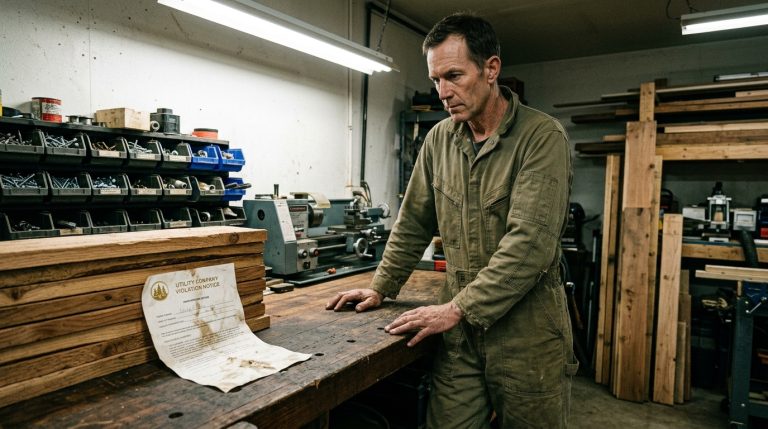
I didn’t step out of the cab immediately. I kept my hands at ten and two, the engine idling low, a rhythmic vibration that traveled up the steering column and settled into my bones. My eyes locked onto the white rectangle of paper taped to the center bars. It was high-grade bond, the kind that whispered of expensive law firms and air-conditioned boardrooms. It had no place on a working ranch where the only paperwork usually involved vet bills or feed invoices.
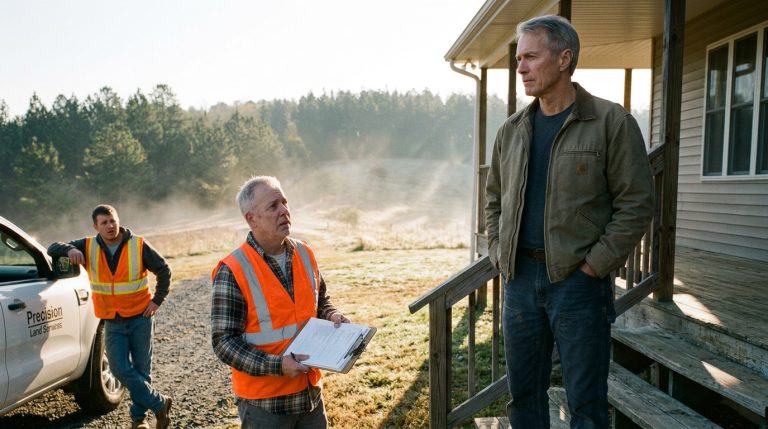
Two men stood on the other side, leaning against a clean, white SUV. Polo shirts, tucked in. Clipboards, held like shields. They weren’t looking at the cattle. They were looking at their watches.
My blood started that slow, creeping simmer—the kind that doesn’t boil over, but turns everything to iron. My father used to say that a man is defined by what he refuses to surrender. As I watched them, I realized they weren’t just here to inspect a boundary; they were here to redraw my life.
I gripped the door handle. The metal was cold under my palm, a grounding, sharp edge. I didn’t reach for my phone to call a lawyer. Not yet. I didn’t reach for the rifle behind the seat, though the weight of it was a comfort I didn’t need to acknowledge. I simply opened the door, the hinges groaning in the silence, and stepped out. The crunch of gravel beneath my boots was the only sound for a hundred yards.
One of the men, the younger one with a haircut that cost more than a week’s worth of hay, tapped his clipboard. “Mr. Callaway? We’re with the HOA inspection team. We’ve been waiting.”
I stopped five feet from the gate. I didn’t look at him. I looked at the notice, the bold, printed text demanding compliance with road easement protocols I’d never heard of. It was a masterpiece of manufactured authority.
“You’re on my land,” I said, my voice sounding flatter, colder than I intended.
The older man, who hadn’t spoken yet, flashed a smile that didn’t move his eyes. It was a predator’s trick—calculated, defensive, and entirely empty. “According to the new survey filing, Mr. Callaway, this entire access route is HOA jurisdiction. We aren’t trespassing. We’re performing an audit of our own property.”
The world shifted. It wasn’t just a disagreement over noise or cattle. They had moved the goalposts while I was working the fence line. And as I stared at the man’s polished shoes, I saw a discrepancy in the way the notice was taped—a slight tilt, a corner peeling. It was a small thing, a physical flaw in their perfect narrative.
I reached out, my fingers brushing the paper, and noticed the seal’s ink was slightly smudged. My mind clicked. If they were as precise as they pretended to be, they wouldn’t have let a smudge like that get past the front office.
“Audit,” I repeated, tasting the word. It felt like ash.
“That’s right,” the man said, his posture stiffening. “And if you’d like to keep using this road, we’re going to need to discuss the seven years of arrears you’re currently carrying.”
My pulse hammered against my throat, a steady, rhythmic warning. I didn’t laugh. I didn’t argue. I just looked at the gate, then back at them, and for the first time, I saw the fear beneath their manufactured confidence. They were holding a lie, and they were terrified I’d notice.
CHAPTER 2: The Brunch Suit
The silence lasted three heartbeats, but it felt like three hours. Richard Harlland didn’t blink. He just adjusted his cuffs, the fabric of his shirt crisp and white against the dusty, sun-bleached backdrop of my own property. He was a man who looked like he’d never had to scrape mud off his boots in his life.
“Mr. Callaway,” he said again, his voice smooth, professional, and entirely devoid of human warmth. “I’m sure you’re frustrated. Nobody likes an unexpected invoice. But the county records are quite clear. The maintenance of this thoroughfare is a shared responsibility, and retroactive assessments are a standard feature of association management.”
I looked at the clipboard he held. It was perfectly aligned. The ink was dark and sharp. Beside me, the younger inspector shifted his weight, his eyes tracking the movement of my hands. He was looking for a reaction, waiting for me to lose the internal battle.
My father’s voice echoed in the back of my mind, as clear as if he were sitting in the passenger seat: Never let anybody tell you what’s yours isn’t.
I felt the familiar tension in my shoulders, the weight of the ranch—the fence lines I’d mended, the stones I’d set. This wasn’t just a road. It was the spine of the ranch. Without it, the north pasture was an island.
“You keep using that word, Richard,” I said, stepping closer until the space between us felt electric. “Audit. Jurisdiction. Assessment. They sound important in a boardroom.” I gestured to the surrounding land, to the way the road dipped into the creek bed, the exact same way it had for eighty years. “But out here? They’re just noise.”
I didn’t wait for him to respond. I reached out and pulled the notice from the gate. The tape ripped with a sharp, sickening sound—the sound of skin tearing. I balled the paper up, the sharp edges digging into my palm, and held it out toward him. He didn’t take it.
“I’m not paying a dime,” I said. “And I’m not engaging in a ‘discussion’ about my own property. You’re leaving. And you’re taking your measuring wheels and your polo-shirted vultures with you.”
Richard’s smile didn’t falter, but his eyes narrowed. For a fraction of a second, the mask slipped. I saw a flash of raw, unfiltered irritation—not the annoyance of a man who’d been insulted, but the cold calculation of a man whose game plan had just hit an unforeseen snag. He didn’t like being told ‘no.’ He wasn’t used to it.
“You’re making a tactical error, Jake,” he said, using my first name with a practiced, patronizing familiarity. “The HOA has the legal weight of the county behind its filings. If you choose to escalate this, you’ll find that administrative law is a very slow, very expensive grinder. You’re a rancher. You have cattle to feed, fences to mend. Do you really have the time or the capital to fight a filing that’s already been recorded?”
He was testing the architecture of my life, poking at the pillars to see which one was softest. He was right about one thing: I was tired. I was already worn thin by the season’s demands. But that realization didn’t make me want to surrender. It made me want to sharpen the edge of the blade.
“I have all the time it takes,” I said.
“We’ll see,” Richard replied. He turned toward the SUV, his movements graceful, almost like a dance. He didn’t look back as he climbed inside.
I watched them drive off, their tires spitting gravel onto the very road they claimed to manage. I stood at the gate for a long time, the paper still balled in my fist. The air grew still, the afternoon heat beginning to shimmer off the dirt.
I looked down at the paper in my hand. It was just a piece of bond, but it felt heavy, vibrating with a hidden intent. My mind flicked back to the smudge on the seal—the slight, imperfection that didn’t belong in a world of such calculated precision.
I walked back to my truck, the engine turning over with a familiar, mechanical growl. I didn’t drive toward the house. I drove toward the county line, my eyes scanning the road, really looking at it for the first time in years. I checked the cattle guards, the drainage ditches, the way the gravel had been laid down in long-forgotten layers.
Every inch was a fingerprint of the family. If they wanted a war, they had picked the wrong piece of ground. I didn’t need to be loud, and I didn’t need to be fast. I just needed to be right.
When I pulled into the yard, the house was dark, the windows reflecting the dying sun. I walked inside, the silence of the kitchen greeting me like an old friend. I set the crumpled notice on the table. It sat there, a white scar against the dark, worn wood.
I pulled my chair out and sat down. The kitchen was cold, the air thick with the history of the room. I reached into the junk drawer, pulling out a heavy, magnifying glass I hadn’t touched since I was a boy.
I didn’t reach for a rifle or a phone. I reached for the light. I brought the glass down over the notice, focusing the lamp directly onto the seal. The smudge was still there, blurry and indistinct. But underneath it, the faint, erratic impression of a notary’s signature caught the light at an odd angle.
It looked rushed. It looked wrong.
I sat there for a long time, the hum of the refrigerator the only sound in the house. My heart was steady now, the heat in my blood replaced by a singular, cold focus. Richard Harlland thought he was playing a game of chess with a man who didn’t know the rules. He hadn’t realized that I wasn’t playing the game at all. I was simply protecting the land.
And if I had to dismantle every piece of his carefully constructed authority to keep it, I would. I leaned back, my eyes never leaving the paper, and began the long, slow work of tracing the lie back to its source.
CHAPTER 3: The Kitchen War Room
The light from the kitchen lamp was unforgiving. It turned the dust motes dancing in the air into tiny, suspended sparks and cast long, jagged shadows against the wall. I didn’t move for a long time. My eyes kept returning to the magnifying glass, to the way the glass distorted the signature on the HOA notice. It looked synthetic—a copy of a copy, stripped of the pressure and the nuance of a real human hand.
My father’s old desk was in the corner, a relic of oak and heavy brass hardware. I crossed the kitchen, my boots sounding hollow against the floorboards. I pulled the center drawer open, the wood scraping against wood with a protest that echoed in the empty house. Inside, I found what I was looking for: the primary metal box that held the ranch’s history.
I didn’t care about the mortgage papers or the insurance deeds. I pushed them aside. I needed the foundation. I found the original survey from 1958, the ink faded to a sepia tone, the lines drawn with a steady, architectural hand. Then, I pulled the property tax assessments from the last decade.
I began to build a wall of paper. I laid out the documents side by side, creating a timeline on the kitchen table that felt more like a map of a battlefield. My hands were steady, but my mind was moving at a clip, cataloging dates, names, and jurisdictions.
The HOA notice claimed the road was a shared easement established during their founding twenty-two years ago. I pulled the founding documents, the ones my father had kept in a sealed sleeve. I flipped through the pages, my finger tracing the legal descriptions of the subdivision boundaries. The road—my road—was excluded. It was consistently labeled as ‘private access.’
“You’re sloppy, Richard,” I muttered, the words disappearing into the silence of the room.
It wasn’t just the map; it was the entire framework of his argument. He was counting on the fact that most people see a seal and a document and stop asking questions. He was betting that I would see the ‘official’ stamp and assume it was the truth. He didn’t know that my father had taught me that truth wasn’t something you were given; it was something you maintained.
I spent the next four hours cross-referencing every drainage invoice, every gravel receipt, and every surveyor’s report I could find. My coffee went cold, a skin forming on the surface, but I didn’t take a sip. The narrative was becoming clear. The HOA hadn’t just ‘misunderstood’ the easements; they had been systematically encroaching, moving the boundaries on paper one document at a time, hoping no one would notice until the precedent was set.
I picked up the HOA notice again. Under the lens, the notary stamp was a disaster. Carol Ames—the name felt familiar, a local woman who had been a fixture in the county for decades. I pulled out my ledger of property maintenance. I remembered her. She’d come out to the ranch once, years ago, to witness the signing of a boundary adjustment when the county had widened the highway.
I went back to the drawer, searching for that old boundary adjustment paper. When I found it, I laid it next to the HOA notice. I looked at the notary signature on the old document—the flow of the pen, the way the ‘A’ arched, the specific pressure on the downstroke.
It didn’t match. Not even close.
A chill crawled up my spine, not from fear, but from the sudden, sharp clarity of what I was looking at. This wasn’t a clerical error. This was a deliberate act of forgery. Richard and his board had manufactured the legality of their claim by hijacking the identity of a trusted notary.
I realized then that I couldn’t just fight this in the street. I couldn’t just stand at the gate with a camera. This was a war of evidence, and I was holding the first piece of ammunition. I looked at the clock on the wall—3:15 AM. The house was settling around me, the joists creaking under the weight of the night.
I took out a fresh notepad. I needed more than just these documents. I needed to know if I was the only one. I started a list of names—other ranchers who had lived through the expansion of the subdivision, people who had complained about fences being moved or access being restricted. I didn’t have their numbers, but I knew where to find them: at the hardware store, at the local feed co-op, at the county records office.
I was no longer just a man protecting his land. I was an investigator, and for the first time in years, the ranch felt like it was shifting from a sanctuary to a fortress. I gathered the documents into a heavy file folder, the weight of it in my hand promising the kind of justice that couldn’t be ignored.
I wasn’t going to wait for them to come back to my gate with their orange cones and their polo shirts. I was going to find out how deep this rot went, and I was going to start by finding Carol Ames. If she didn’t sign this, then somebody else did—and that person was the key to unlocking the entire, fragile house of cards Richard Harlland had built.
I stood up, the chair scraping sharply against the floor. My eyes felt gritty, and my muscles ached from the hours hunched over the table, but my resolve was as sharp as a newly honed blade. The sun would be up in a few hours, and when it hit the horizon, I would already be on the road. The fight had moved beyond my fence line. It was no longer about a gate or a road. It was about the truth, and I was going to force them to look at it, whether they wanted to or not.
CHAPTER 4: The Orange Barrier
The sun was barely cracking the horizon, painting the sky in bruises of purple and gold, when I pulled up to the gate. I didn’t slow down as much as I should have. The crunch of gravel beneath the truck tires was loud in the morning stillness, a rhythmic protest against the morning air.
I stopped a few feet short of the entrance. There they were: three high-visibility orange cones linked by a zip-tied, laminated sign that screamed ACCESS REQUIRED HOA APPROVAL. It was pathetic. It was a joke. But it was a joke that effectively turned my driveway into a restricted zone.
I killed the engine. The sudden silence was heavy. I sat there for a moment, gripping the steering wheel, my knuckles white. I could have just pushed them aside with the truck, but that would be playing into their hand. They wanted a reaction. They wanted me to be the hot-headed rancher who couldn’t follow ‘procedure.’
I stepped out of the cab. The morning air was thin and sharp, smelling of pine and damp earth. I walked toward the cones, the ground firm under my boots. I looked at the sign. It was stapled to a rigid plastic frame, the typeface clean, sans-serif, and designed to look authoritative. I didn’t see a notary stamp here, but I saw the same arrogance that had dripped from Richard Harlland’s smile.
I took a picture with my phone, the shutter click sounding like a gunshot in the quiet. I moved methodically, capturing the placement of the cones, the zip ties, the way they stood in the middle of the road like a dam in a river. Then, I reached down.
My fingers brushed the plastic. It was cold, slick with dew. I didn’t yank it aside. I unsnapped the zip ties one by one, feeling the resistance of the plastic, the way it fought to stay locked. Once they were free, I set the sign aside in the tall grass and moved the cones to the shoulder.
As I stood there, wiping the grit from my hands, I heard the faint, distant hum of another vehicle. I looked up. A black sedan was coming up the access road from the subdivision, moving slowly. Richard. He wasn’t just sitting behind a desk; he was out here, playing gatekeeper.
The sedan pulled up behind my truck, its headlights cutting through the dawn. Richard stepped out, his posture carefully curated—shoulders back, chin tilted just enough to signify superiority. He didn’t look at me; he looked at the cones now sitting in the dirt.
“You’re tampering with association property, Mr. Callaway,” he said, his voice carrying clearly on the morning breeze. “That’s a violation of the local bylaws.”
I didn’t turn around right away. I finished brushing the dust off my jeans, my movements slow and deliberate. When I finally faced him, I kept my expression blank, a void he couldn’t fill with his practiced rhetoric.
“Property,” I said, repeating the word. “You keep using that word, Richard. I don’t think it means what you think it means.”
He took a step forward, his polished loafers sinking into the gravel. He looked at the gate, then back at me. “The board has authorized the restriction of non-resident access until the arrears are settled. You’re trespassing on your own land according to the current administrative status.”
I let out a short, sharp breath that might have been a laugh if there was any humor in it. “Administrative status. Is that what you call it when you forge a notary stamp?”
The silence that followed was absolute. For the first time, Richard didn’t have a canned response. His eyes flickered—a momentary lapse in his composure, a shift in the tectonic plates of his confidence. He recovered quickly, but the gap had been opened.
“I have no idea what you’re implying,” he said, his voice dropping an octave, losing some of its pre-packaged gloss.
“I’m not implying anything,” I said, stepping closer. I didn’t raise my voice. I didn’t need to. “I’m stating that I’ve been looking at your map, Richard. And I’ve been talking to Carol Ames. You might want to get your story straight before the county attorney gets involved.”
He stiffened. The morning light caught the edge of his watch, a sharp, metallic glint that seemed to mirror the steel in my own resolve. He was realizing that I wasn’t just some rancher who had been pushed around. I was a man who had done his homework, and the ground beneath him was no longer as solid as it had been five minutes ago.
“You’re out of your depth, Callaway,” he said, the mask sliding back into place, though it didn’t fit quite as well as it had before. “These are legal filings. They aren’t going away just because you decided to play detective.”
“Maybe not,” I said, turning my back on him to climb into my truck. “But they aren’t staying either.”
I started the engine, the roar drowning out whatever he was about to say next. I didn’t look in the rearview mirror. I just drove, the tires crunching over the spot where the cones had been, a physical act of reclamation. I had the photos, I had the timeline, and I had the conviction that I was holding the thread that would unravel the whole tapestry.
The road ahead was winding, disappearing into the shadows of the trees, but for the first time in weeks, I knew exactly where I was going. Every turn was a piece of my life, every mile a testament to the fact that they could print as many maps as they wanted, but they couldn’t write over the reality of the land itself.
I reached for my phone as I drove, my thumb hovering over the contact for Thomas Greavves. It was early, but for a man like Thomas, it was exactly the right time. The war had moved from the gate to the courthouse, and I was done playing defense.
CHAPTER 5: The Architect of Shadows
The legal district was a grid of sterile, concrete monoliths that seemed to swallow the morning light. I parked the truck in a spot that was too narrow, the metal of my door scraping against the concrete pillar as I squeezed out. I didn’t care about the paint. I reached onto the passenger seat and grabbed the file, the edges of the papers sharp against my skin.
Thomas Greavves’ office was located in a building that smelled of floor wax and old secrets. When I stepped inside, the receptionist didn’t even look up from her screen, the rhythmic clicking of her keyboard the only welcome. I didn’t wait for permission. I walked straight to the back, to the office where I’d sat a thousand times with my father, discussing crop yields and probate.
Thomas was already at his desk, his sleeves rolled up, a forest of paper and county records spread out before him. He looked up, his eyes tired but sharp, and gestured to the chair across from him.
“You’re early, Jake,” he said, his voice a low, gravelly hum.
I didn’t sit. I tossed the folder onto his desk, the sound of it landing sharp and heavy. “Richard tried to block the road again this morning. Put up cones. Threatened me with legal action.”
Thomas didn’t look surprised. He pushed his glasses up the bridge of his nose and began to flip through the documents I’d brought, his eyes scanning the lines with a predator’s focus. He didn’t speak for a long time, the only sound the rustle of paper.
“I’ve been digging,” he finally said, pointing to a document he’d pulled from the bottom of the pile. It was a file from three years ago—a boundary dispute between the HOA and a small nursery on the east side of the subdivision. “Look at the notary stamp on this one, Jake.”
I leaned over the desk. The stamp was identical to the one on the notice I’d received. Same arch of the ‘A’, same pressure on the downstroke, same smudge in the corner.
“They’ve been doing this for years,” Thomas whispered, his voice cold. “They identify a property that borders the subdivision, create a discrepancy in the easement maps, and then file an ‘amended’ jurisdiction map. If the owner doesn’t fight, they just keep pushing until they control the land.”
I felt a surge of adrenaline, sharp and hot. It wasn’t just a forgery; it was a business model. But then my eyes caught something else—a small, handwritten note clipped to the back of the nursery file. It was a set of initials: V.P.
“Vincent Puit,” I said, recognizing the name from the HOA board meetings. He was the treasurer, the man who always looked at his phone whenever the topic of road maintenance came up.
Thomas nodded. “He’s the one who signs the final filings. But look at the account number on the legal fees. It doesn’t go back to the HOA’s general fund. It goes to a private holding company, ‘V & R Holdings.'”
The realization hit me with the force of a physical blow. V and R. Vincent and Richard. They weren’t just managing the HOA; they were skimming from the very people they claimed to protect. My road wasn’t just a target for expansion; it was a way to launder the legal fees they were extorting from their own members.
“They’re using the HOA as a front,” I said, the words tasting metallic.
“They’re using the HOA to legitimize theft,” Thomas corrected. “But here’s the problem, Jake. If we take this to the county, we’re going to be up against an organization that has been filing these ‘amended’ maps for over a decade. They have a paper trail that looks perfectly legitimate, provided you don’t look too closely at the notarizations.”
I looked at the documents, the sheer volume of them, the complexity of the deceit. Richard hadn’t just been arrogant; he’d been building a cage, and I had just walked right into the middle of it. If I pushed too hard, he wouldn’t just try to block my road—he’d try to bury me under a mountain of litigation that would bankrupt the ranch before I even got to a judge.
“So we need to cut the head off,” I said, my voice steady. “If the notarizations are the keystone, then we take them down by proving the keystone is fake.”
Thomas looked at me, a flicker of something like respect in his eyes. “Carol Ames is the only one who can testify to that. But if she’s been involved in this—knowingly or otherwise—she’s not going to talk. Not unless she has to.”
I picked up the folder, the weight of it suddenly different. It wasn’t just my defense anymore. It was a weapon. “I’ll talk to her. I’ll make her see that if she goes down with them, she’s going to lose everything.”
“Be careful, Jake,” Thomas warned as I turned to the door. “Richard isn’t just a bureaucrat. He’s a man who has successfully stolen land for ten years without anyone calling him out. He’s going to notice when someone starts looking behind the curtain.”
I didn’t answer. I walked out of the office, the fluorescent lights of the hallway humming in my ears. The world outside looked different—the concrete, the sterile grid, the sense of order that hid the rot underneath. I didn’t see a road anymore. I saw a map of a crime, and I was the only one holding the keys to the truth.
The truck was still there, parked awkwardly against the pillar. As I reached for the door, I saw a black sedan sitting at the end of the block. It didn’t move. It just sat there, the windows tinted, the engine idling in the morning haze. Richard was watching. He knew I’d been here. He knew I’d been talking to Thomas.
The escalation was no longer a question of if, but when. I climbed into the truck, started the engine, and pulled out into traffic, not looking back. The game had changed, and for the first time, I was the one holding the cards.
CHAPTER 6: The Weight of Silence
The drive to Howard Bell’s place was an exercise in paranoia. I took the long way around, cutting through the old timber access roads instead of the main county thoroughfare, my eyes constantly darting to the side mirrors. Every flash of sunlight off a window, every parked car that lingered too long at a curb, felt like a sentry reporting my movements back to Richard.
When I finally pulled up to Howard’s farmhouse, it looked smaller than I remembered. It was a modest place, swallowed by overgrown hedges and the kind of quiet that suggested a life spent trying to avoid notice. Howard was standing on his porch, a mug of coffee clutched in both hands, his eyes tracking my truck with a cautious, bird-like intensity.
I didn’t park in the driveway. I pulled onto the shoulder and walked the rest of the way, the file folder tucked firmly under my arm. The air was heavy, the humidity rising as the afternoon pushed toward a storm.
Howard didn’t smile when I approached. He just nodded, his gaze shifting to the folder. “You’ve been making a lot of noise in town, Jake,” he said, his voice dry. “Word travels fast when you start asking about signatures.”
“I’m not asking, Howard. I’m building a case,” I replied, stepping onto the porch. The wood creaked under my weight, a sharp, splintering sound. “I saw you at the meeting. You know as well as I do that the map they used to claim my road is the same one they used to squeeze you three years ago.”
Howard looked away, toward the line of trees bordering his property. He took a slow, deliberate sip of his coffee. “I got tired, Jake. That’s all. I had bills, and my wife was sick, and they were threatening a lien that would have taken the house. Sometimes, you just look at the mountain and decide it’s easier to walk around it than to climb over.”
“And if they take my road, do you think they’ll stop?” I asked, keeping my voice low, controlled. “They’re using the same notary, the same false filings. If they win here, they’ll just move on to the next one. They aren’t building a subdivision, Howard. They’re harvesting it.”
Howard flinched. The word harvesting hit him with a visible impact. He turned back to me, his eyes searching my face for a trace of the fear he lived with every day. “What do you want?”
“I want the records of your settlement,” I said, opening the folder to show him the forged stamp. “I want to show the panel that this wasn’t an isolated incident. I need you to stand up with me at the hearing. Just stand there. Let them see that you aren’t the only one.”
Howard leaned against the railing, his hands trembling slightly—a subtle betrayal of his calm facade. He looked at the folder, then at his own front door, as if expecting someone to step out. “They’re dangerous, Jake. Richard doesn’t just use paperwork. He uses people. He finds out what you’re afraid of, and he makes sure you think about it every single day.”
“I’m already thinking about it,” I said. “And I’ve decided that I’d rather lose the fight than live in the shadow of someone like that.”
A car turned the corner, a dark, nondescript sedan that slowed as it passed Howard’s house. Howard’s shoulders tightened. He didn’t look at the car, but his entire posture shifted, turning him into a man trying to disappear into the woodwork. My own blood went cold. I knew that car. It wasn’t Richard’s, but it was the same model, the same color.
“They’re watching,” Howard whispered, his voice barely audible over the rising wind. “They know you’re here.”
“Let them watch,” I said, though my skin prickled. “If they’re watching, it means they’re afraid of what you know. It means we’re touching a nerve.”
Howard stared at me, and for a long moment, the silence was a physical weight between us. He was a man caught between the safety of his silence and the truth that was currently sitting in a file folder on his porch. I saw the struggle, the way his jaw worked, the way his eyes darted from the road to the folder and back again. He was calculating the cost of his own courage.
“If I sign,” he said, his voice thin, “it’s going to be the end of the peace I’ve built here. They won’t just come after the road. They’ll come after everything.”
“They’re already coming, Howard,” I said, my voice as hard as the gravel beneath our feet. “You’re just deciding if you want to meet them on your terms or on theirs.”
He reached out, his fingers brushing the file. He didn’t take it, but the contact was a commitment. The sky darkened, the first fat drops of rain beginning to patter against the porch roof, a rhythmic, insistent sound that mirrored the ticking of a clock.
He looked at me, a sudden, sharp clarity in his tired eyes. “Bring me the formal statement. Get it drawn up by Thomas, and make sure it’s airtight. I’ll sign it. But Jake—if we do this, we don’t blink. Not once.”
“I’m not blinking,” I promised.
As I walked back to my truck, the rain started in earnest, a sudden, violent downpour that turned the dust to slick, gray mud. I climbed in, the engine turning over with a steady, defiant growl. I looked toward the end of the road where the sedan had disappeared, and for the first time, I didn’t feel like the target.
I was the one setting the trap. The investigation was widening, the circle of witnesses was growing, and the rot at the heart of the HOA was about to be dragged out into the full, unforgiving light. I put the truck in gear and headed back toward town, the storm lashing against the windshield, clearing the path ahead. The next step wasn’t a choice anymore—it was a necessity. I was going to see Carol Ames, and I was going to make sure she understood that the truth had a price, and she was the one who was going to pay it.
CHAPTER 7: The Witness in the Static
The municipal office was a labyrinth of beige walls and buzzing fluorescent lights that seemed to drain the color from everything they touched. I stood at the service counter, the linoleum floor cold beneath my boots. Every time the heavy door behind the counter creaked, my pulse jumped. I had the forged document—the one with the impossible stamp—folded in my breast pocket, sitting against my ribs like a live coal.
Carol Ames appeared at 4:45 PM. She looked exactly as I remembered: silver hair pinned back with severe efficiency, glasses resting low on a nose that had spent forty years reading fine print. She was packing a leather briefcase, her movements economical and tired. She was five minutes from retirement, and she didn’t look like she was looking for a fight.
“Ms. Ames,” I said, stepping forward as she neared the counter.
She looked up, her expression guarded. “We’re closed, Mr. Callaway. Filing requests need to be submitted through the portal.”
“I’m not here for a filing,” I said, placing the document on the counter. I didn’t push it toward her; I just let it sit there. “I’m here to ask you about your stamp. The one on this amended jurisdiction map.”
She glanced at the paper. Her eyes widened for a fraction of a second, then snapped back to mine, ice-cold. “I don’t recognize this.”
“It’s from eighteen months ago. You notarized it—or at least, your stamp did.”
She reached out, her hand hovering over the document, but she didn’t touch it. I saw the tremor in her fingers—a faint, rhythmic shaking that betrayed her composure. “I notarize thousands of documents, Mr. Callaway. I have a meticulous record-keeping system. If it’s not in my log, I didn’t sign it.”
“Then look at your log,” I pressed, keeping my voice low. “Check the dates. Check the names. Because someone is using your identity to steal land, Carol. They’ve done it to me, they’ve done it to Howard Bell, and they’re doing it to whoever is next.”
She retreated a step, her hand going to her throat. She looked around the office, suddenly aware of the empty cubicles and the silent, staring computers. “You don’t understand who you’re dealing with. Richard Harlland doesn’t like loose ends. If I tell you this isn’t my signature, I’m not just admitting a forgery—I’m admitting that I lost control of my own seal. Do you know what that does to a career in this county? It destroys it.”
“Your career is ending in five minutes,” I said, gesturing to the briefcase. “But your reputation? That lasts. If you don’t say anything, you’re the one who provided the authority for the theft. You’re the one they’ll point to when the state attorney finally comes knocking.”
She looked at the document again, and this time, she touched it. Her finger traced the stamp, the pressure so light it was almost a caress. I saw the fear in her eyes—not the fear of losing her job, but the fear of being seen for what she was: a woman who had let the lines blur until they broke.
“They came to me,” she whispered, her voice barely audible. “Vincent Puit brought a stack of them. Said they were ‘procedural adjustments.’ I was tired, Jake. My husband was in the hospital, and they offered me a consulting fee. I didn’t look at the maps. I just… I stamped them.”
The confession hung in the air, a physical weight that made the room feel smaller. It wasn’t the masterminding of a crime; it was the quiet, mundane decay of integrity that made the whole thing possible.
“I need you to say that in a room,” I said. “Not to me. To the hearing panel.”
“They’ll destroy me,” she said, tears welling in her eyes. “They have lawyers. They have leverage. They know things about this town that you can’t even imagine.”
“They have fear,” I said. “But that only works if you’re holding onto something you’re afraid to lose. You’re retiring. You’re walking out that door. What do they have on you that’s worse than being the person who helped steal a family’s legacy?”
She looked at me for a long, agonizing moment. Outside, the rain turned into a deluge, hammering against the windows. She looked at her briefcase, then at the document, and finally at me. She wasn’t a villain; she was just someone who had stopped paying attention.
“I have the original logs,” she said, her voice steadying. “I never destroyed them, even when they told me to. I kept them because I thought… I thought one day I might need to prove I was doing my job.”
“Bring them,” I said. “And I’ll make sure the truth gets told.”
She nodded once, a sharp, decisive movement. She didn’t say goodbye. She just turned and walked into the back office, leaving me standing at the counter. I watched her go, the sound of her footsteps retreating into the silent building.
I walked out into the rain, the cold water soaking my coat. I didn’t feel relieved. I felt the heavy, sobering weight of the truth. It was ugly, it was small, and it was entirely human. Richard and Vincent hadn’t needed a mastermind to build their empire; they had just needed people who were tired, people who were afraid, and people who stopped looking at what they were stamping.
I reached my truck and sat in the dark for a long time, listening to the rain. The hearing was tomorrow. I had the documents, I had the witnesses, and now I had the keystone. I gripped the wheel, the cold metal biting into my skin. The fight was coming to a head, and for the first time, I felt the sharp, bitter taste of impending victory. It wasn’t the kind of win that makes you want to celebrate. It was the kind that leaves you staring at the ruins, wondering how much of the world was built on secrets just like this.
CHAPTER 8: The Weight of Truth
Richard Harlland didn’t look at me. He looked at the table in front of him, his knuckles white against the dark, polished surface, his expensive watch catching the harsh overhead light—a small, glittering reminder of the vanity that had driven him to this point.
Judge Patricia Voss sat motionless, her black robes a shadow against the stark white walls. She wasn’t rushing. She was a woman who understood the gravity of the record. Beside her, Thomas sat with a stillness that was both calm and absolute, his files stacked in perfect, lethal order.
“Mr. Harlland,” Judge Voss said, her voice cutting through the silence like a blade. “The notarization logs produced by Ms. Ames under oath show no record of the transactions you claim occurred on these dates. The testimony from multiple landowners, including Mr. Bell, confirms a pattern of coerced settlements based on these same contested maps. Do you have anything further to add to the record regarding the sourcing of these filings?”
Richard took a breath, a shallow, hitching sound. He opened his mouth, and for a second, I waited for the lie. I waited for the smooth, practiced justification that had carried him through twenty years of board meetings. But the room was too small, the evidence too heavy, and the silence too loud.
He didn’t speak. He just slowly, deliberately, pulled his hand away from the table. He stood up, not with the arrogance of a predator, but with the hollow, defeated gait of a man who realized the world he’d built had folded beneath him. He looked at the panel, then at Thomas, and finally, his eyes drifted toward me. There was no hatred there, only a profound, exhausted recognition. He knew he had lost not because I was stronger, but because I had been more patient with the truth than he had been with his lies.
He didn’t speak. He simply walked toward the exit, his movements brittle, a man who had suddenly remembered he was mortal.
The panel didn’t hesitate. Judge Voss read the ruling into the record—a clear, concise condemnation of the fraudulent filings and an immediate restoration of the Callaway property rights. The words were clinical, stripped of drama, but as they echoed in the room, I felt the tension that had been coiled in my chest for weeks finally unravel.
The aftermath was slow. The room emptied out, the lawyers packing their briefcases, the board members whispering in shocked, hushed tones, their eyes avoiding mine. I stayed in my seat until the room was mostly quiet. Thomas leaned over, clapping a firm, steady hand on my shoulder.
“It’s over, Jake,” he said softly. “The county attorney will handle the rest. They don’t have a leg to stand on.”
I nodded, but I didn’t feel like a victor. I felt like a man who had just finished a long, grueling job. I walked out of the building and into the late afternoon air. The rain had stopped, leaving the streets washed clean, the sky a vast, indifferent blue.
The drive home was quiet. I didn’t rush. I watched the familiar landscape unfold—the fence lines, the old oaks, the way the road dipped toward the creek. I turned off the main road and onto my own gravel path. The gate was open, exactly as I’d left it.
I pulled up to the house and climbed out. The ranch was silent, the cattle grazing peacefully in the distance, a red-tailed hawk circling high above. I walked over to the gate, the iron heavy and cold under my hand. I reached down and tightened the bolt on the bottom latch—a small, necessary repair that I’d been putting off for months. The metal groaned, then snapped securely into place.
It was a small act, but it felt like everything.
I turned and looked out over the land, the long, winding road leading back toward the county line. There were no orange cones, no signs, no threats. It was just the land, the history, and the quiet satisfaction of knowing that the boundaries were exactly where they were supposed to be.
The front door opened, and my daughter stepped out onto the porch, her silhouette framed against the warm light spilling from the kitchen. She didn’t call out; she just stood there, watching me. I walked toward her, the gravel crunching beneath my feet, the sound rhythmic and steady.
When I reached the porch, I didn’t need to explain what had happened. She saw it in my posture, in the way I held my shoulders, the way the tension had finally bled from my face. We stood there together in the cooling air, the vast, open silence of the ranch wrapping around us like a protective cloak.
“Is it done?” she asked softly.
“It’s done,” I said.
I looked at my hands, calloused and stained with the day’s work. They were the same hands that had built the fence and mended the road, the same hands that had held the file folder that had brought down an empire of lies. I had learned that the truth was a heavy thing to carry, but it was the only thing worth holding.
I walked into the house, the warmth of the kitchen greeting me like a promise. I hung my coat on the hook, the house smelling of coffee and dry sage, the rhythm of my life finally settling back into the quiet, steady pace it was meant to follow. Tomorrow, there would be fence lines to check and cattle to feed. There would be the endless, necessary labor of a life lived on its own terms. And as I sat down at the table, the weight of the last few weeks finally dropping away, I knew one thing for certain: I would wake up with the sun, and I would drive the road, and I would be exactly where I belonged.