The Current of Pinewood Springs: A Pragmatic Account of Infrastructure, Integrity, and the Price of Power
CHAPTER 1: The Cost of Compliance
The air in the garage smelled of stale gasoline and the damp, metallic tang of an approaching front. I stood by the open side gate, watching the propane company’s technician wrestle with the heavy iron bolts securing my backup tank. It was painted a forest green, meant to vanish against the privacy fence, but now it looked like nothing more than a rusted anchor being dragged from the mud.
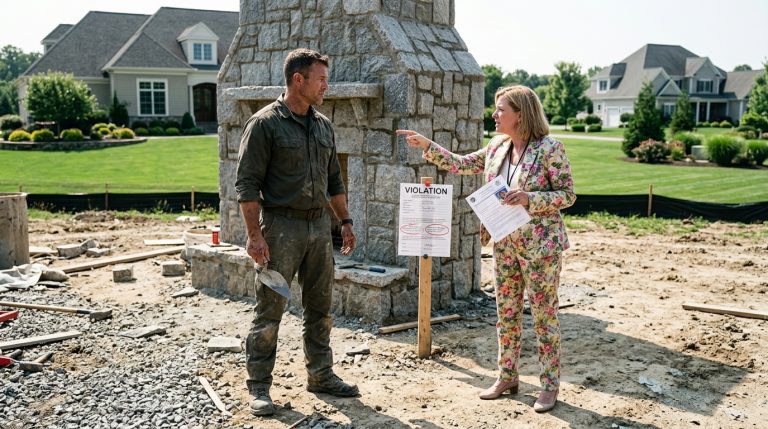
Patricia Danvers stood at the edge of my driveway. She didn’t look at me; she watched the tank. Her Lexus, parked at the curb, gleamed with a predatory, polished finish that mocked the dark sky. She was the gatekeeper of Pinewood Springs, and today, she was collecting her pound of flesh.
“Thirty days,” she said, her voice devoid of inflection, professional as a tombstone. “That was the deadline, Mr. Matthews. You are currently in the grace period of your own undoing.”
I leaned against the doorframe, feeling the grit of the concrete floor beneath my boots. The silence in the house was heavy. Without the generator, the HVAC system was dead, the clocks were dark, and the hum of the refrigerator had long since faded into an unsettling stillness.
“The application was complete, Patricia,” I said, my voice hitting the damp air with a flat, pragmatic weight. “Engineering specs, safety inspections, everything. You denied it because of ‘aesthetics.’ There is nothing aesthetic about an empty patch of dirt where my security used to be.”
She finally looked at me then. Her eyes were sharp, evaluating. She wasn’t seeing a neighbor; she was seeing a line item on a ledger that needed to be balanced. “The covenants are the foundation of this community’s value. If we allow one deviation, we invite decay. We are simply maintaining the standard.”
As she turned back toward her car, a flicker of light caught my eye. Across the cul-de-sac, the HOA office building sat tucked behind a wall of groomed shrubs. Even through the thickening clouds, the building’s security lights were perfectly, offensively bright. A faint, low-frequency vibration traveled through the ground beneath my feet.
It was the diesel generator.
I looked at the tank being hoisted onto the truck. It was five hundred gallons. The HOA unit, I knew from a public records search I’d filed months ago, was a thousand. The iron in my blood went cold. This wasn’t about property values or the height of a fence. It was about who held the fuel, and who was left to freeze in the dark.
I watched the truck pull away, leaving behind a scarred, empty space in the sideyard. My house was cold, and for the first time in eight years, I felt entirely exposed.
CHAPTER 2: The Friction of Silence
The space where the tank had sat was raw, a scarred patch of dead grass and overturned dirt that looked like a freshly turned grave. The silence of the neighborhood, usually a background hum of lawnmowers and distant traffic, felt different now—it was a heavy, pressurized thing. Without the generator’s low-frequency thrum, the house felt diminished, as if it had lost its heartbeat.
I stood there for a long time, the cold seeping through the soles of my work boots. The wind picked up, carrying the smell of wet pavement and ozone. The sky to the west had bruised into a deep, sickly purple, the clouds churning in a slow, rhythmic rotation. Another front was moving in, faster and more violent than the last. I looked toward the HOA office, still glowing with that defiant, artificial brilliance. The disparity between my dead system and their humming diesel unit wasn’t just a grievance anymore; it was an tactical advantage.
My phone vibrated in my pocket. A text from David, my lawyer. Technically compliant, Connor. Don’t push it.
I shoved the phone back into my pocket, the screen glowing briefly against my thigh. If compliance was a cage, I was done waiting for the door to open. I walked into the garage, my footsteps echoing against the concrete. The smell of oil and stale gas lingered, a phantom reminder of what had been ripped out. I needed to know how deep the HOA’s “operational necessity” actually ran.
I sat at my workbench, the surface cluttered with rusted tools and half-finished wiring projects. I pulled out my laptop, the screen illuminating the dark, cluttered space. My fingers moved over the keys with a familiar, rhythmic precision. I wasn’t looking for legal loopholes anymore; I was looking for the paper trail. Pinewood Springs was a private entity, but its utility contracts were public record, buried in county filings that nobody bothered to read unless they were looking for a reason to sue.
A sudden, sharp crack of thunder shook the house, the vibration rattling the jars of screws on my shelf. The lights in the garage flickered—a brief, stuttering death rattle—before stabilizing. The air pressure dropped so rapidly my ears popped. The weather was turning mean, a jagged, unpredictable mess that would likely knock out the grid again.
I searched through the county’s digital archives, my eyes tracing rows of permit applications, zoning waivers, and vendor contracts. There it was: the HOA’s maintenance agreement. It was buried under an amendment for “Community Infrastructure Upkeep.” I pulled the PDF, the digital page scrolling slowly as the storm outside hammered against the siding.
The name popped off the screen: Holloway Management Group. I squinted. The address linked to the management group was a PO Box in downtown Denver, but the contact person was listed as Marcus Holloway. A quick, aggressive search of business registrations revealed the connection. Marcus Holloway and Patricia Danvers hadn’t just been board president and vendor; they were listed as co-owners of an LLC that had received over forty thousand dollars in “consulting fees” from the HOA in the last two years alone.
The connection was physical, documented, and absolutely, unequivocally corrupt.
My heart rate didn’t spike; it steadied into a cold, logical rhythm. I wasn’t looking at a mistake or an oversight. I was looking at the fuel line of the whole system. The light from my monitor cast long, jagged shadows against the wall of the garage, the rusted surfaces of my tools glinting in the dark.
I leaned back, the chair groaning under my weight. The storm outside began to roar, a high-pitched whistling sound that tore through the trees. I had the leverage, but if I moved too quickly, I’d be crushed before I could even make a sound. I needed more than just the papers; I needed to prove that the rules they forced on us were the same ones they were using to line their own pockets.
I saved the files, my thumb hovering over the mouse. The wind slammed into the house again, and for the first time in a week, the lights didn’t just flicker—they went out entirely. The silence that followed was absolute, save for the frantic, metallic rhythm of rain hitting the roof. I sat in the pitch black, the screen of the laptop the only light left in the room, watching the battery icon tick down, a slow, inevitable march toward total darkness.
I wasn’t just cold anymore. I was ready.
CHAPTER 3: The Weight of Evidence
The final pixel of the laptop screen died with a soft, electronic sigh, leaving me in a darkness so thick it felt weighted. The storm outside had escalated from a rhythmic drumming to a violent, chaotic assault; the wind tore at the garage siding with the screech of rusted metal straining against its bolts. I sat perfectly still for a heartbeat, my hands still hovering over the cold keys. The silence inside the house was absolute, but the house itself was groaning, the structural timber shifting under the atmospheric pressure of the supercell.
I didn’t move. I couldn’t afford to. I needed that PDF of the Holloway Management agreement, along with the proof of the board-approved consulting fees. I reached out into the dark, my fingers finding the hard, cool edge of the workbench. I knew this space by heart—every scratch in the wood, every box of rusted hardware, every misplaced tool. I reached into my pocket, my thumb fumbling for the small emergency flashlight I kept clipped to my keyring.
The beam of the light cut through the gloom, a thin, stark cone of white that illuminated the swirling dust motes in the stagnant air. I didn’t point it at the house; I kept it low, aimed at the floor. My goal was to move, to get to the backup drive I had stored in a fireproof lockbox near the back wall.
The floorboards under my boots felt spongy. Water was likely seeping in from the driveway, a byproduct of the failing drainage in the cul-de-sac. It was another failure of the HOA’s “upkeep”—the gutters were clogged, the runoff unchecked. My progress was slow, deliberate. I kept my back to the wall, listening. Outside, the world was a cacophony of breaking branches and the frantic, wet slapping of rain, but inside, I was the only thing moving.
I reached the lockbox. The metal was icy to the touch, oxidized from the humidity. I punched in the combination, the mechanical click of the tumblers sounding like a gunshot in the quiet room. I pulled out the external drive. It was a simple, utilitarian piece of tech, but it held the keys to the entire house of cards. I took a deep breath, the air smelling of wet concrete and trapped, ancient dust.
I couldn’t just store this here. If the storm took the house, or if Patricia’s reach extended to “security inspections,” the evidence would be gone. I looked toward the garage door, then back at the interior door leading into the kitchen. My house was dark, the refrigerator’s hum absent, the familiar layout now a series of obstacles in the shadows. I needed to move the data, but I also needed to see if anyone else in the neighborhood was watching.
I moved to the side window, peeling back the edge of the heavy, dust-caked tarp I kept over my tools. Through the gap, the neighborhood was a graveyard of dark homes. But the HOA office—that perfect, architectural centerpiece of the neighborhood—was still bathed in a soft, internal glow, though it seemed dimmer than before. The diesel generator’s output was fluctuating. They were burning through their fuel, and they were desperate.
A shadow moved across the window of the HOA office. It was quick, deliberate, and entirely out of place for an empty building.
My grip on the flashlight tightened. I pulled back from the window, the cold of the glass lingering on my forehead. Someone was in there. Someone was managing the decay, watching the lights, and holding the keys to the kingdom while the rest of us sat in the dark. The realization didn’t shock me; it confirmed the architecture of the trap. I wasn’t just fighting a policy; I was fighting an occupation.
I retreated to the center of the garage, the space feeling smaller, more claustrophobic. I checked my watch—the hands were invisible in the dark. I had to reach Frank, the retired accountant, before the morning. He was the only one on the board who had shown even a flicker of doubt. If I could get these records to him, if I could show him the paper trail of the Holloway consulting fees, I might be able to trigger an emergency audit.
But to do that, I had to leave the house. I had to step out into the middle of the storm, past the patrols of Patricia’s influence, and find the one person who could dismantle the board from the inside. The floor shifted again, a groan of timber from the kitchen above. Someone was outside, walking the perimeter.
I went still, my lungs burning as I forced myself not to breathe. Footsteps. Slow, deliberate, and heavy, crunching into the wet gravel of the driveway. They weren’t the aimless steps of a neighbor checking their property; they were the measured cadence of someone inspecting the damage.
I set the drive down on the workbench, covering it with a rag, and picked up a heavy, steel-headed hammer. It was a tool, nothing more, but in the dark, its weight felt like an equalizer. The handle was wrapped in worn, frayed rubber that provided a steady, rough grip. I waited. The footsteps stopped directly in front of the side door.
The handle of the door, locked and reinforced, didn’t move. But the pressure against the wood was unmistakable. Someone was testing the threshold.
The wind shrieked, a sudden gust blowing the rain against the garage door like handfuls of gravel. In that noise, a voice—muffled, low, and perfectly, terrifyingly familiar—spoke to someone else, a shadow-voice that barely cleared the roar of the gale.
“Check the power junction,” the voice said. It was Patricia.
I stood in the dark, the hammer held at my side, my heart beating a steady, rhythmic cadence that matched the pulse of the storm. They weren’t just here to look; they were here to make sure the darkness stayed permanent.
CHAPTER 4: The Breach of Protocol
The wood beneath my palm groaned. Patricia’s fingers—or the person she’d sent—were testing the deadbolt, the metal latch vibrating against the strike plate with a rhythmic, impatient force. It was a calculated intrusion. They weren’t looking to break in with a crowbar; they were looking to see if the door was already compromised. I kept the hammer low, my knuckles white against the rubber grip. The garage was cold, the air thick with the smell of rain and the sharp, metallic tang of the tools hanging on the pegboard.
I didn’t move. I forced my breathing to slow, a deliberate, disciplined exercise in containment. If I opened that door, I was handing them the justification they needed to label me a threat to community order. If I stayed silent, I was the ghost in the machine, watching them from the shadows.
“The junction box isn’t here,” a man’s voice murmured—not Patricia’s, but someone younger, impatient.
“The records say it was serviced here last month,” Patricia’s voice drifted in, thin and distorted by the wind. She sounded annoyed, the irritation of a woman who was used to reality bending to her schedule. “Check the other side of the fence. If the breaker is tripped, he’s running an illegal load.”
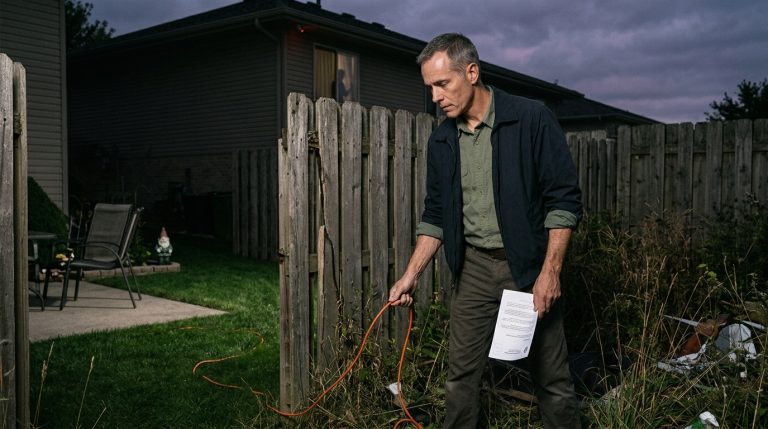
Illegal load. The irony was a jagged edge in my mind. The breaker box was original to the house, but I’d modified it to handle the surge of the generator. It was perfectly safe, perfectly inspected, and perfectly within the bounds of my own property rights—rights they had been systematically eroding for years. I eased my weight away from the door, my boots silent on the concrete, and retreated toward the interior door leading into the kitchen.
I didn’t turn on a light. I didn’t need to. I knew the geometry of this house, the way the floorboards sighed under specific pressures, the way the air shifted when a window was cracked. I slipped into the kitchen, the linoleum cold beneath my socks. Through the window, I could see the narrow beam of a flashlight sweeping across my sideyard, slicing through the rain like a white blade.
They were moving toward the privacy fence, their shadows long and grotesque against the sodden grass. I moved to the kitchen counter, my hand finding the heavy, laminated copy of the HOA bylaws I’d kept in a drawer. I flipped it open, my thumb tracing the text by the ambient light of the storm flashes.
I’d been looking at the wrong documents. I’d been focused on the tank removal, the fuel storage, the aesthetic covenants. But as I scanned the fine print, a single, handwritten note on the margin of the maintenance schedule caught my attention—a date, scrawled in black ink, that shouldn’t have been there. It was a work order for the HOA’s diesel generator, dated for a Tuesday three weeks ago, but it listed my home address as the service location.
My breath hitched. They hadn’t just been auditing me; they were using my property as a placeholder for their own maintenance, funneling the cost of their office generator’s upkeep into the neighborhood’s general infrastructure budget. It was a classic shell game. The “consulting fees” to Holloway Management weren’t the only leak; they were offloading the operational costs of their own facility onto the residents’ accounts.
I turned the page, my pulse hammering in my ears. The work order was signed by Holloway.
A heavy thud sounded against the garage door. They were done looking for the junction box. Now, they were looking for a way in. I needed to move, but I couldn’t leave the house. If they entered, they would find the laptop, the drive, and the trail I’d been building. I reached into the utility drawer and pulled out a heavy-duty screwdriver, my mind racing.
The strategy had to shift. I couldn’t just keep the evidence; I had to use it to create a friction point that they couldn’t ignore. If Patricia wanted to treat my home as a maintenance site, I would show her exactly what kind of infrastructure she was dealing with. I moved to the back door, the one that led to the utility crawlspace beneath the house, and slid the bolt back.
The rain rushed in, a deluge of cold, wet air that tasted of iron. I stepped out into the mud, the wind instantly soaking my shirt. I wasn’t running. I was moving to the only place where the HOA’s control was weakest: the main power feed for the entire block, hidden behind the overgrown hedges at the edge of the cul-de-sac.
If they wanted to check the load, I’d give them something to look at. I moved through the shadows of the fence, the mud slick and unstable under my feet. The flashlight beam swept the yard again, passing inches from where I crouched in the dark. I didn’t flinch. I watched them, their silhouettes framed against the flickering glow of the HOA office, and I understood the truth. They were the ones in the dark, even if their lights were still on.
I reached the base of the utility post, the wood damp and swollen with water. My hands found the metal housing, the casing cold and vibrating with the current. This was the hub, the place where the neighborhood’s power was divided and distributed. If I tripped the main line here, the entire street would go dark—including their precious office.
I held the screwdriver against the housing, the metal biting into the painted steel. I wasn’t going to break it. I was just going to open it, and let the storm handle the rest.
CHAPTER 5: The Static Point
The metal casing of the utility housing offered no resistance as I worked the screwdriver into the seam. It was an old unit, oxidized by years of mountain air and neglect, and the screws were fused with rust. Every turn of the tool sent a shudder through the post, a vibration that felt like a pulse under my fingertips. I didn’t want to cut the power; I wanted to trigger a fault. A calculated, temporary imbalance that would force the neighborhood’s grid to reset, and in that reset, I hoped to force a logged error—a clear, digital signature of the HOA’s facility drawing more power than the load-balancing controllers could handle.
The wind surged, a wall of cold air that nearly tore the screwdriver from my hand. I jammed it deeper, bracing my boots against the mud, my focus narrowing down to the tension in the metal.
“Hey! You there!”
The beam of a high-intensity flashlight swept over my shoulder, blindingly bright against the dark, rain-slicked wood of the post. I froze. The voice was heavy, strained—it was Frank Patton, the retired accountant, but there was a tremor in his tone that suggested he wasn’t alone.
I didn’t turn. I kept my head down, my frame shielded by the post and the overgrown foliage. If I bolted, I was guilty. If I stayed, I was an observer. I pulled the screwdriver free and tucked it into my jacket pocket, the steel cold against my skin.
“Connor?” The voice was closer now. Frank stepped into the periphery of my vision, his raincoat glistening like black oil. He was holding a heavy duty mag-light, his knuckles strained as he gripped it. Behind him, emerging from the gloom of the cul-de-sac, was a man I recognized—one of the security contractors hired by Holloway.
“Frank,” I said, my voice barely audible over the gale. I turned slowly, making sure my hands were visible, empty. “Just checking the connection. The storm’s putting a lot of stress on the main line.”
Frank looked at me, then at the utility housing. His face was a map of tired lines and suppressed worry. “You’re going to get yourself killed. Or arrested. The board has eyes on every corner of this street tonight, Connor. They know something’s shifting. They’re tracking the power usage logs in real-time.”
The security contractor, a man whose face was obscured by the hood of his jacket, stepped forward. He didn’t look like a guard; he looked like a technician. “He was tampering with the feed,” the man said, his voice flat, professional. “That’s a felony, Matthews.”
“I was checking the connection,” I repeated, my gaze locking onto the contractor’s eyes. He didn’t blink. He was holding a portable diagnostic tool—a handheld reader that showed a continuous stream of data. He was monitoring the surge. My move had been detected before I even had the chance to finish. The escalation was happening faster than I had calculated.
“Step away from the post,” the contractor ordered.
I took a deliberate step back, my boots squelching in the mud. “Is that what Holloway told you to say? Or are you just working the overtime on the consulting budget?”
The contractor didn’t respond, but his posture hardened. Frank looked between us, his flashlight beam wavering. The tension in the air was palpable, the static electricity from the storm making the hair on my arms stand up. I felt a surge of adrenaline, cold and sharp, as I realized the trap. They weren’t just monitoring the power; they were waiting for someone to try to shut it down.
“Leave him, Miller,” Frank said, his voice unusually steady. He looked at the contractor, then back at me. “I’ve seen the logs, Connor. I know what they’re doing. But you can’t fight this in the dark. Come with me. We need to get inside before the next surge hits. The whole grid is going to dump when the substation reaches critical capacity.”
“Frank, wait—”
“No,” Frank interrupted, his eyes flashing with a sudden, desperate intensity. “Don’t touch the feed. If you blow the main, you destroy the records too. That’s what they want. They want to force a total system failure so they can rewrite the logs.”
The reality of his words hit me like a physical blow. The decoy wasn’t just the consulting payments; it was the grid itself. They were using the power outage as a literal purge, a way to wipe the forensic trail clean under the cover of a natural disaster. My attempt to force a reset would have been the final, fatal step in their scheme.
“You’re one of them?” I asked, my voice tight.
“I’m trying to keep what’s left of this neighborhood from burning down,” Frank replied. He reached into his pocket and pulled out a small, encrypted key fob. “I have the backups. Real ones. Not the ones Holloway manipulated. But we have to move now. They’re shutting down the final circuits.”
A low, guttural moan rose from the ground—not wind, but the sound of heavy equipment dying. The lights in the HOA office, which had been flickering for minutes, finally groaned and cut to black. The street went completely, terrifyingly dark.
The contractor—Miller—didn’t move. He stood in the pitch black, his flashlight off. The sound of rain seemed to amplify, a torrential roar that drowned out everything else. I felt a hand on my shoulder—Frank’s—and he pulled me toward the trees.
“We don’t have much time,” Frank whispered, his breath hot against my ear. “Patricia is already at the office. She’s destroying the physical files.”
We turned, the mud grabbing at our feet as we sprinted away from the utility post. My mind raced, the paranoia settling in—was Frank a savior, or was this the final move to lead me into a corner? Every shadow looked like a threat, every gust of wind like an approaching patrol. We weren’t just fighting for power anymore; we were fighting to keep the truth from being erased in the dark.
CHAPTER 6: The Architect of Shadows
The rain was no longer a weather event; it was a physical barrier. It hammered against the back of my jacket, a relentless, icy rhythm that blurred the world into streaks of mud-brown and charcoal-gray. We crouched behind a line of dense, neglected hedges that separated the cul-de-sac from the maintenance road behind the HOA office. My lungs burned with the cold, thin air, and the mud had seeped into my boots, turning the simple act of standing into a battle against the slick, uneven ground.
Frank fumbled with the key, his hands shaking—not from the cold, but with an intensity that bordered on frantic. He jabbed the key into a nondescript steel utility door embedded in the rear wall of the HOA annex. It was a service entrance, one that wasn’t marked on any of the neighborhood maps I’d studied.
“The records are inside,” Frank gasped, his voice straining against the roar of the wind. “They’re running the shredder in the main office. If we don’t get to the server room before the backup power kicks in, everything—the Holloway payments, the maintenance logs, the diversion of funds—it all gets wiped. The system is programmed to purge on a hard reset.”
I watched him. The darkness of the alley was absolute, broken only by the occasional, violent strobe of lightning that turned the world into a high-contrast negative. Frank was sweating, his face pale and etched with a desperation that looked, in the harsh, flickering light, suspiciously like terror. Or perhaps, I realized with a sudden, sinking weight in my gut, it was the mask of someone who knew exactly when the trap was going to snap shut.
“You said you had the backups,” I said, my voice sharp, cutting through the ambient noise of the storm. I didn’t move toward the door. “Why do we need to reach the server room if you already have the data?”
Frank stopped, the key half-turned in the lock. He didn’t look at me. He kept his eyes fixed on the door, his posture rigid. “The data I have is the summary, Connor. The evidence, the real proof, is in the metadata of the live server. That’s what they’re trying to destroy. You want to win? You need the primary source.”
He twisted the key. The door clicked, a dry, metallic sound of disengagement. He swung it open, revealing a sliver of dimly lit corridor, and stepped inside. He stood there for a moment, waiting for me to follow, a silhouette framed against the sterile, fluorescent humming of the interior.
My mind raced. Every instinct I’d honed over years of engineering—of tracing faults through complex, tangled systems—screamed at me that this was wrong. The HOA office was the kill zone. If I stepped through that door, I was stepping into the center of their defensive perimeter.
I looked back toward my house. The neighborhood was silent, dark, and utterly indifferent to the struggle. My gaze traveled to the HOA office’s main entrance—the one where I’d seen the shadow earlier. The security contractor, Miller, was standing there, his silhouette motionless against the glass. He wasn’t guarding the entrance; he was waiting.
He was watching the door Frank had just unlocked.
“Connor!” Frank hissed, his voice tinged with genuine panic. “We don’t have time! The grid is about to cycle!”
I stepped forward, but I didn’t go through the door. I reached out and caught the edge of the frame, my fingers finding a heavy, concealed latch—a magnetic alarm sensor. It had been bypassed, the wiring neatly clipped and bridged. Frank hadn’t just been given this key; he’d been given an invitation. The bridge was a professional job, clean and precise.
“This wasn’t broken by a resident,” I said, my voice low. “This was bypassed by a technician. Miller.”
Frank’s face finally turned toward me. The light from the hallway hit his eyes, and there was no warmth there—only a cold, hollow calculation. “Sometimes, to topple a system, you have to use its own protocols against it. Get inside, Connor. Unless you’re planning on going back to the dark.”
The floorboards in the hallway vibrated. The sound of heavy, rhythmic footsteps began to echo from the front of the building—someone was moving down the corridor toward us, fast. The emergency lights in the ceiling flickered, shifting from a dim red to a sharp, clinical white. The primary system was rebooting.
I was standing on the threshold of a choice that was no longer about property rights or propane tanks. It was about whether I was going to be the architect of my own undoing or if I could find a way to pivot. I looked at the hammer still in my pocket, the cold steel a reminder of my only real leverage. I didn’t go inside. Instead, I reached out and slammed the door shut, locking it from the outside with the heavy, rusted bolt I’d seen on the frame.
“Connor, what are you doing?” Frank shouted from behind the door, his voice muffled. The banging started immediately—a frantic, desperate thudding against the metal.
I didn’t answer. I turned and ran, not toward the house, but toward the main breaker box at the side of the building. If the system was going to purge, I wouldn’t stop it. I was going to accelerate it. I had the override codes from the file I’d recovered earlier, the ones I’d thought were just records. Now, I realized they were access credentials to the entire municipal grid that fed this neighborhood.
I reached the breaker housing, the mud clawing at my boots. The storm was at its peak, the wind tearing shingles from the roof of the annex. I jammed the screwdriver into the service port, but this time, I didn’t aim for a fault. I aimed for the bypass.
The sparks that jumped from the housing were blinding, a fountain of white-hot liquid metal that sizzled in the rain. The smell of burning insulation and ozone filled the air, a sharp, acidic sting. The office building let out a low, mechanical scream, a sound of transformers straining and failing under a massive, forced surge.
Every light on the block vanished. The silence that followed was total, broken only by the sound of the rain. I stood in the dark, my breath coming in jagged, painful gasps, and listened.
For the first time in years, the hum was gone. And in the sudden, absolute stillness of the neighborhood, I knew the game had changed. The truth wasn’t in the servers anymore. It was in the wreckage.
CHAPTER 7: The Fracture of Logic
The smell of ionized air was so thick it coated the back of my throat, metallic and sharp. I leaned against the utility post, my body trembling from the recoil of the surge. My hands were scorched, the skin raw where the heat had lashed out, but the darkness was absolute. The HOA office was dead. No hum, no glow, no rhythmic thumping of the diesel engine. The entire neighborhood was silent, save for the frantic, wet sound of the rain sluicing off the rooftops.
I pulled the screwdriver from the housing, the tip of it blackened and pitted from the discharge. I had done it. The override had triggered a hard-circuit blow across the entire block, a deliberate, violent refusal of their power. But as my eyes adjusted to the gloom, a subtle, rhythmic clicking began to resonate from deep within the earth—a sound I hadn’t expected.
It wasn’t a mechanical engine. It was the sound of a relay switch, a persistent, ticking cadence.
I knelt in the mud, pushing aside the overgrowth at the base of the utility hub. There, beneath the primary feed I had just fried, was a secondary, armored conduit I had never seen before on any of the municipal records. It ran deep into the ground, shielded in heavy-duty PVC, and it was still powered. Even with the main grid down, this line was pulsing with a low, insistent current.
They hadn’t just been stealing power from the neighborhood utility; they had built a private, isolated grid that bypassed the grid entirely. The consulting fees were just the tip of the iceberg—they had essentially privatized a segment of the public infrastructure, turning the neighborhood into a captive node for their own energy consumption.
The clicking increased in frequency. I stood up, the mud dragging at my boots like a physical weight. I needed to trace the line. I followed the conduit as it snaked through the darkness, away from the office and toward the back fence of the HOA president’s own property. The path was treacherous, a narrow strip of slick ground between the hedge and the back fence of the neighboring houses.
I moved with a predatory, quiet efficiency. My exhaustion had hardened into a single, focused objective. I wasn’t just looking for evidence now; I was looking for the heart of the system.
As I crested the rise near the back of the property line, I saw it. A small, reinforced shed, hidden behind a thicket of overgrown pine. It wasn’t an HOA structure. It was the private battery bank, a sprawling, modern array of high-density lithium cells, linked directly to the HOA office through the underground conduit.
A shadow shifted near the shed’s entrance.
I dropped to the ground, the damp earth cold against my chest. Miller, the security contractor, was standing by the door. He wasn’t guarding it—he was loading something into a heavy, metallic case. He was stripping the data drives from the local storage units. He wasn’t just working for Patricia; he was cleaning up the mess before the authorities could arrive to investigate the surge.
The weight of the hammer in my pocket felt like a liability now. I wasn’t going to fight him. I was going to document him. I pulled my phone, the screen still flickering with a dim, dying light, and held it steady. The rain blurred the image, but the reflection of his face in the light of his own equipment was clear enough.
He stopped, his head snapping toward the pines. He had heard the rustle of the leaves, the snap of a branch. He drew a long, tactical light and swept the perimeter.
I held my breath, the smell of scorched copper and rain filling my lungs. I was ten feet away, concealed by the darkness of the hedge. If I moved, he would see me. If I stayed, he would finish the wipe and disappear into the night, leaving me with nothing but a fried grid and a broken set of tools.
I looked at the conduit. It wasn’t just a line; it was a physical link. If I severed that, I wouldn’t just take down the power. I’d disrupt the entire data transfer, forcing a system-level lockout that would trap his files in the hardware.
I didn’t think. I lunged.
I didn’t go for him; I went for the ground. I slammed the claw of the hammer into the PVC conduit, the impact reverberating through the earth. The casing shattered, the inner wires exposed—a tangle of multi-colored strands, humming with trapped energy.
Miller screamed, a raw, primal sound of frustration, and dived toward me. I didn’t retreat. I shoved the hammer into the center of the bundle, forcing the wires to cross-contaminate.
A massive, brilliant blue arc erupted from the ground, lighting up the entire backyard like a flashbulb. Miller was knocked back by the force of the discharge, the case falling from his hands and skidding across the wet grass. The air cracked, a sonic boom that sent a shockwave through the pines.
I scrambled back, my skin stinging, the heat of the arc a searing, painful reminder of the risk. I stood up, my eyes watering, and looked at the ground. The conduit was smoking, the wires fused into a twisted, blackened mass of copper.
The data was gone. Not purged by them—destroyed by the system itself.
Miller groaned, struggling to get to his feet, his flashlight shattered on the ground. I didn’t wait to see if he’d recover. I turned and ran, the adrenaline fading into a hollow, aching exhaustion. I had won the battle, but as I looked back at the HOA president’s house—dark, silent, and abandoned—I realized the true scale of the structure I had just dismantled. It wasn’t just a grid. It was an entire way of life, built on a foundation of theft, that had finally, finally, been cut off from the source.
CHAPTER 8: The Weight of the Grid
The silence following the arc-flash was not empty; it was heavy, pressing against my eardrums like deep water. I stood over the ruin of the conduit, the heat radiating from the scorched earth a stark contrast to the freezing rain. Miller was gone, having scrambled away into the darkness the moment the surge hit, leaving behind his shattered flashlight and the heavy, metallic case—now fused shut by the same electrical fire that had killed the private grid.
I didn’t try to open the case. I didn’t need to. The fact that he’d tried so hard to protect it was the final, undeniable validation. I walked away from the shed, my boots dragging in the mud, my body feeling as though every muscle had been turned to lead.
I didn’t head for the HOA office. I didn’t need to see Patricia. The lights of the entire neighborhood had gone out, but for the first time in years, it was an honest darkness. The grid had finally failed in the way it was designed to—as a system of shared dependency, not a rigged hierarchy.
I reached my house, the front door unlocked, the porch light dark. I went straight to the garage, the space feeling familiar and grounding in the quiet. I sat on the concrete floor, my back against the workbench, and closed my eyes. The adrenaline was leaving me, replaced by a profound, hollow exhaustion. I reached into my pocket and pulled out the screwdriver, its handle charred and useless. I laid it on the workbench, a symbol of the struggle, and exhaled.
The aftermath arrived not with a bang, but with the slow, steady arrival of dawn. Through the garage window, I watched the gray light creep over the rooftops of Pinewood Springs. The morning air was crisp, cleansed by the storm.
There were no sirens. The grid was dead, and the emergency backup in the HOA office had been permanently fried by my interference. By mid-morning, the sound of movement began to ripple through the streets—doors opening, people stepping out onto their porches, the quiet hum of confusion and relief.
A truck pulled into the cul-de-sac. It wasn’t a utility vehicle, but a car I recognized: David, my lawyer. He stepped out, looking disheveled, his suit jacket ruined by the rain. He walked toward my driveway, his eyes scanning the empty sideyard, the spot where my propane tank had once stood. I met him on the porch.
“The board is gone,” he said, his voice quiet, lacking its usual performative polish. “Patricia sold the house at 4:00 a.m. She’s already in the city. The management company is filing for bankruptcy protection as of an hour ago. The money, the records—it’s all being seized by the county for the audit.”
I nodded, the movement feeling mechanical. “And the HOA? The office?”
“Empty,” David said. “Whatever was in that shed Miller was protecting, it’s being treated as hazardous electrical waste. It’s over, Connor.”
I looked out at the street. Neighbors were gathering near the clubhouse, their faces tired but alive with a new, tentative energy. Frank was there, talking to a group of homeowners, his posture noticeably lighter than it had been the night before. I watched them for a long time. They weren’t heroes, and I wasn’t either. We were just people who had finally stopped letting the system hold our fear hostage.
Later that afternoon, the propane truck rolled back into the driveway. The technician, the same one who’d taken the tank away weeks ago, stepped out of the cab. He didn’t say a word. He just started working, the rhythmic clink of metal on metal filling the yard.
I walked out to the sideyard and knelt, digging my fingers into the soft, rain-soaked earth. It was still scarred, but it was mine. I took the small, rusted keychain—the one I’d used to trigger the fault—and buried it in the mud.
When the tank was finally reconnected, the technician turned the valve, and I heard the low, steady hiss of gas moving through the lines. I went to the side of the house, flipped the ignition switch on my generator, and felt the familiar, powerful vibration shudder through the foundation. The lights in the kitchen flared to life, a warm, golden glow that poured out through the window and onto the grass.
It wasn’t a victory parade. It was just heat. It was just light. I sat on the back step, watching the sunset catch the edges of the neighborhood, and felt the tension in my chest slowly uncoil. I had set out to protect my own access to the basics, and in the process, I’d forced the system to reveal its own hollowness.
I wasn’t looking for a future of conflict. I was looking for the quiet dignity of a life that followed the rules—as long as those rules applied to everyone, starting at the top. The hum of the generator was the only sound in the yard, a steady, rhythmic pulse that signaled that the house was alive, independent, and finally, completely, mine.