The Price of Maintenance: A Quiet War Against the Erosion of Oak Creek Estates
CHAPTER 1: The Severed Artery
The silence was the most aggressive thing I had ever heard.
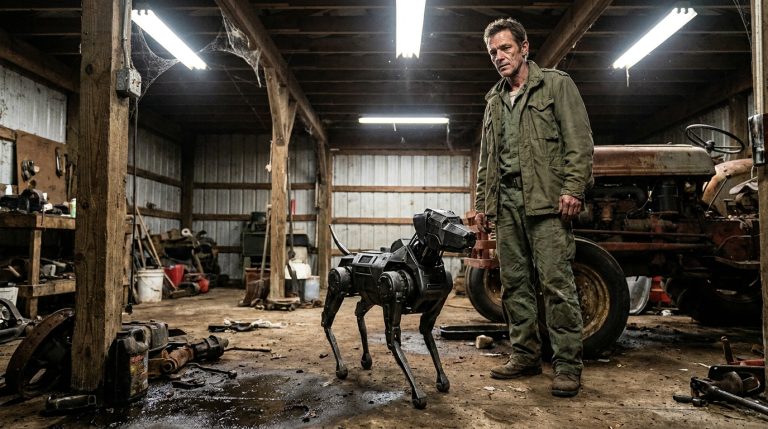
The workshop, my sanctuary of molten steel and precise geometry, had gone dead in a heartbeat. The industrial lathe that usually hummed a steady, comforting rhythm had choked, its inertia spent. Outside, the driveway was silent, save for the ticking of my truck engine cooling in the afternoon heat.
Karen Peterson stood five feet away. She was the president of the Oak Creek Estates HOA, a woman who treated a blade of clover as a personal insult. Today, she held a pair of heavy-duty, yellow-handled bolt cutters like a gardener holds a prize-winning rose. The thick, black casing of my main three-phase service line lay severed in the dirt between us, the copper wiring exposed, jagged, and lifeless.
“This unsightly cable was violating community aesthetics,” she said. Her voice was smooth, devoid of any jagged edges. She offered me that specific, thin-lipped smile—the one that suggested she had just performed a public service.
I looked at the cable. Then I looked at the hole she had dug, a sloppy, desperate trench through the utility easement. My boots felt heavy on the gravel. This wasn’t just a disagreement about a fence or a paint color; she had cut a lifeline. I had twenty years of combat engineering behind me. I knew the structural integrity of a foundation, and I knew how to identify a threat that had crossed the line from nuisance to sabotage.
“Karen,” I said, my voice sounding flat and alien to my own ears. “Put the cutters down. Step away from the trench.”
She didn’t move, but the smugness faltered for a fraction of a second. She scanned the driveway, perhaps expecting me to erupt, to scream, to play the role of the angry, irrational neighbor she had built in her mind. I didn’t give her the satisfaction.
Instead, I reached into my pocket and pulled out my phone. I didn’t look at her again; I looked at the ground, at the exposed conduit, at the way the earth had been torn open. I began to record.
“Mr. Miller,” she began, her tone shifting to a rehearsed, bureaucratic patronization. “I have the authority—”
“You have no authority here,” I interrupted, my gaze fixed on the copper. Beneath the cable, half-buried in the displaced soil of her trench, I noticed something that didn’t belong. A piece of rusted iron, a surveyor’s marker that had been clearly moved. She hadn’t just been cleaning up the neighborhood; she had been digging with a specific target in mind.
My heart didn’t race. It settled. The familiar cold, rhythmic clicking of a planning phase took over my mind. I needed to see the paperwork she was using to justify this. I needed to know exactly how much she had paid to buy the equipment in her hands.
As the sun caught the edge of the jagged copper, I knew one thing for certain: she hadn’t cut this line because it was ugly. She had cut it because she was afraid of what it kept running.
CHAPTER 2: The First Tactical Response
I stayed still, the silence stretching between us like a wire pulled to the breaking point. Karen’s grip on the yellow-handled bolt cutters didn’t loosen. She looked at me, waiting for the explosion, for the veteran to lose his composure and give her the scene she needed to justify the call to the police she undoubtedly had queued up on her own phone.
I breathed in, the air tasting of dry, churned earth and the faint, metallic tang of the severed conduit. My combat training wasn’t a switch I flipped; it was the hum of my own nervous system. It was the ability to see the world as a series of vectors and pressures. I didn’t see a neighbor standing in my driveway; I saw a hostile actor in a restricted space, holding a tool that had successfully disrupted the infrastructure of my livelihood.
“You’re going to step back now, Karen,” I said, my voice quiet, almost conversational. “Not because I’m asking, but because the property line is marked, and you’re currently standing on a legally documented easement. Every second you stay there, you’re adding to the damages I’m going to present in civil court.”
Her eyes flickered. She looked down at the trench, then back at me, a flash of genuine confusion crossing her face. She expected a scream; she got a ledger entry.
“This is an HOA-regulated neighborhood, Mr. Miller. Your ‘fabrication’—your noise, your heavy machinery, the eyesore of that line—it’s destroying the value of Oak Creek. I’m simply returning the lot to its approved state.”
She spoke with the rehearsed cadence of a woman who had spent years convincing herself that her petty tyranny was actually civic service. I didn’t engage with the morality of her argument. It was a distraction, a secondary front designed to pull my focus away from the physical reality of the destruction.
I knelt, not to challenge her, but to inspect the work. The trench was sloppy, but the cut was deliberate. She had gone deep, cutting through the protective sheathing before the actual copper. It took effort. It took intent. I pulled my phone back up, the camera lens steady, and documented the depth of the cut, the serial number of the exposed conduit, and the precise location of the surveyor’s marker she had kicked aside.
“You realize this is a commercial-grade line, don’t you?” I asked, looking up at her from the dirt. I saw the tremor in her hand—not fear, but a sudden, sharp realization that the stakes had changed. “This isn’t a garden wire. It requires specific permitting and engineering to handle the load. Cutting it hasn’t just ‘cleaned up’ the view. It’s put the neighborhood grid at risk of a surge.”
“That’s nonsense,” she snapped, though her gaze darted to the neighbors’ windows. Curtains were twitching. The street was waking up.
“It’s electrical physics,” I countered. “The company will be here within the hour. When they arrive, they won’t just see a cut wire. They’ll see a safety hazard that falls under state jurisdiction, not your HOA bylaws.”
I stood up, wiping the dust from my hands onto my jeans. I felt a cold, sharp itch at the back of my neck—a sensation I hadn’t felt since the desert. It was the feeling of being watched by someone who wasn’t just a neighbor, but a predator. I wondered, for a split second, if I was reading the situation correctly. Was she really just a bored, power-tripping suburbanite? Or was her obsession with this specific spot of earth—this exact trench—driven by something far more calculated?
I had been so focused on the noise of her complaints that I hadn’t looked at the silence of her intent.
“You’re overstepping, Frank,” she said, her voice tighter now. “This isn’t the war zone. This is a gated community.”
“You’re right,” I said, stepping past her to the edge of the workshop. I didn’t look back. I reached for the handle of my truck, my movements measured, efficient. “This is a community. And you just gave me every reason I need to dismantle your authority piece by piece.”
I didn’t argue further. The argument was a trap. I went to the truck and pulled out a small, ruggedized notebook. I sat in the driver’s seat, the engine still ticking, and began to log the time, the witness locations, and the physical description of the destruction. I felt the familiar weight of the task. The rust on the fence line, the cracked pavement of the driveway, the smell of neglect—everything looked different when viewed as a battlefield.
She stood there for another minute, the bolt cutters heavy in her hand, waiting for a response that wouldn’t come. I didn’t look up until she finally turned and walked back toward her own manicured property, her stride just a little less confident than it had been ten minutes ago. I wasn’t just fixing a power line; I was starting an audit of a life that clearly had more secrets buried in the soil than just a piece of commercial conduit.
CHAPTER 3: The Audit
The quiet of the workshop was no longer the peaceful absence of sound; it was a vacuum waiting to be filled with data. I sat at my drafting table, the heavy oak surface scarred by years of welding spatter and the sharp gouges of metal files. Outside, the Oak Creek evening was beginning to settle, the streetlights flickering to life with a rhythmic hum that usually signaled the end of my workday. Tonight, they were just another reminder of the power line that lay severed in the dirt.
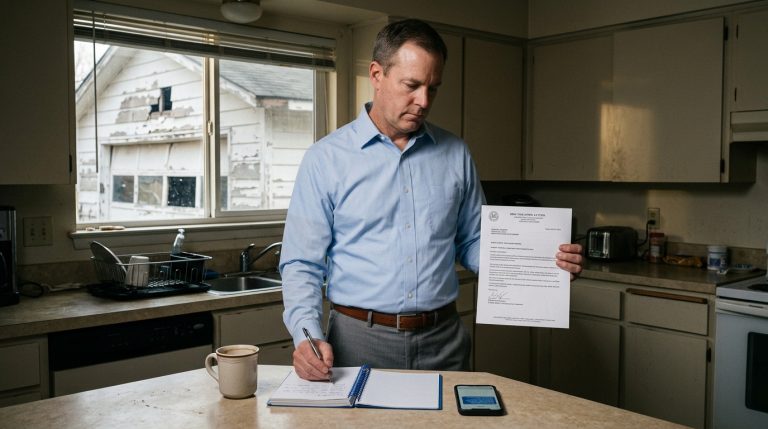
I opened the binder I had been keeping since the first “violation notice” arrived. It was thick, a collection of passive-aggressive letterhead and bureaucratic threats that Karen had used to turn the neighborhood into her own personal fiefdom. To the casual observer, it was a chronicle of neighborhood disputes. To me, it was a map of intent.
I started at the beginning, tracing the timeline of her complaints against my property. But as I flipped through the pages, my thumb brushed against something that didn’t feel right. The paper was thicker, slightly textured—a carbon copy tucked behind a standard notice regarding “unauthorized industrial noise.” I pulled it free.
It was an invoice from a local landscaping firm, dated four months ago, for “Consulting Services on Easement Clearing.”
I frowned, the metal-dust smell of the room suddenly sharp in my nostrils. Why would an HOA president hire a private consultant to clear a utility easement on a private lot, especially when the county already maintained them? I dug deeper into the binder, my movements methodical, the way I used to parse intelligence reports in the field. Beneath the clutter of fine notices and warnings, I found a pattern.
There were duplicates. Invoices for tree removal, soil analysis, and boundary surveys, all billed to the HOA, all referencing the same ten-foot strip of land that ran directly through my workshop’s electrical conduit.
The friction of the paper against my calloused fingertips was the only sound in the room. I wasn’t looking at a neighborhood dispute anymore. I was looking at a systematic attempt to manufacture a legal claim over the land under my feet. Karen wasn’t just enforcing rules; she was paying for a pretext.
I grabbed a red marker and a blank sheet of drafting paper. I began to map it out, not by date, but by geography. Every invoice she had filed, every “violation” she had issued, clustered around that single ten-foot easement. She wasn’t trying to make the neighborhood look better. She was trying to consolidate control over the only path that connected the outer road to the green space behind the houses.
My phone buzzed on the table. A text from Dave, the retired Air Force vet.
Saw the cops earlier. You okay? Heard she’s telling people you were aggressive.
I didn’t reply immediately. I looked at the invoices again. The landscaping firm listed on the bill wasn’t even based in the county; it was a shell company with a registered address in a industrial park three towns over. I picked up my calipers, feeling the cold weight of the metal, and set them down. I needed to know who owned that firm.
The “rust” of the situation was starting to show. Beneath the polished veneer of the Oak Creek HOA, there was a layer of rot—of falsified expenses and fabricated justifications. And if she was spending HOA funds to survey and clear land she didn’t own, she wasn’t just a bully. She was a liability.
I stood up and walked to the window. The evening light was hitting the patch of dirt where the cable was cut. From this angle, I could see the fresh earth, the way it had been disturbed, and the strange, geometric precision of her trench. It wasn’t just a path for a power line; it was the start of an access road. She had been clearing the way for months, hoping I’d get tired of the fines and the harassment and just walk away, leaving the path clear for whoever was paying her to turn this quiet corner lot into an industrial bypass.
A dark, heavy realization settled in my chest. She wasn’t the only one involved. She was the one holding the bolt cutters, but someone else was holding the ledger.
I turned back to the desk and pulled out a second binder, one I’d kept in a locked cabinet—the original land survey and the property plats I’d studied before buying the house. I laid them over her fake invoices. The overlap was perfect. She was trying to steal the access point to the back development zone.
I took a slow, steady breath. The anger was gone, replaced by a cold, tactical clarity. I didn’t need to yell at her. I didn’t need to fight her in the driveway anymore. I needed to follow the money. If she was using HOA funds to facilitate a land grab, the paper trail would be her undoing.
I started a new list. Not of violations, but of names, dates, and account numbers. My workshop was dark, the machines cold, but for the first time in weeks, the gears in my head were moving with perfect, synchronized precision. I would let her keep sending the fines. I would let her keep playing the queen of the neighborhood. Every time she reached for that binder of hers, she was just giving me more pieces to build the trap that would eventually lock her out of this community for good.
The air in the room felt heavy, charged with the anticipation of a long, quiet war. I looked at the surveyor’s map, the lines clear and immutable, and felt a grim satisfaction. She had declared war on a man who knew exactly how to bridge gaps and dismantle structures. And she had absolutely no idea who she was dealing with.
CHAPTER 4: The Whisper Campaign
The morning mist clung to the asphalt of Oak Creek Estates, turning the manicured lawns into a blurred, monochromatic landscape. I walked with my hands in my pockets, feeling the solid, comforting weight of the notebook tucked against my side. Dave’s house was three streets over, a modest place that stood out only because of the impeccably kept rosebushes—a stark contrast to the aggressive, clipped hedges that defined the properties Karen had “sanitized.”
As I turned the corner, the scent of wet soil and stagnant drainage water hit me—a sharp, metallic odor that reminded me of the time we had been tasked with securing a supply route through a flooded valley overseas. That operation had been a failure of logistics; we’d focused on the main road, ignoring the small, secondary paths where the real disruption was happening. Standing here, watching the quiet, gray morning, I realized the neighborhood was just as compromised. Karen wasn’t fighting for standards; she was strangling the local social infrastructure to clear a path for something much larger.
Dave was waiting on his porch, his posture straight, the unmistakable bearing of someone who had spent their life in service. He didn’t wave. He simply watched me approach, his eyes scanning the street with the same professional caution I felt in my own gut.
“Coffee’s inside,” he said as I reached the steps. “And the house is clean. The HOA board doesn’t have an eye on this block today.”
We sat in his small kitchen, the table covered in the same kind of scattered documents I’d been obsessing over at my own desk. He had been digging, too. It turned out that when you treat your neighbors like inmates, you eventually end up with a jail full of people who have nothing but time to study their warden.
“You’re not the first person she’s pushed, Frank,” Dave said, sliding a folder across the table. “Look at this. It’s a list of every family that’s moved out of Oak Creek in the last three years. She claims it’s just the natural turnover of the market. But look at the dates. Every single one of them was served with a series of ‘violation notices’ exactly three months before they listed their homes.”
I flipped through the pages. The pattern was undeniable—a systematic, relentless pressure campaign. It wasn’t just about the power line. It was about creating a state of perpetual, low-level anxiety that made people want to leave. And when they left, the property values dropped, allowing a developer to move in and scoop up the land at a fraction of the cost.
“She’s acting as a scout,” I muttered, the pieces clicking into place with a sickening clarity. “She’s not just the HOA president; she’s an agent for whoever is waiting to buy this ground out from under us.”
“And she’s using our own dues to fund the harassment,” Dave added, his voice low. “She’s got a slush fund disguised as ‘Legal Reserve.’ I’ve been tracking the payments. They go to a law firm that doesn’t exist, and then they disappear. It’s textbook layering.”
I looked at Dave, recognizing the same quiet resolve in his face that I felt in my own. We weren’t just two neighbors complaining about a power cut. We were identifying the tactical weak points in an enemy’s position. But the real problem remained: information alone wouldn’t win this. We needed a force multiplier. We needed the rest of the neighborhood to stop seeing her as a “concerned citizen” and start seeing her for what she was—a thief.
“She’s planning a community meeting for next Thursday,” I said, my gaze narrowing. “She’s going to propose a ‘Security Enhancement’ plan. It’ll probably involve privatizing the common areas, which gives her the legal authority to block any access she doesn’t like.”
“That’s the move,” Dave agreed. “If she gets that motion passed, she’s in control. The green space, the easement, the road access—it all goes to the highest bidder.”
I stood up, the chair scraping loudly against the linoleum. The fatigue of the previous night began to creep into my shoulders, but I shoved it down. We had a week. Seven days to pull the rug out from under her, to translate this mountain of dry paperwork into a human language that every resident in this neighborhood would understand.
“We don’t go at her with the bylaws,” I said, walking to the window and peering through the blinds. “We go at her with the truth. We show them the invoices. We show them the move-out records. We show them that their ‘high standards’ have been a front for an industrial liquidation sale.”
Dave nodded, a ghost of a smile playing on his lips. “It’s going to be a messy fight, Frank. She’s not going to just walk away.”
“She won’t have to,” I replied, the cold, pragmatic weight of my training returning. “She’ll be out of options. When the infrastructure of her authority breaks down, she’ll be exposed. I’ve spent twenty years tearing down things that were built to last, Dave. A house of cards like this? It won’t take much.”
I left his house feeling the weight of the coming week. The streets of Oak Creek looked different now—no longer a collection of suburban homes, but a series of interconnected cells that needed to be alerted. I was moving through the neighborhood, noticing the rust on the street signs, the way the light caught the edges of the houses, and the quiet, desperate tension that hung in the air. We were no longer just living here. We were conducting a siege.
CHAPTER 5: The Midpoint Revelation
The walk back to my lot was a test of restraint. I wanted to move fast, to get ahead of whatever the state vehicle parked in my driveway meant, but I forced myself to match my stride to the rhythm of the street. If I moved like a man with something to hide, I’d be handing Karen the one weapon she lacked: institutional legitimacy.
As I rounded the final bend of the cul-de-sac, the scene was already set. An inspector—a man in a crisp, gray uniform, looking entirely out of place against the backdrop of Oak Creek’s overgrown lawns—was walking the perimeter of my workshop. He held a clipboard like a shield. Karen Peterson was standing a few paces behind him, her expression a masterclass in performative concern. She wasn’t just observing; she was directing. She pointed toward the trench, then gestured at the workshop door, her hand moving with a practiced, sweeping motion.
I didn’t stop. I walked straight toward them, the gravel crunching under my boots—a sound that made both of them turn.
“Mr. Miller,” Karen said, her voice dripping with artificial empathy. “I’m sorry to interrupt your morning. But the HOA board has received reports of dangerous electrical bypasses and unauthorized ground-disturbing activity. We had to involve the state safety bureau.”
The inspector looked at me, his eyes tired, the kind of eyes that had spent too many years looking at violations and not enough at the people behind them. “Mr. Miller, I’m Inspector Vance. We’ve received a formal petition alleging that the workshop is operating outside the residential safety code. Given the recent power failure, I’m authorized to inspect the entire infrastructure.”
I didn’t look at Karen. I kept my eyes on Vance, my face a carefully constructed mask of professional calm. “I welcome the inspection, Inspector. But before you step inside, you should know that this land is protected by a documented utility easement. The damage to that cable wasn’t a failure on my part—it was the result of a deliberate, illegal act of sabotage committed by the person currently standing behind you.”
Karen’s smile didn’t break, but I saw the sudden, sharp tension in her jaw. “That is an outrageous lie, Inspector. I was merely reporting a hazard.”
I reached into my pocket, pulling out the folder Dave and I had assembled. I didn’t hand it to her. I handed it to Vance.
“Inspector, that folder contains copies of invoices filed by the HOA under the current president’s signature. They are for services related to the ‘clearing’ of this exact easement. I believe you’ll find that they originate from a shell company with no state licensure. I’m not just contesting the safety report. I’m filing a formal request for an audit of these transactions.”
The air shifted. The arrogance in Karen’s posture didn’t evaporate, but it curdled. She saw the folder, and for a fleeting second, the composure that had carried her through months of bullying cracked. She realized the paper trail wasn’t a nuisance—it was a noose.
“This is irrelevant,” Karen snapped, her voice losing its polished, suburban cadence. “The safety of the neighborhood—”
“Is exactly what I want to discuss,” I interrupted, turning to her for the first time. The silence that followed was heavy, metallic, and cold. “If the neighborhood is at risk, it’s because you’ve been funneling dues into private interests, manipulating property boundaries, and orchestrating a land grab under the guise of an HOA mandate. The Inspector isn’t here to check my shop, Karen. He’s here to verify the mess you’ve made.”
Vance opened the folder. He didn’t look at the workshop anymore. He looked at the invoices. He looked at the dates, the signatures, and the discrepancy in the vendor tax IDs. The inspector’s face, usually a map of indifference, tightened with professional interest. He knew a fraudulent paper trail when he saw one.
“Ms. Peterson,” Vance said, his voice flat, professional, and entirely devoid of the deference she had come to expect. “If these documents are legitimate, this isn’t an HOA matter. This is a criminal investigation. I suggest you step away from this property line immediately.”
Karen stood frozen, her eyes darting between the clipboard and my face. She was cornered by the very system she had tried to weaponize. She tried to say something, a retort, an accusation, but the words died in her throat. The “queen” was watching her kingdom dissolve in real-time.
As she turned and walked away, her steps were disjointed, lacking the predatory precision she’d shown just hours earlier. I watched her go, feeling the raw, aching fatigue of the fight, but beneath it, the iron-cold certainty that the turning point had passed. We hadn’t just exposed a secret; we’d shattered the illusion that kept her in power.
I looked back at the inspector. “Shall we start with the electrical system, Vance? I have everything documented.”
He nodded, his focus now fully on the task of untangling the truth. I opened the workshop door, the smell of dust and steel greeting me like an old friend. The real fight—the fight for the land itself—was just beginning, but for now, the decay had been identified. The rust was being scraped away.
CHAPTER 6: The Escalation
The heavy steel door groaned as I pulled it open. Standing in the doorway, illuminated by the harsh, flickering amber of the yard light, was Tom—one of the board members Karen had kept in her inner circle. He looked like a man who hadn’t slept in forty-eight hours, his shirt wrinkled, his eyes darting toward the street as if he expected to see a phantom at every corner.
“Frank,” he rasped, stepping inside without waiting for an invitation. He smelled of cold sweat and cheap cigarettes. “You need to stop. You have no idea what you’ve started with the inspector.”
I didn’t offer him a chair. I leaned against the workbench, the cold metal biting into my forearms, and waited. The workshop was a graveyard of broken projects and exposed wires, the air thick with the scent of ozone and copper. Tom’s intrusion felt like a breach in a perimeter, but I kept my breathing steady, my posture neutral.
“I started nothing, Tom,” I said, my voice low and steady. “I’m just asking the state to look at the numbers. If those numbers are clean, you have nothing to worry about. If they aren’t, then we have a much bigger problem than an inspector in the driveway.”
Tom paced the small, cramped space, his boots kicking up dust from the concrete floor. “She’s not just a neighbor, Frank. She’s an instrument. The development group—the ones buying the green space—they have people. People who don’t care about county easements or HOA bylaws. You think you’re fighting for the neighborhood? You’re just a line item in a liquidation plan.”
He stopped, pressing his hands against his face, his frame trembling. “She told us the privatization plan was just to keep the neighborhood ‘exclusive.’ She didn’t tell us it was a total transfer of authority to a private firm. She didn’t tell us they were planning to bulldoze the utility access to build a security gatehouse.”
I felt the shift. This wasn’t the petty tyranny of a bored homeowner; this was the methodical dismantling of a community by a corporate entity using an HOA as its face. I looked at Tom, seeing not a conspirator, but a man who had realized too late that he had traded his integrity for a seat at a table that was about to be burned.
“Why tell me now?” I asked.
“Because the board meeting on Thursday isn’t a vote, Frank,” he whispered, his eyes widening. “It’s a coronation. She’s already signed the transfer of title. The meeting is just a formality to make it look like the residents agreed. She has the signatures. She has the security team prepped to ‘manage’ any dissenters. She’s going to lock the access points before the public even realizes the land has been sold.”
I felt the blood in my veins turn to ice. My tactical training kicked into overdrive. I hadn’t been accounting for a physical lockout. I’d been planning for a legal debate, but she was planning for a physical takeover of the neighborhood’s infrastructure.
“The meeting isn’t until Thursday,” I said, my mind already calculating the logistics. “How does she have the titles?”
“She forged them. She used the records from the county office—the same office you were auditing. She knows you’re onto her, Frank. She’s moved up the timeline. She’s coming to your shop tonight to ‘secure’ the property. She’s got them thinking you’re the one trying to sabotage the neighborhood’s security.”
Before I could answer, the sharp, rhythmic crunch of tires on gravel sounded in the driveway. Headlights cut through the workshop’s grimy windows, sweeping across the tools and the half-finished welding projects like searchlights.
“She’s here,” Tom whispered, his face going pale.
I didn’t panic. I went to the wall, grabbing the master breaker for the shop’s internal lights and the perimeter security system. I moved with a fluidity born of muscle memory, checking the locks, ensuring the heavy roll-up door was braced. This was no longer a disagreement. This was a defensive operation.
“Get to the back,” I told Tom, pointing toward the storage annex. “If you want out of this, stay quiet and stay behind the heavy shelving. I’m going to meet her at the door.”
I didn’t wait for his compliance. I walked toward the front entrance, the air in the room turning heavy, the silence of the shop replaced by the distant, rhythmic thud of heavy footsteps on the driveway. She wasn’t coming with a binder of bylaws this time. She was coming to finish the job.
As I reached the door, I didn’t reach for a weapon. I reached for the light switch, plunging the shop into total darkness. Let her come in. Let her see what happens when she tries to bulldoze a man who has spent his entire life building things that hold under pressure. The war had just moved from the courtroom to the front steps, and I was exactly where I needed to be.
CHAPTER 7: The Community Siege
The impact of the door frame shattering echoed like a gunshot in the confined space of the shop. I didn’t move, my body pressed against the side of the heavy welding table, my eyes straining to adjust to the sudden sliver of light bleeding in from the driveway’s security lamps. Karen hadn’t come alone. The silhouettes that spilled into the room were not neighborhood residents; they were far too disciplined, their movements too fluid, too coordinated.
“Miller!” Karen’s voice was high, sharp, and stripped of all its usual, measured pretense. “I know you’re in here. We have the title transfer, and the board has authorized the immediate clearing of all non-conforming infrastructure. Step out, or we’re authorized to use whatever force is necessary to secure this site.”
I didn’t answer. I reached out in the dark, my hand finding the heavy, cold handle of a pipe wrench I’d left on the workbench. My breathing was shallow, rhythmic, exactly as it had been during training. I wasn’t just defending a shop; I was holding a line that protected the very possibility of a future for Oak Creek.
Tom was still huddled in the annex, his breath hitching in the silence. I signaled for him to stay put, then shifted my position, moving with the practiced silence of a man who knew every inch of his environment. I didn’t need light to navigate this space; I knew the placement of every tool, every jagged edge, and every floor-level obstacle.
One of the silhouettes crossed the threshold, a heavy flashlight beam cutting through the dust, dancing erratically over the lathe, the welder, and the stack of steel plates.
“Check the annex,” a voice hissed. It was a professional, cold, and entirely detached from the neighborhood conflict. These weren’t locals. They were the security team, the tip of the spear for the firm waiting to turn our streets into a gated exclusion zone.
I moved. I didn’t engage directly; I threw a heavy metal file toward the opposite side of the shop. It struck a stack of spare metal parts with a resonant, metallic clang that seemed to fill the entire room.
The silhouette pivoted, the beam of the flashlight swinging toward the noise. In that momentary lapse, I was already behind him. I didn’t strike to maim; I struck to disable. A quick, forceful shove against the shoulder caught him off balance, and he tumbled into the heavy lathe, his own momentum doing the work.
“Down!” I barked, my voice projecting with the authority of twenty years in the Corps.
The second man froze, but Karen was already pushing past him, her face illuminated by the harsh, sweeping beam of her own light. When she saw me standing by the workbench, her eyes narrowed, and for the first time, I saw the truth behind the arrogance: she was terrified. She knew that if I was still standing, her narrative was already beginning to dissolve.
“You’re finished, Miller!” she screamed, gesturing toward the back where the other men were moving. “The papers are signed! The community voted! You’re just a squatter on private property!”
“The community didn’t vote on anything, Karen,” I said, my voice cutting through the chaos. “They were lied to. And I have the signatures of every board member who was coerced, plus the financial records that show exactly who paid for this security team.”
I reached into my pocket, pulling out the small, thumb-sized drive containing the scanned duplicates of the forged titles and the shell company invoices. I held it up, the light glinting off the metal.
“This goes to the state prosecutor in ten minutes. If you want to stop it, you’ll have to do more than break a door. You’ll have to destroy the entire record.”
The security guard, the one I’d sent sprawling, was struggling to get up, but the other man remained frozen, looking at me, then at Karen, his professional detachment clearly wavering. They were mercenaries, and they were beginning to realize that the risk of this job far outweighed the pay.
“Get him!” Karen commanded, but the guard didn’t move. He was looking at the folder I’d dropped on the floor—the one Vance, the inspector, had marked as evidence. The reality of a criminal investigation was settling in.
I walked toward the main door, my presence filling the space, every movement calculated to project an unwavering, absolute resistance. The shop, the dark, the scent of burning oil, the weight of the steel—it all belonged to me. Karen retreated, her heels clicking on the concrete, her face a mask of frustration and failing control.
“This isn’t over,” she spat, though the force behind the words was gone.
“No,” I replied, standing in the doorway as they scrambled back toward their vehicles. “It’s just starting. But the battlefield has changed, Karen. You’re not the one setting the terms anymore.”
As they drove away, the gravel spraying into the dark, I felt the adrenaline begin to bleed out of me, leaving behind a cold, hollowed-out exhaustion. The shop was a wreck, the door was ruined, and the night was far from over. But the breach had been held. I turned back into the darkness of the shop and found Tom, who had finally crawled out from the annex.
“They’re gone,” I said, the words heavy and final. “Now, we get to work.”
CHAPTER 8: The Settlement
The sunlight that filtered through the workshop’s grime-streaked windows the next morning felt different. It was steady, devoid of the frantic, searchlight intensity that had characterized the previous night. I stood by the main electrical panel, the smell of fresh solder and burnt electrical tape heavy in the air. My hands, stained with grease and tiny, needle-like scratches from the wiring work, moved with a deliberate, slow grace. I wasn’t rushing; the emergency was over.
The state prosecutor’s office had acted with surprising speed. By sunrise, the documents I’d provided—the forged titles, the shell company invoices, and the sworn statements from board members like Tom—had reached the right desks. Karen Peterson had been escorted from her home in the early hours of the morning, not by a security firm, but by the state police. Watching her go—the “president” of Oak Creek Estates, led away in the back of a cruiser with nothing but the clothes on her back—I felt no surge of triumph, only a deep, anchoring sense of completion.
It was the 5-Pillar Catharsis. The payoff was absolute: her infrastructure of control had collapsed under the weight of its own dishonesty. The poetic justice was clear—she had attempted to use the law as a weapon to forcibly remove me, and in the process, she had created the very paper trail that led the law directly to her door.
I reached for the copper wiring, crimping the final connection with a pair of pliers that felt like an extension of my own hand. The 200-amp service hummed to life, a low-frequency vibration that traveled through the soles of my boots and into the very foundation of the building. The lathe, my primary machine, blinked its power-on light—a steady, unblinking green that meant work could finally begin again.
I spent the rest of the day in the “Cool Down,” the frantic pace of the siege slowly yielding to the rhythmic, quiet labor of fabrication. I wasn’t building parts for money today; I was fixing the things I’d neglected. I took the heavy, dented tool chest that had been overturned during the struggle and spent two hours hammering out the steel, re-aligning the hinges, and scrubbing away the scuffs. It was symbolic closure. I was repairing the physical damage to my world, piece by piece, just as the neighborhood was beginning to do the same.
Outside, I could see neighbors walking their dogs, stopping to talk in the middle of the street. They weren’t whispering anymore. They were laughing. The tension that had defined Oak Creek for years—the feeling of being constantly watched, constantly judged—had been replaced by a tentative, growing sense of collective ownership. We had reclaimed the green space. We had dismantled the gatekeeper.
Dave stopped by around noon, carrying two cups of coffee and a look of genuine, exhausted relief. He stood in the doorway, watching me weld a support bracket back onto the workshop door. He didn’t offer a grand speech; he just nodded, his gaze lingering on the steady, bright arc of the welding torch.
“The board’s calling an emergency meeting for the weekend,” he said, his voice quiet. “We’re going to hold an election. Proper this time. No binders, no secret handshakes.”
“That’s how it should have been all along,” I replied, lifting my welding mask and wiping the sweat from my forehead.
“You going to run for president?” he asked with a small, tired grin.
I looked around my workshop—the machines, the steel, the quiet potential of a day that was finally my own. I thought about the hours of paperwork, the legal debates, and the tactical exhaustion of the last few weeks.
“No, Dave,” I said, setting the torch aside. “I think I’ve done enough administration for a lifetime. I’m just going to build things. Real things.”
The emotional connection of the moment was subtle, grounded, and deep. I realized then that the fight hadn’t just been about a power line. It had been about the right to work, to create, and to exist without being defined by someone else’s narrow, fearful vision of what a home should be. I had regained that right, not just for myself, but for the street.
As the sun began to dip below the horizon, painting the neighborhood in the warm, long shadows of evening, I turned off the workshop lights. The hum of the equipment faded, leaving behind the comforting, natural sounds of a neighborhood at peace. The rust of the old conflict had been cleaned away, and for the first time in twenty years, I felt like I was exactly where I belonged. I closed the door, locked it, and walked toward my house, the weight of the last few weeks finally, and completely, lifted.