The Iron Gate and the Paper Sovereign: A Defense of Ground, Blood, and Boundary Lines
CHAPTER 1: THE SMOKE OVER THE FENCE
The heat coming off the charcoal basket was dry and steady, baking the skin of my forearms as I turned the patties with a heavy-tined fork. Around us, the subdivision of Whispering Pines stretched out like a blueprint pressed flat against the earth—roof after identical roof of weathered slate gray, lawns cropped to a uniform two inches, and mailboxes standing at rigid attention like rows of tin soldiers.
Except for here.
Our patch of land sat dead center in the middle of their geometry, an irregular polygon of wild-grown grass, towering fruit trees, and a garden that followed the dip and rise of the natural topsoil rather than a landscaper’s string line. My grandfather had laid the foundation of this workshop and porch back when the county was nothing more than gravel roads and wild plum thickets. When the developers came with their heavy machinery ten years ago, laying down asphalt and pouring concrete slabs, they tried to buy him out with double, then triple market value. He had sat on this very porch with a whetstone and a hunting knife, sharpening steel until the men in suits simply packed up their briefcases and drove away.
Now, the burden of that stubbornness belonged to me.
Ten feet away, just beyond the rusted wire fence my grandfather strung up in fifty-two, a shadow fell across the sun-bleached grass. Brenda didn’t walk so much as she patrolled. Her canvas gardening shoes made no sound on the pristine sod of her side of the line. She stood motionless, her arms crossed tight over a stiff linen blouse, her clipboard pressed against her hip like a slate ledger.
She wasn’t looking at the grill. She was looking at the grease stain on the weathered cedar planking of our back deck.
“You’re drifting over the allowable decibel threshold,” she said, her voice thin and dry, cutting through the low rumble of the radio sitting on the porch rail. She didn’t raise her voice; she didn’t need to. It was the tone of a woman who expected the world to adjust its volume to her convenience.
I kept my eyes on the beef patties, letting the fat spit against the coals before answering. “It’s a Saturday afternoon, Brenda. And this is my yard.”
“It’s an eyesore,” she replied, her gaze shifting to the tall stalks of sunflowers I’d planted along the western perimeter—six feet of heavy green stems and heavy yellow heads nodding in the dry afternoon wind. They blocked her kitchen window completely, denying her the uninterrupted view of our back door she had relied on for the past five years. “The covenants of Whispering Pines dictate a maximum fence height of four feet. Those plants are a structural violation.”
“Covenants apply to property owners,” I said quietly, setting the fork down on the side tray with a dull clatter of steel. “I don’t belong to your club.”
Brenda’s mouth tightened into a white, bloodless line. She unclipped a silver pen from the metal edge of her clipboard, clicked the top down with a sharp clack, and began to write. She didn’t say another word, but as she turned on her heel to walk back toward her air-conditioned kitchen, she paused, lifting her phone from her pocket and pointing the lens squarely at my guests sitting around the wooden picnic table.
The click of the shutter was silent, but the intent hung heavy in the dry air like dust before a storm.
CHAPTER 2: THE CLIPBOARD ON THE BORDER
The silence that settled over the yard after Brenda retreated behind her double-paned kitchen window was not a peaceful one. It was the tight, drawn-in quiet of a perimeter being measured. Across the weathered cedar planks of the deck, my friends lingered near the cooler, their voices dropping an octave as they watched the white lace curtain of the neighboring house twitch and fall back into place.
“She’s going to make good on that, man,” Mark said, wiping a paper plate clean with a napkin and tossing it into the bin. He leaned his hip against the edge of the picnic table, looking over at the property line where the six-foot sunflowers nodded in the cross breeze. “You can’t just wave off people like that. They live for municipal paperwork. It’s like a hobby to them.”
“Let her write,” I said, though the dry weight of iron ore seemed to settle in the back of my throat. I reached down to turn off the burners beneath the grill, the hiss of cooling gas cutting through the afternoon. “Paper only holds weight if you agree to carry it.”
Yet, as Mark packed up his cooler and the tail-lights of the last sedan crunched down the asphalt drive toward the subdivision’s uniform entrance, the memory of my grandfather’s voice drifted up unbidden from the back of my mind. They won’t come with a shovel, boy, he had rasped one evening while oiling the teeth of a crosscut saw on this very porch, his thumb catching on a burr of steel. They’ll come with a stack of receipts and a magistrate with ink on his cuffs. A man can fight a shovel with a spade of his own, but paper takes an entirely different kind of iron.
The sun dipped low behind the rows of identical slate-gray roofs, casting long, fractured shadows across our overgrown lawn while Brenda’s side of the fence remained bathed in the amber glare of automated dusk-to-dawn security lights. I walked the perimeter alone with a flashlight, checking the rusted wire where it met the southern corner post.
It was there, half-submerged beneath a thick mat of creeping ivy and dry crabgrass, that I noticed the first anomaly.
The concrete marker the county surveyors had set down during the initial 1970s expansion of Whispering Pines wasn’t missing—it had been deliberately nudged. A trench about three inches wide had been scored into the dirt along the exterior edge of our fence line, running parallel to Brenda’s property. Someone had been driving a flat-bladed spade into the turf under the cover of the morning dew, systematically testing the subterranean clearance of our post holes.
I knelt down in the dirt, the dry earth crumbling between my bare fingers, smelling faintly of ancient compost and rusted iron filings. There were no boot prints on our side of the ivy, but the turf on Brenda’s side was packed flat, worn smooth by the deliberate, rhythmic pacing of someone standing just out of sight, measuring the perimeter inch by painstaking inch.
The $500 noise fine wasn’t an isolated petty grievance born from a stray bass line or a loud laugh over a birthday burger. It was a reconnaissance probe. They wanted to test the friction. They wanted to see if the legal machinery of the HOA would buckle our knees or if we would push back, exposing where our structural defenses were softest.
I stood up, wiping the dark loam from my palms onto the thighs of my jeans, and looked back at our old house. The green shutters were peeling slightly at the corners, the porch timber groaned under the rising night wind, and the windows glowed with a warm, uneven light that no blueprint could ever quite replicate.
If Brenda wanted to play with paper, I needed to know what kind of ink was drying in the county archives. The sun dropped completely below the horizon, leaving the sky the color of hammered lead, and I walked inside to fetch the iron key to the desk drawer where my grandfather kept his old deeds.
CHAPTER 3: THE COUNTY ARCHIVES AND THE YELLOWED INK
The drawer didn’t slide open easily; it caught on the humid swell of the old timber, requiring a sharp, downward jerk of my palm to unseat it. Inside, nestled beneath a bundle of faded seed receipts and an insurance policy from nineteen-fifty-eight, lay the heavy linen-bound ledger my grandfather had kept like a merchant’s log. I pulled it out onto the surface of the scarred wooden desk, the paper smelling faintly of attic dust and dried clover.
There was no electricity in the workshop save for a single swing-arm lamp with a brass shade that buzzed softly when switched on, casting a jaundiced circle of light over the parchment. I didn’t look at the ledgers first. At the very bottom of the drawer, wedged tight against the back panel, was a flat tin box with a rusted brass clasp. Inside sat the original municipal plat map stamped by the county recorder’s office back when Whispering Pines was nothing more than a surveyor’s dream of gravel tracks and timber stands.
The blue ink had faded to the color of bruised slate, but the red revision stamp slapped across the center of our plot was unmistakable. EXEMPT.
It wasn’t just a casual exclusion penciled in by a sympathetic clerk; it was a legally binding covenant ratified under state land-grant provisions that predated the incorporation of the entire suburban development by nearly three decades. My grandfather hadn’t just refused to sell; he had traded a sliver of his northern pasture to the county road commission in exchange for perpetual sovereign right-of-way isolation. The modern subdivision had been built around us because it legally had to be. Every inch of Brenda’s pristine, manicured sod on our eastern and northern flanks sat right on the razor-thin border of that recorded exclusion.
I traced the faded boundary line with the tip of my thumb, feeling the raised texture of the old ink. If Brenda’s committee was systematically probing our footings and issuing arbitrary $500 fines for backyard noise, they weren’t just acting out of neighborhood snobbery. They were laying the groundwork for a calculated encroachment. A series of unresisted citations, unpaid fines, and recorded liens would eventually force a tax seizure or a municipal compliance auction. In dry, bureaucratic language, the house would be absorbed into the association’s master portfolio under the guise of an abandoned or non-compliant parcel.
The realization didn’t make me angry; it made the air in the small room feel thin, metallic, and cold.
I folded the plat map carefully along its original creases, the dry paper whispering in the quiet house, and slid it into the breast pocket of my work shirt. The county courthouse downtown closed its public records office at five, but the digital terminals in the basement archive annex were accessible to property holders until midnight with a registered parcel key.
The drive down County Road 4 was dark, flanked on both sides by the endless, monotonous rows of identical streetlamps illuminating empty asphalt and identical mailboxes. When I parked my battered truck in the municipal lot, the concrete municipal building rose before me like a monolithic block of gray stone, completely devoid of character, a monument to the very uniformity Brenda worshipped.
Inside, the fluorescent lights hummed with a sterile white glare that made my eyes ache. I slid my grandfather’s registered parcel key into the brass slot of the records terminal, the machine whirring to life with a mechanical clatter of internal gears. Poking through the digitized municipal filings for District 4-B didn’t take long once I plugged in the parcel identification number from the 1970s plat.
There it was, buried beneath three layers of modern zoning amendments and digital updates: a recent architectural proposal dated six months prior, outlining a “Phase Four Land-Use Realignment” for Whispering Pines. The memo detailed the acquisition strategy for the sole remaining unintegrated enclave—our plot—designating it for a community retention basin and visitor parking lot. And at the bottom of the memorandum, authorizing the initial administrative pressure tactics, was a familiar signature: Brenda Vance, President, Whispering Pines Architectural and Covenants Committee.
She hadn’t just been staring over the fence because she hated my sunflowers. She had been managing an acquisition timeline.
I printed two copies of the electronic filing, the laser printer spitting out the crisp, white sheets with a rhythmic snap-snap-snap that echoed off the hollow walls of the empty archive room. I rolled them tightly, tucked them beneath my arm, and walked back out into the cool midnight air. The night was dead silent, but as I started the truck’s engine, the weight of the papers in my pocket felt like a loaded weapon. The game had shifted from neighborhood harassment to a war of lines and jurisdiction, and the first shot was going to be an answer she couldn’t tear down with a clipboard.
CHAPTER 4: THE CLOSED DOOR ON CEDAR LANE
The tires of the truck crunched over the gravel drive, the sound dying instantly against the dense, manicured silence of Whispering Pines. It was past midnight, yet a single amber carriage light burned above the white-trimmed front entrance of Brenda’s house, casting a long, angular beam across the flawless sweep of her lawn.
I didn’t turn off the engine right away. I sat behind the wheel, letting the block idle with a low, heavy vibration that rattled the rusted casing of the passenger-side mirror. On the seat beside me lay the printed memorandum from the county’s digital archive—the hard proof of Phase Four, the acquisition timeline, and her signature at the bottom authorizing the administrative pressure campaign.
The strategy was clear now. The $500 noise fine wasn’t an emotional outburst over a weekend barbecue; it was an administrative wedge. If left uncontested, unpaid fines accumulate statutory penalties, transition into county tax liens, and ultimately trigger municipal receivership hearings. A neat, bloodless legal execution disguised as neighborhood compliance.
I cut the engine, the sudden drop in sound leaving only the ticking of the cooling exhaust pipe. I stepped out into the grit of the driveway, the rolled papers heavy in my hand like a rolled-up blueprint of trench lines.
The front porch light of Brenda’s house flickered the moment my boot hit the pavement. It wasn’t motion-activated; it was wired to a manual interior switch or an observant eye watching from behind the lace panels of the front window. Before I had even reached the slate-paved walkway leading to her double-hung front door, the heavy oak panel swung inward.
Brenda stood in the threshold, framed by the bright, sterile glow of the hallway sconces. She wasn’t wearing her gardening apron or her daytime linen blouse. Instead, she wore a dark woolen cardigan pulled tight across her chest, her graying hair pinned back with severe precision. She didn’t look surprised. She looked like a general waiting for an expected courier in the middle of a prolonged siege.
“It’s past midnight,” she said, her voice dry and thin, carrying easily across the dew-slicked grass. She didn’t step outside; she stayed planted squarely in her doorway, her hands folded over the dark fabric of her skirt. “If this is about the municipal notice regarding your property boundaries, you are trespassing on association easement.”
“There is no association easement here, Brenda,” I said, stopping three paces short of her welcome mat. I didn’t raise my voice; the night air was too flat, too heavy with the smell of clipped grass and damp earth to waste breath on shouting. “And you know it.”
I pulled the printed memorandum from my pocket and let it drop onto the small cast-iron table beside her front door, the corner hitting the metal with a sharp ping.
She didn’t look down at the paper. Her eyes remained locked on mine, cold and unyielding, framed by the rigid geometry of her perfect, identical porch. “The neighborhood has standards,” she said, her tone hardening into something defensive and sharp. “Values don’t protect themselves. When a development like this goes up, it requires absolute cohesion. A pocket of unmanaged land right in the center drags every single appraisal down. People worked hard for what they have here.”
“My grandfather worked this ground before the bulldozers even cleared the county road,” I replied, taking a slow step closer. The gravel under my boots ground against the paving stones. “He didn’t sell out so some committee could draft an acquisition memo behind closed doors.”
“He was stubborn,” Brenda snapped, the thin veneer of bureaucratic calm finally slipping to reveal a raw, defensive edge. “An anachronism holding onto a dirt patch while the rest of the world moved forward. You think you can live outside the rules forever? The county board reviews zoning variances every quarter. Paperwork changes. Old plats get re-indexed. By next year, this little island of yours won’t even have a grandfather’s signature to stand on.”
The words hung in the air between us, confirming every suspicion the archive files had hinted at. It wasn’t just a local grievance; it was a long-game administrative war of attrition.
“We’ll see how well your zoning revisions hold up when the state land-grant commissioner sees the original 1940s sovereign covenant,” I said quietly, turning on my heel before she could form a reply.
I walked back down her walkway, the sound of my boots crunching heavily against the gravel, leaving her standing under the harsh glare of her hallway light with the papers sitting untouched on the iron table. The perimeter had been tested, the lines had been drawn in digital ink, and the next move belonged to the board.
CHAPTER 5: THE LETTER TO THE BOARD
The workshop air was thick with the scent of uncooled iron and dry timber when I stepped back inside, closing the heavy wooden door against the midnight chill of the subdivision. On the scarred desk sat the stack of blank legal paper and a heavy black fountain pen my grandfather had left in its brass tray. If Brenda wanted to fight this battle through administrative channels, then the response wouldn’t be shouted across a property line or dropped informally on a welcome mat. It would be formally entered into the official registry of the Whispering Pines Architectural and Covenants Committee, copied directly to every single member of the board whose names I had pulled from the municipal records earlier that evening.
I pulled the chair out, the legs scraping harshly against the floorboards, and sat down beneath the buzzing amber light of the brass-shaded lamp.
The strategy required absolute precision. I didn’t write out of anger, nor did I waste ink on threats of retaliation. Instead, I laid out the facts with the cold, unyielding weight of an inventory list. I detailed the history of the original 1940s land grant, cited the specific municipal exemption numbers recorded in the county archives, and appended the exact text of the Phase Four acquisition memo that Brenda had authorized six months prior. I pointed out, in clear bureaucratic prose, that using association funds and municipal pressure tactics to pursue an unauthorized private acquisition constituted a severe breach of fiduciary duty and potential administrative fraud.
As the pen scratched across the heavy paper, the house around me settled into its midnight creaks. Every window looked out into the uniform darkness of Whispering Pines, where identical roofs met identical fences under the silent sweep of automated security lamps. For a moment, the silence felt less like privacy and more like a perimeter under siege. Brenda had spent years treating her clipboard like a badge of absolute authority, convincing an entire neighborhood that conformity was law. But authority built on administrative shadow-boxing collapses the moment someone turns on the archive lights.
I folded the formal notification into three crisp panels, slipped it inside a heavy manila envelope, and sealed the flap with a firm press of my thumb. Across the front, I wrote the addresses of the five elected board members of Whispering Pines, ending with Brenda’s name last.
The clock on the workshop wall ticked heavily, its brass gears grinding through the small hours of the morning. There would be no sleep tonight; the friction was too close, the margin between our old land and their blueprinted expansion too thin. I stood up, tucked the envelope into the breast pocket of my shirt alongside the plat map, and walked out to the truck. The morning delivery run to the board’s administrative mailbox would go out before dawn, before Brenda had time to brief her committee on what happened at midnight. The paper was moving now, and it carried far more weight than any clipboard could ever hold.
CHAPTER 6: THE LONG SOUND OF THE BRASS GATE
The morning sun cleared the slate-gray roofs of Whispering Pines with a flat, pale glare, casting long shadows across the manicured lawns. By eight o’clock, the formal notification had been sorted into the board’s central drop-box alongside five separate certified envelopes addressed to each governing member. It didn’t take long for the administrative machinery to seize up.
Around nine, the phone lines inside the association’s management office began to ring continuously. Through the front window, I watched the subdivision’s treasurer—a weary-looking man named Henderson who lived three doors down—stumble out onto his driveway, clutching a printout of the 1940s sovereign land covenant in one hand while staring back and forth between his own pristine turf and our wild patch of land.
Ten minutes later, a silver sedan pulled up to the curb, and Brenda stepped out. She didn’t march with her usual rigid authority; her stride was stiff, her gaze fixed straight ahead as she marched up Henderson’s driveway to demand an explanation.
I stood on the wrap-around porch, leaning my weight against the heavy timber railing my grandfather had hewed out of white oak forty years ago. Beside my hand, the old iron gate hung slightly off its bottom pintle, creaking softly in the morning breeze. I didn’t reach for a clipboard, and I didn’t raise a voice. I simply watched as Henderson handed Brenda a single sheet of paper—the exact municipal exemption record proving that the architectural committee had exceeded its jurisdiction, falsified acquisition memos, and exposed the entire association to severe legal liability.
Brenda stared at the document, her mouth opening to speak, but the words died in the dry morning air. She looked across the narrow strip of manicured sod toward our overgrown garden, her eyes meeting mine for one long, unbroken second. There was no defiance left in her posture, only the sudden, crushing realization of a bureaucrat who had built a kingdom on paper, only to watch the wind blow it away.
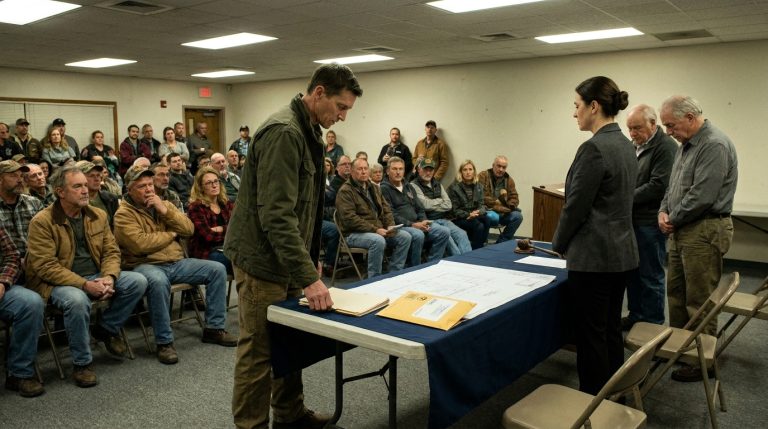
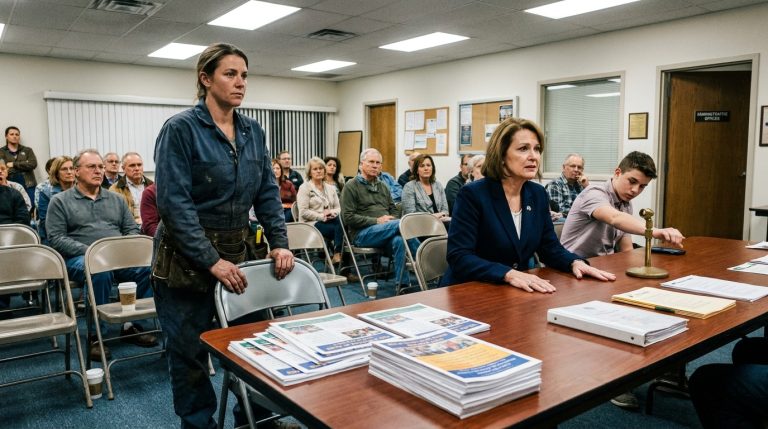
Within forty-eight hours, an emergency board meeting was called behind closed doors. By the end of the week, an official letter arrived in our box—not a fine, not a threat, but a formal, unconditional retraction signed by every remaining member of the committee. Brenda was stripped of her presidency, her clipboard permanently set aside as the board scrambled to distance themselves from her unauthorized acquisition crusade.
Months later, when the warm summer air rolled back across the county, I threw a second party. This time, there were thirty people, a live band playing heavy blues on the deck, and a spread of food that smoked the neighborhood air for blocks. The music rolled unhindered over the fence lines, loud and steady, echoing against the uniform walls of the subdivision.
I stood by the iron gate, looking over toward Brenda’s house. The blinds were drawn tight, the pristine lawn as quiet as a museum display. She was just another neighbor now, stripped of all authority, learning the hard way that walls built on intimidation cannot hold back the weight of real ground.
I reached down, took a small drop of machine oil on my fingertip, and smoothed it into the dry hinge of the iron gate until it swung shut with a clean, effortless click. The work was done, the boundary was held, and the quiet afternoon settled into the deep, enduring peace of a place that belonged to no one except the earth beneath its feet.