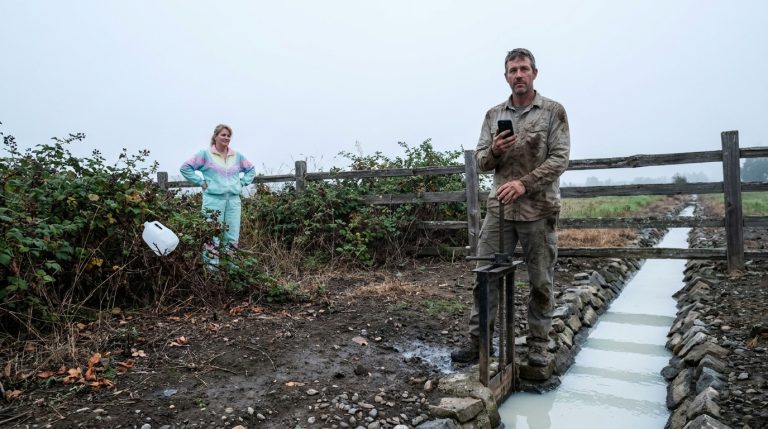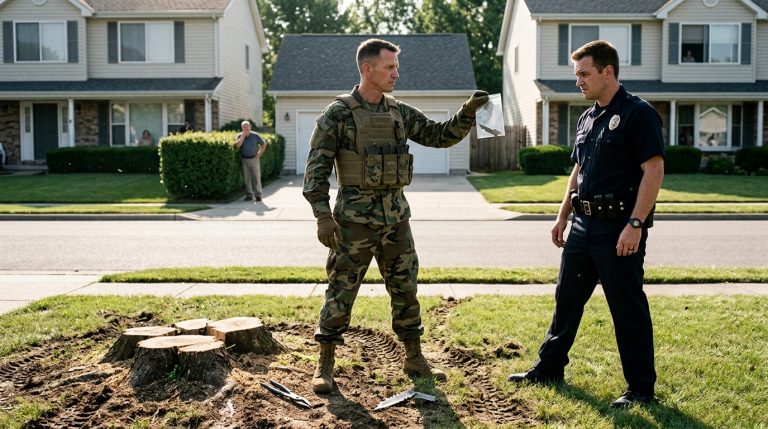
The Kiln War: How a Retired Master Sergeant Weaponized Bureaucracy to Destroy Suburban Tyranny
CHAPTER 1: THE SOVEREIGN BORDER
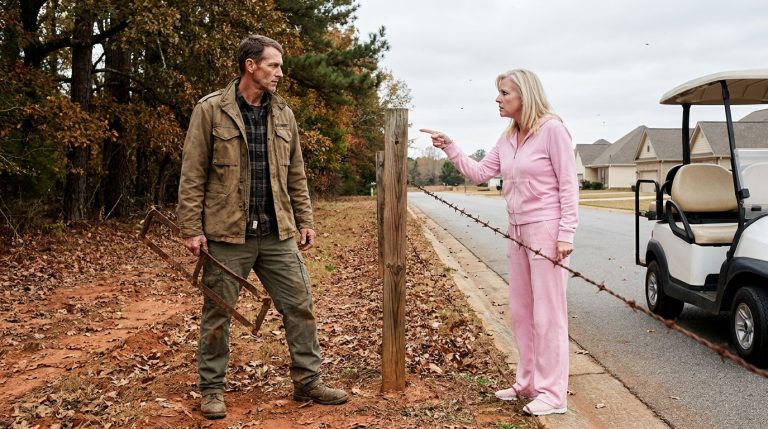
The toe of her orthopedic sneaker rested three inches over the property line.
I didn’t look at her face first. I looked at the grass. The boundary pin—a four-inch steel spike driven flush into the turf five years ago—sat precisely beneath her left heel.
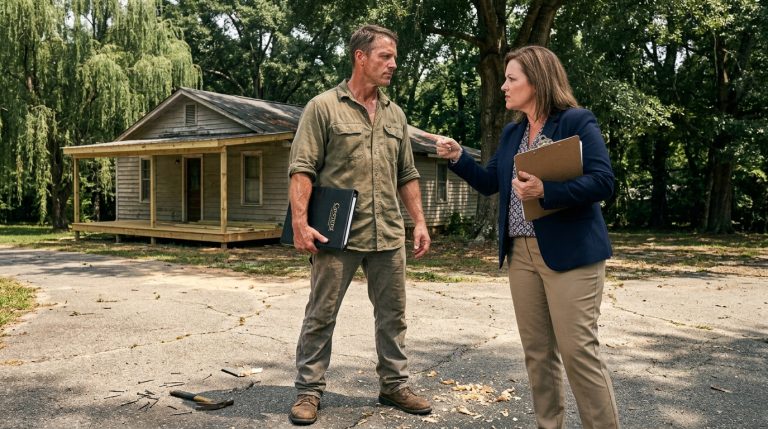
“That thing is a fire hazard, an eyesore, and a violation of three separate covenants,” Karen Miller said. Her voice carried the flat, nasal authority of a municipal inspector with a fresh clipboard. “Section four, subsection C. You have seventy-two hours to dismantle it, or the fines begin at five hundred dollars a day.”
I didn’t move. I stood on the 6×6 concrete pad I had poured with sixty-pound bags of Quickrete, my thumb resting in the curve of a brass trimming loop. The tool was warm from my pocket. I scraped a thin slice of dried red clay off its bevel with my thumbnail. Flake. Fall.
“Section four applies to unattached wooden sheds,” I said. My voice didn’t rise. In the Sandbox, if you raised your voice over the radio, it meant you were losing control of the grid. “This is a steel-reinforced ceramic kiln.”
“It is an unapproved structure.” She stepped forward, her full weight shifting onto my turf. The powder-blue polyester of her tracksuit rustled like dry leaves. She pointed a finger adorned with a cheap cubic zirconia at the welded frame behind me. “And you are conducting commercial business in a residential zone. We have records.”
There was a discrepancy in her posture. Her shoulders were tight, but her eyes kept darting past the kiln toward the small detached tool shed twenty yards back. She wasn’t scanning for safety hazards. She was looking for inventory.
“The plot is five acres, Karen. Zoned residential-agricultural under the original 2018 plat map.”
“The board amended the plat map two months ago,” she snapped, a tight, triumphant grin pulling at the corners of her mouth. “All properties are subject to standard architectural oversight now. You received the notice.”
I hadn’t. Which meant it was sent via regular mail without certified return receipt, or it wasn’t sent at all.
She thrust a photocopied paper against my chest. I didn’t reach for it. I let it hit my work apron and slide down to the concrete slab. She scoffed, turned on her heel, and marched toward her white Buick LeSabre parked on the asphalt curb.
I leaned down and picked up the paper. The ink was slightly smeared, running cold on cheap paper.
Violation 1: Covenant 4C1 (Unapproved External Structure).
Violation 2: Covenant 73 (Prohibition of Commercial Activity).
Violation 3: Covenant 9B5 (Open Flame Restriction).
At the bottom, in small italicized font: Failure to comply within 72 hours results in an immediate $500/day administrative assessment. Attendance required at the Architectural Review Committee hearing on Tuesday at 19:00.
I walked slowly back to the workshop, the brass tool still cycling between my knuckles. Spin. Click.
Sarah was standing in the doorway, her hands tucked into the pockets of her sweater. She didn’t ask what happened. She had heard the tone from the porch.
“She wants the kiln gone,” she said.
“She wants a surrender,” I corrected.
I walked past her to my desk, opened the top drawer, and pulled out a fresh black legal pad. I didn’t touch my phone. I didn’t call the HOA management company. I wrote three words at the top of the white page: Operation Trojan Horse.
“Are we calling Dave?” Sarah asked softly.
“Not yet.” I unclipped a small, matte-black square from my belt—a military-grade body camera I’d kept in my surplus kit—and set it beside the computer keyboard. “First, we map the minefield.”
Ten minutes later, I was on my bank’s encrypted portal. I didn’t transfer money to the Oakmont Estates portal. That was an admission of liability. Instead, I established a high-yield restricted escrow account titled Disputed Covenant Assessment Reserve.
I set an automated daily transfer: $500.00, scheduled for 08:00 every morning until further notice.
If a judge ever looked at the ledger, he wouldn’t see a defiant delinquent. He would see a Master Sergeant holding the line with absolute fiscal precision while the opposing party threw paper grenades over his fence.
I stepped back out into the late afternoon air. The Raku kiln sat silent, its heavy steel shell cool under the lowering sun. Deep inside its firebrick chamber lay six unglazed ceramic pots, waiting for the flame.
I picked up the brass trimming tool, scraped another sliver of dried earth from the blade, and watched it disappear into the green grass.
The clock was ticking. Seventy-two hours.
They thought they were starting a code enforcement action. They had no idea they had just stepped onto a mapped kill zone.
CHAPTER 2: THE KANGAROO GARAGE
18:58.
The digital digits on my dashboard shifted from red to green. The engine idling beneath my boots hummed at an even seven hundred RPMs. Across the street, the three-bay garage door of 124 Magnolia Lane was rolled up, throwing a wide rectangle of fluorescent glare across the concrete driveway.
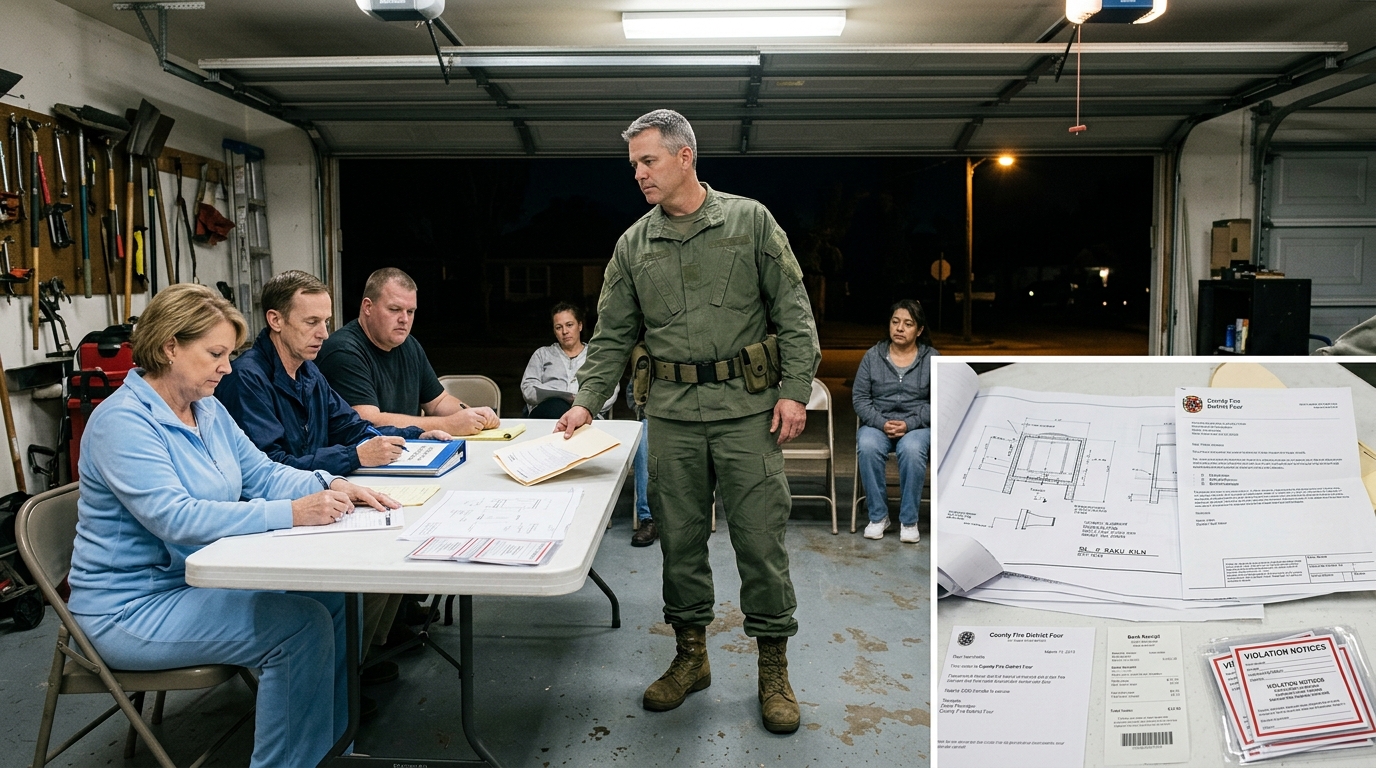
I checked the manila folder on my passenger seat. The technical blueprints for the kiln were flat. The printout of the fire marshal’s email—acknowledging the safety shut-offs—sat clipped to the front. Beneath it lay the bank receipt for the first $500 transfer to the Disputed Covenant Assessment Reserve.
I shut off the ignition. The silence hit the cab instantly, cold and heavy.
When I walked into the garage, the smell of damp carpet and stale coffee hit me first. Folding chairs were arranged in three cramped rows on the polished gray floor. About ten homeowners sat scattered across the seats, shoulders slouched, eyes fixed on the concrete. They had the vacant posture of people who had already calculated the price of arguing and decided they couldn’t afford it.
At the far end, behind a white plastic folding table, sat Karen Miller.
She wore the same powder-blue tracksuit, the zipper pulled high against her throat. To her left sat Gerald—a thin man with a navy windbreaker who twitched his jaw every six seconds. To her right sat Stan, broad-shouldered, blank-faced, staring at a yellow legal pad like a man waiting for a bus.
“Mr. Turner,” Karen said, her voice ringing off the metal garage doors. She didn’t look up from her stack of papers. “Take a seat. We are on item four.”
I didn’t take a seat. I walked to the center aisle and stood five feet from the plastic table. I set the manila folder flat on the surface.
“The specifications for the Raku kiln,” I said. My voice was low, hitting the concrete floor and staying there. “Including the high-alumina firebrick rating, the triple-valve propane shut-off, and the written review from County Fire District Four.”
Gerald shifted in his chair. His hand twitched toward a blue binder on his left labeled Magnolia Escrow & Maintenance Records. He pulled it back instantly, but the motion was too sharp. My eyes locked onto the white label on the spine.
Karen didn’t touch my folder. She tapped a neat stack of pre-printed forms with the tip of her pen.
“We appreciate your presentation, Mr. Turner,” she said, her tone dripping with rehearsed patience. “However, the committee is not here to debate the technical merits of your… project. We are here to enforce the rules that maintain the aesthetic harmony and property values of Oakmont Estates.”
“The kiln is built twenty-five yards from my workshop and over a hundred yards from the nearest property line,” I said. “It produces zero toxic discharge. The fire marshal confirmed it meets municipal safety codes.”
“Municipal codes do not supersede the covenants of this association,” Karen said. She finally looked up. Her eyes were small, pale, and completely devoid of doubt. “Your structure was not pre-approved by the Architectural Review Committee. It is, therefore, in violation. The committee has reviewed your case.”
She didn’t glance at Gerald or Stan. Neither of them moved a muscle.
“Your appeal is denied,” she said.
A woman in the second row—Maria Garcia—let out a soft, ragged breath and looked down at her lap.
“You have two options,” Karen continued, her pen hovering over a fresh sheet of paper. “You can dismantle the structure within the remaining forty-eight hours of your initial notice, or you can submit a formal variance application to the full board. That application requires a complete set of architectural renderings, a new land survey, and a non-refundable two-hundred-dollar review fee.”
“And the board meets when?” I asked.
“Our next quarterly meeting is in three months,” she said, a thin, needle-like smile touching her lips. “Of course, the daily fine of five hundred dollars will continue to accrue while the application is pending.”
Forty-five thousand dollars in fines to wait three months for a committee she controlled to read an application she had already decided to burn.
“So the fines continue even if I follow your process,” I said.
“The violation is active,” she chirped. “The clock doesn’t stop because you file paperwork.”
I looked at her face for four full seconds. I looked at Gerald, whose jaw twitched twice in rapid succession. I looked at the blue Magnolia Escrow binder sitting six inches from his left elbow.
I didn’t argue. I didn’t reach for the fire marshal’s email. I picked up my manila folder, folded it precisely in half, and tucked it under my arm.
“I see,” I said.
“We will expect the two-hundred-dollar check by Friday if you intend to apply,” Karen called out to my back as I turned toward the open driveway.
I walked out into the cool night air. The fluorescent light of the garage faded behind me, replaced by the dark, quiet line of the street.
I didn’t drive straight home. I pulled the truck into the dark turnout near the neighborhood mail kiosks, pulled out my legal pad, and flipped past the first page.
Operation Trojan Horse was dead. It was too passive. It assumed the enemy was operating under a set of rules that could be negotiated.
I drew a heavy black line through the title. Above it, in crisp, block lettering, I wrote: OPERATION CHECKMATE.
I reached into my pocket, pulled out the brass trimming loop, and felt the sharp edge of the metal against my thumb.
She thought she was using a bureaucratic vise to crush a retired soldier. She didn’t know I was already mapping every seam in her armor—and the first crack had just opened on a blue binder sitting on a plastic table.
CHAPTER 3: THE GARGOYLE PROTOCOL
The graphite tip snapped against the yellow paper.
The small snap echoed inside the cab of the truck. I didn’t shake my hand or blow away the grey dust. I pressed the broken stub into the top margin, dragged two heavy lines beneath the new header, and closed the cover.
Outside, the neighborhood mail kiosk sat under a single buzzing sodium light. Four metal doors hung open, rusted at the hinges, vibrating slightly with every passing breeze from the woods behind my lot.
I drove home slowly. The speedometer didn’t cross fifteen miles per hour. When I pulled up to my driveway, the workshop lights were off, but a single lamp burned on the front porch. Sarah was sitting on the top step, a white mug held between both hands, her knees pulled tight against her sweater.
I stepped out of the truck, the soles of my work boots crunching on the gravel.
“They denied it,” she said. It wasn’t a question.
“They didn’t look at the fire marshal’s letter,” I said, walking up the steps. I sat on the wooden deck two feet away from her, my back against the pine support beam. “They offered a variance application. Two hundred dollars non-refundable. Three months wait time. Five hundred a day while it sits on her kitchen table.”
Sarah’s fingers tightened around the mug. Her knuckles turned pale, almost blue in the porch light. “Forty-five thousand dollars.”
“In theory,” I said. “In practice, it’s zero, because I opened an escrow account three hours ago.”
I reached into my pocket, pulled out the brass trimming loop, and laid it flat on the step between us. A thin rim of dried red clay still coated the inside curve.
“She wants a war of attrition,” I said. “She thinks I’m sitting back here waiting for her process to starve me out. So tomorrow, we give her something else to look at.”
The next morning at 06:00, the sun hadn’t cleared the tree line. The air inside my workshop was forty degrees, smelling of wet silt, fired brick, and damp cedar.
I didn’t turn on the wheel. I went to the heavy wooden workbench in the corner, pulled three twenty-five-pound blocks of iron-rich red stoneware clay from their plastic wrapping, and dropped them onto the canvas surface with a heavy, dull thud.
Thump.
I took a wire tool, sliced off a six-inch slab, and began hand-building.
I didn’t sculpt a bowl or a vase. I built a pedestal eight inches square. On top of it, I pulled and pinched a squat, grotesque figure: a bloated torso in a tight tracksuit, a pinched face with two tiny, hollow eye sockets, and a right hand frozen in a permanent, clawed reach for a tiny wooden gavel.
By 11:00, the piece was complete. I carried it out to the kiln on the concrete slab, fired up the propane burner, and ran a quick two-hour forced bisque. At 14:00, while the ceramic was still glowing hot inside the chamber, I pulled it out with steel tongs, plunged it into a metal bucket of sawdust to create a heavy black smoke reduction, and doused it in ice water.
The thermal shock cracked the outer glaze into a fine, spiderweb lattice of dark bronze and green lines.
I carried the finished gargoyle to the very front edge of my lawn, three inches behind my boundary pin, and set it on a concrete cinder block facing Magnolia Lane.
Beside it, I mounted a clear acrylic frame containing a laminated copy of Karen Miller’s first violation notice.
At 16:30, a white Buick LeSabre slowed down as it passed my property. The electric window rolled down two inches. A pair of small, pale eyes stared through the gap at the statue. The car didn’t stop, but the brake lights flickered red twice before it accelerated toward the cul-de-sac.
The next morning, a fresh white envelope sat in my mailbox.
Violation 4: Covenant 12A (Unapproved Lawn Ornamentation).
Fine: $100.00.
I didn’t tear it up. I laminated it, walked out to the lawn, and mounted it directly beneath the first notice on the cinder block.
That night, Sarah brought three local home decor magazines into the living room and dumped them on the coffee table.
“If you’re going to build a gallery on the curb, you need better inspiration,” she said, trying for a light tone, though the tightness around her eyes remained.
I picked up the top issue—Westchester Living, Fall Edition. The glossy pages slicked beneath my thumb. I flipped past multi-million-dollar kitchens, stainless-steel range hoods, and custom swimming pools.
Halfway through the issue, my thumb stopped.
Page forty-two. A two-page spread under a bold gold header: Opulence in Oakmont: A Master Bathroom Retreat.
The photograph showed a sprawling master bathroom. In the center sat a deep soaking tub surrounded by gold fixtures. But the walls behind the tub were covered in a sweeping, fluid mosaic of custom ceramic tiles—shimmering bronze, deep cobalt, and a distinct, spiderweb crackle glaze running through every edge.
My pulse didn’t spike. It dropped. My internal body temperature seemed to fall five degrees in a single second.
I knew those tiles.
I knew the exact six-inch square dimension. I knew the specific ratio of copper carbonate to cobalt oxide I had mixed in a plastic bucket two years ago. I knew the precise three-minute window I had held them in the reduction barrel to force that bronze luster across the surface.
I had spent eighty days throwing, cutting, and firing those tiles in my workshop for a high-end designer named Seline at Prestige Interiors. The purchase order had read Project Riverflow. The client name on the invoice had been kept anonymous under a corporate non-disclosure agreement.
The total invoice price: $32,750. Paid via bank transfer from a firm called The Vanguard Ledger.
I looked at the small text at the bottom right corner of the page.
Homeowner: Mrs. Karen Miller, 124 Magnolia Lane.
I sat in the dark living room for thirty seconds without moving. The brass trimming tool was in my apron pocket. I reached in, gripped the cold metal frame, and pressed my thumb into the blade until the skin turned white.
She had stood on my property line forty-eight hours ago and called my kiln a commercial eyesore. She had threatened to fine me into bankruptcy for making pottery in a residential zone.
And she was soaking in thirty-two thousand dollars worth of my fire every single night.
I leaned across the table, grabbed my legal pad, and flipped past Operation Checkmate.
On a fresh, clean page, I wrote a single line:
Subject has deployed contraband. Target locked.
CHAPTER 4: THE WORKSHOP RESISTANCE
The pen ink was still wet on the paper when the first headlights swept across the living room window.
It was 05:45 the following morning. I stood by the potbelly stove in the workshop, holding a chipped ceramic mug of black coffee. Outside, the gravel driveway crunched under heavy tires.
I set the mug on the iron plate of the stove and walked to the double timber doors.
A dark blue Ford F-150 sat near the kiln. The driver’s side door swung open, and Bob the mechanic stepped out. He wore a grease-stained canvas jacket, his white hair uncombed. In his left hand, he held a folded piece of paper; in his right, a rusted steel torque wrench.
“You Turner?” he asked. His voice sounded like dry gravel dragged over iron.
“I am,” I said.
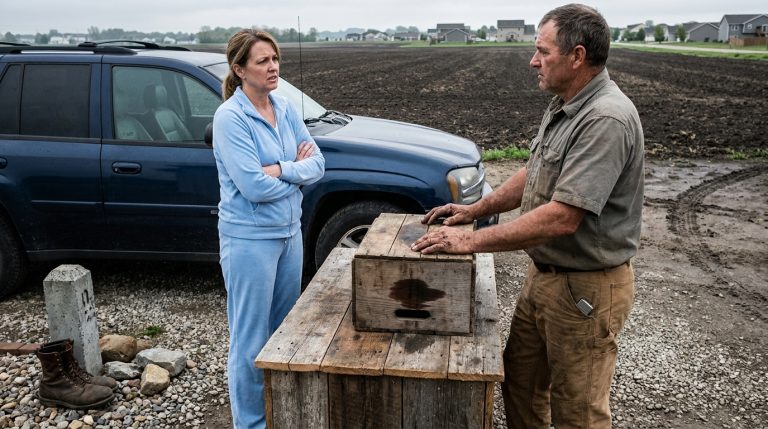
He walked up the two concrete steps, handed me the paper, and spat into the gravel. “She got me last night. A thousand bucks for changing a fuel pump on my own Mustang inside my own closed garage. Said a neighbor complained about chemical fumes.”
Before I could answer, a silver Honda Civic pulled up behind his truck. Hector and Maria Garcia stepped out, walking side-by-side. Maria held a small plastic bag filled with fresh garden soil; Hector carried a thick leather accordion binder under his arm.
“We saw the gargoyle on the road,” Hector said softly. He reached out and touched the rough timber frame of my door. “We thought… maybe there is a place where people do not have to bow.”
By 06:30, seven homeowners were sitting on overturned five-gallon clay buckets around my central worktable.
I didn’t offer them speeches. I laid out my legal binder in the middle of the canvas surface. Beside it, I placed the notarized affidavit from Seline at Prestige Interiors regarding Project Riverflow, alongside the bank receipts for the $500 daily escrow transfers.
“This isn’t about my kiln,” I said, pointing to the line item on the invoice. “And it isn’t about Bob’s Mustang or Maria’s garden. Karen uses the covenants as a private extraction mechanism. If you pay the fine directly to her portal, you admit fault and give her leverage. If you fight her alone, she drowns you in administrative paper.”
Bob leaned forward, his calloused hands resting on his knees. “So how do we hit back?”
“We don’t hit back individually,” I said. “We trigger Section 12, Subsection D of the original 2018 association bylaws. A recall vote for the entire executive board.”
Hector frowned. “She claims she amended the bylaws two months ago.”
“She amended the architectural guidelines,” I said, tapping the blue paper copy of the county records I’d pulled the night before. “She never filed the recall threshold amendment with the county clerk. To trigger a mandatory vote of no confidence, we need sixty percent of the registered plat map. That’s seventy-eight signatures.”
Bob let out a short, harsh laugh. “Seventy-eight? In a neighborhood where people hide behind their blinds when her LeSabre drives down the street?”
“They hide because they think they’re alone,” I said. “We give them a list. Every illegal fine, every kickback from her preferred towing company, and every unapproved expenditure.”
“What about her board?” Maria asked softly. “Gerald and Stan?”
“Gerald handles the book transfers,” I said. My eyes drifted to the name on the affidavit copy: The Vanguard Ledger. “He’s weak. When the pressure hits the paper, he’ll fold to protect his own property.”
By noon, the committee had divided Oakmont Estates into six tactical sectors. Hector took the cul-de-sacs. Bob took the northern avenue. We agreed to gather every evening at 19:00 in the workshop to tally signatures and compile documentation.
At 14:15, my phone buzzed on the workbench. It was an automated push notification from the Oakmont Estates community portal.
Subject: URGENT COMMUNITY SAFETY ALERT: UNAUTHORIZED EXTREMIST ACTIVITY.
I clicked the link. A broadcast email signed by Karen Miller had been sent to all one hundred and thirty homeowners.
The prose was weaponized propaganda:
It has come to the attention of the board that a disgruntled resident at 410 Woodland Way—a former military individual with extensive training in demolitions and high-temperature incendiary devices—is attempting to organize an illegal militia group within our neighborhood. This individual is currently subject to multiple severe code violations regarding explosive fire hazards and commercial exploitation. Do not sign any petitions. Do not engage.
I read the text twice. My left hand remained completely still on the wooden table, but my thumb pressed hard into the brass trimming loop in my apron pocket until the metal cut deep into the callus.
She wasn’t just defending her authority anymore. She was using my service, my medical discharge, and my history in Kandahar as a weapon to isolate me from my neighbors.
The workshop door creaked open.
Sarah stood in the threshold, her phone in her hand, her face pale. “Mark… did you see it?”
“I saw it,” I said.
Before she could speak, the heavy rumble of a V8 engine sounded outside. A dark green Ford F-250 with a veteran plate frame pulled up beside my truck. The door opened, and a man in his sixties with a cropped grey beard and a black windbreaker stepped out. He wore a brass Marine Corps emblem on his lapel.
He walked into the workshop, pulled a printed copy of Karen’s email from his pocket, and slapped it onto my workbench.
“Master Sergeant,” the man said, his voice like iron grinding on stone. “I’m Colonel Vance, retired. I live on Magnolia Lane. My wife showed me this garbage ten minutes ago.”
I looked at him. “Colonel.”
“Is this your workshop?” he asked, looking around at the kilns, the clay blocks, and the legal binders.
“It is.”
“And she’s trying to drag your service into a neighborhood shakedown?”
“She’s trying to keep people quiet,” I said.
Colonel Vance pulled a heavy silver pen from his breast pocket and looked down at the blank yellow legal pad on my desk.
“Where do I sign the recall petition?” he asked. “And where do we deploy the rest of the company?”
I picked up my pen, turned to a fresh page on the clipboard, and handed it to him.
The trap wasn’t just set anymore. Karen had just pulled the tripwire herself.
CHAPTER 5: THE MASTER BATHROOM TRAP
The heavy steel clip of the board snapped shut under Colonel Vance’s thumb.
Eighty-four signatures. Six over the supermajority threshold. The black ink lines stretched across seven pages, each name accompanied by a lot number and a certified date stamp.
I didn’t smile. I took the clipboard, slipped it into my leather briefcase alongside the projector cable, the notarized affidavit from Prestige Interiors, and the bank statements from the Disputed Covenant Assessment Reserve.
“They’ve locked the clubhouse main gates,” Colonel Vance said, looking down at his watch. 18:45. “Gerald is standing by the chain-link fence turning cars away, claiming overflow parking.”
“Let him,” I said, sliding my arm through my jacket sleeve. “Bob brought his flatbed.”
By 18:55, ninety-two residents were inside the Oakmont Estates clubhouse. They weren’t sitting politely in rows. They stood shoulder-to-shoulder along the cinderblock walls, spilling into the hallway and out onto the concrete patio where Bob’s truck idled, its yellow floodlights illuminating the back entrance.
At the front table, Karen Miller sat behind three microphones.
She wore a dark navy wool suit with padded shoulders, her chin tilted up, her hands folded neatly over a thick blue binder labeled Magnolia Escrow & Maintenance Records. To her right, Gerald’s eyes twitched erratically toward the side doors. To her left, Stan sat perfectly still, staring at his shoes.
Karen raised her wooden gavel and struck the striking block three times. Crack. Crack. Crack.
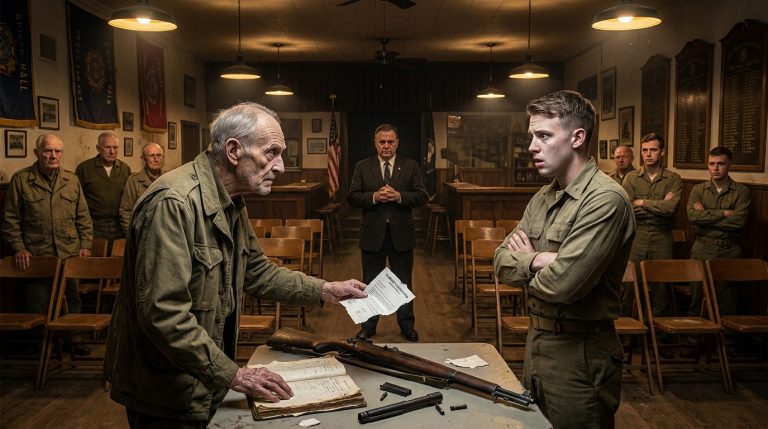
“This annual meeting of the Oakmont Estates Homeowners Association is now in session,” she said. Her voice echoed through the PA system, thin and clipped. “Due to recent security threats and unauthorized disruptions, tonight’s agenda will be restricted strictly to board reports.”
“Point of order,” a voice boomed from the third row.
Colonel Vance stood up. He didn’t wait to be recognized. He walked straight down the center aisle, holding a white manila folder in his right hand. Beside him walked Alex, the young attorney from Elm Street, carrying a thick stack of blue legal summonses.
“The floor is not open for public comment,” Karen snapped, her thumb pressing hard against the edge of the wooden block. “Mr. Vance, sit down or you will be assessed an administrative disturbance fee.”
“Under Section 12, Subsection D of the 2018 covenants,” Alex said, his voice quiet, clear, and perfectly modulated for the room, “a petition signed by sixty-two percent of the registered property owners has been filed with the county clerk as of 16:00 today. We are executing an immediate floor vote of no confidence.”
A sharp, collective intake of breath swept through the room.
Karen’s face didn’t flinch, but her right hand twitched, knocking a pen off her notepad. “That petition is invalid. The board amended the recall guidelines—”
“You amended the architectural guidelines,” Alex interrupted, placing a stamped county document directly on her table. “You forgot to record the recall threshold with the register of deeds. The original 2018 bylaws govern this room tonight.”
Gerald stood up so fast his metal chair screeched against the linoleum. “Karen, I told you we needed to—”
“Sit down, Gerald!” she hissed through gritted teeth.
I walked down the aisle carrying my laptop. I didn’t ask for permission. I plugged the HDMI cable into the clubhouse wall unit and powered on the ceiling projector.
A bright white square flashed across the ten-foot pull-down screen behind the board.
“My name is Mark Turner,” I said. The room went dead silent. “For forty-two days, Mrs. Miller has issued daily five-hundred-dollar fines against my property, citing Covenant 73—Prohibition of Commercial Activity.”
I hit the spacebar.
Slide one hit the screen: the original blueprint of my Raku kiln, flanked by the official email approval from County Fire District Four.
“She claimed my workshop was an illegal commercial operation,” I continued. “She claimed my ceramic art was a hazard to this community.”
I hit the spacebar again.
Slide two: a high-resolution, full-color scan of page forty-two from Westchester Living Magazine. The sweeping mosaic of bronze, cobalt, and crackle-glazed tiles filled the entire ten-foot screen, glowing under the ceiling lights.
“This is Mrs. Miller’s master bathroom,” I said. My voice dropped two octaves, carrying through the quiet room like a iron blade sliding over slate. “Featured in last month’s issue. Total cost of the custom tile installation: thirty-two thousand, seven hundred, and fifty dollars.”
A low murmur started in the back row and rolled forward.
“Mrs. Miller,” I said, turning to look her directly in the eyes. Her face had gone completely grey, the skin around her mouth tight as wire. “You spent thirty-two thousand dollars buying art from the very kiln you called an eyesore. You paid for it through a firm called Prestige Interiors under Project Riverflow.”
“That’s a private matter!” Karen shouted, slamming both palms onto the table. “My home interior is not under the jurisdiction of this meeting!”
“It is when the money used to pay for it came out of The Vanguard Ledger,” Alex said.
He stepped forward and laid three certified bank records beside her gavel.
“The account named on the Prestige Interiors invoice matches the transfer account for the Magnolia Escrow reserve funds,” Alex said, turning to face the hundred residents lining the walls. “Mrs. Miller wasn’t just fining residents to enforce compliance. She was using retaliatory fines to cover a thirty-two thousand dollar deficit in the community capital improvement reserve.”
Gerald didn’t wait for the vote. He reached for his briefcase, turned, and bolted out the side exit door into the dark parking lot.
Stan didn’t move. He lowered his head into his hands.
Karen stood behind the table, her chest heaving, her knuckles white as she gripped the wood. “This is a setup! You think you can intimidate me with fake documents? I will sue every single person in this room! I will tie your properties up in litigation for ten years!”
“You won’t,” Alex said softly.
He pulled three white envelopes from his inner jacket pocket and slid them across the table until they touched her hands.
“Karen Miller, you are officially served with a civil action for fraud, breach of fiduciary duty, defamation, and intentional infliction of emotional distress,” Alex said. “Filed individually against you, Gerald Tibs, and Stan Kowalski.”
The room erupted.
It wasn’t a roar of anger. It was a wave of pure, deafening release. People were standing on chairs, shouting over each other, hands raised high in the air as Colonel Vance began calling the verbal vote of no confidence.
“All in favor!” Vance boomed.
A wall of ninety-two hands went into the air.
Karen stood alone behind the table, the legal papers clutched in her right hand, her mouth open, but no sound coming out. The white light of the projector beam reflected off her eyes, casting the shadow of my ceramic tiles directly across her face.
The war of paper was over. The trial by fire had just begun.
CHAPTER 6: THE ABSOLUTE CLEANSING
The white projector light burned across the empty stage long after the room cleared.
Karen Miller didn’t move for three minutes after the last door shut. She stood behind the folding table, her hands flat against the laminated grain, staring at the blue summons envelopes Alex had left beside her gavel.
“The sheriff’s department received the certified audit at 17:00,” Alex said quietly from the doorway. He hadn’t left. He leaned against the doorframe, a blue folder tucked under his arm. “Gerald turned over the passcodes for The Vanguard Ledger twenty minutes ago. The thirty-two thousand seven hundred dollars for Project Riverflow wasn’t the only transaction. He logged eighteen months of wire transfers out of the Magnolia Escrow reserve.”
Karen’s chin remained up, but her breathing came in short, shallow hitches. “It was an administrative loan. The board had full authority—”
“The board had no authority to funnel capital reserves through a shell entity to pay for private home improvements,” Alex said. “The bank records show the transfer path directly from the escrow account into Prestige Interiors. The state attorney general’s financial crimes unit takes jurisdiction at midnight.”
She didn’t answer. She picked up her navy purse, pulled her keys from her pocket with fingers that barely held the brass ring, and walked past us without looking up. Her shoes clicked against the linoleum—a heavy, uneven rhythm that faded down the long, dark hallway.
Six weeks later, the morning air over Woodland Way carried the first sharp bite of late autumn.
A flatbed tow truck sat idling at the curb of 124 Magnolia Lane. Two men in high-visibility vests rolled a heavy bank-repossession lockbox onto the front porch. A yellow wooden sign driven into the manicured lawn read: FORECLOSURE AUCTION — SUBJECT TO RECEIVERSHIP.
I stood on the concrete pad behind my workshop.
The Raku kiln sat cold in its steel frame, its aluminum bricks white and clean under the morning sun. Beside it lay a new batch of thrown stoneware pots—twelve shallow bowls waiting for their glaze coat.
Bob walked around the corner of the workshop, holding two paper cups of dark coffee. His hands were stained with black motor oil, but his posture was straight.
“The new interim board approved the revised bylaws last night,” Bob said, handing me a cup. “No fines without a binding three-member arbitration panel. No restrictions on workshop activities. And the Magnolia Escrow account is back under independent bank control.”
“And Gerald?” I asked.
“Plead down to misdemeanor misapplication of funds,” Bob said, taking a slow sip. “Restitution order filed. He’s selling his house to cover his share of the audit fees. Karen’s hearing is set for next month.”
He looked over at the three clay gargoyles still standing on the cinder blocks near my boundary pin.
“You keeping those up?” he asked.
“No,” I said. “The point’s been made.”
I walked over to the edge of the lawn, unmounted the clear acrylic frames holding the old violation notices, and set them inside a wooden crate. I picked up the first gargoyle—the heavy, cracked figure with the tiny gavel—carried it to the worktable, and set it down next to my recycling bin.
Sarah came out from the back porch carrying a metal bucket of damp cedar shavings and a box of long wooden matches.
“The district fire marshal dropped off the final inspection certificate,” she said, setting the paper on the bench. “Signed in ink. No expiration.”
I didn’t answer with words. I turned the brass regulator on the propane tank, opened the primary valve, and struck a match against the firebrick rim.
The burner ignited with a deep, hollow whoosh—a clean, blue ring of fire that roared softly inside the refractory core.
The heat bloomed instantly, pushing back the morning chill. The thermal wall began to glow, shifting from dull orange to bright, radiant yellow as the internal temperature climbed past eighteen hundred degrees.
Hector and Maria Garcia walked up the gravel driveway carrying a wooden tray of freshly baked bread and a small basket of late-season tomatoes from their rebuilt backyard garden. Behind them, Colonel Vance pulled his green truck into the turnout, stepping out with a lawn chair folded under his arm.
Nobody talked about covenants. Nobody checked a watch.
I picked up my brass trimming tool from the workbench. The blade was clean now, the old red clay scraped away down to the bright yellow metal. I set it carefully in the wooden rack beside my wheel, pulled on my leather heat gloves, and reached for the iron tongs.
The fire inside the brick chamber burned steady and hot, turning cold mud into something solid, durable, and clean.