The Iron Boundary: Where the Cold Dirt Meets the Powder Blue Line
CHAPTER 1: THE GRAVEL LINE
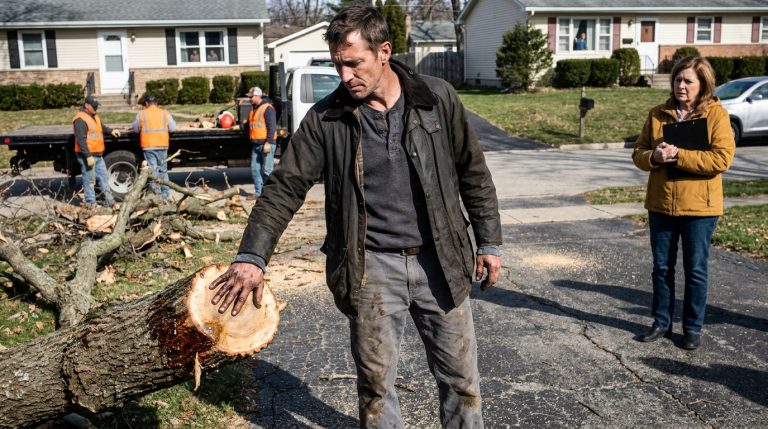
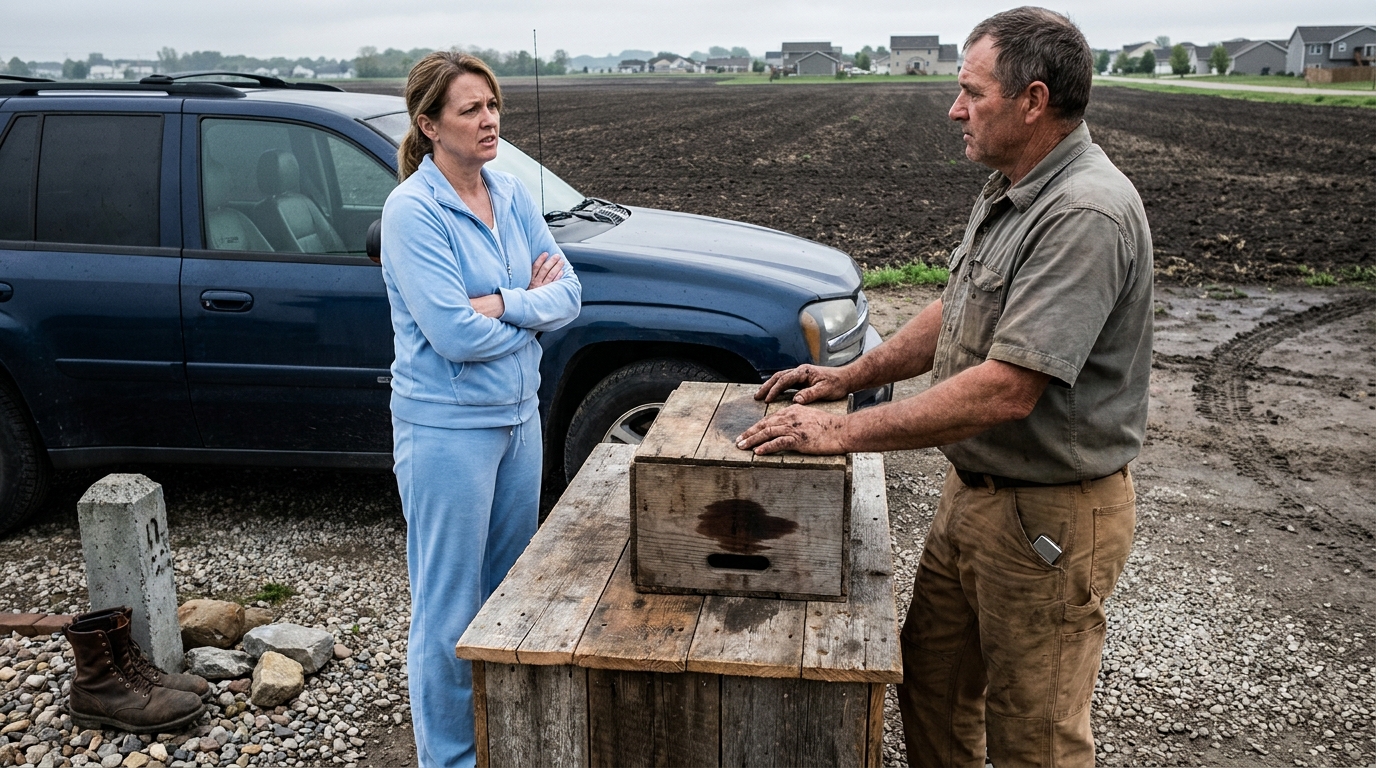
The front left tire of the blue SUV rested four inches inside my property line. The heavy rubber pressed into the dark, damp soil my grandfather had turned with a mule in 1952. The engine idle rattled the brass hinge of my display case.
“Your little vegetable stand is a blight on this community,” she said. The voice was thick with fake sweetness covering a hard core of municipal spite. “I’m giving you twenty-four hours to tear it down before I start fining you into bankruptcy.”
I didn’t answer. I didn’t move my hands from the rough edge of the reclaimed barnwood counter. Instead, my thumb slid into my pocket, feeling the cold, scarred metal of Clara’s brass Zippo lighter. I didn’t smoke. I just felt the weight of the steel.
Karen stood in a powder blue tracksuit that strained across her shoulders. Her arms were folded tight. Behind her, the SUV’s exhaust blew white smoke into the morning air, smelling of unburnt premium gasoline and hot oil.
On the third shelf of the stand sat a wooden crate. A fresh oil stain had seeped into the cedar wood near the bottom corner—dark, fresh, and smelling faintly of diesel fuel rather than crop soil. Someone had walked my perimeter before dawn.
I picked up an heirloom tomato. The skin was thick, marbled red and gold, heavy with well-drained dirt. I rubbed a speck of dust off its side with my sleeve.
“Ma’am,” I said. My voice stayed low, flat, and dry. “This farm was deeded in 1952. My father worked it. I work it. The stand has sat on this gravel for thirty years.”
“I am the president of the Meadowlands Homeowners Association,” she snapped. Her neck flushed dull red above the tracksuit collar. “My jurisdiction is wherever I say it is. This is a residential community, not a flea market.”
“Your HOA was incorporated in 1988,” I said. “You don’t own the dirt under your tires.”
“We’ll see what the county court says about nuisance commercial zones,” she spat.
She turned on her heel, her sneakers crunching hard into the gravel. She slammed the door of the SUV, shifted into reverse, and tore backward into the asphalt road, throwing a spray of loose stone against my lower fence.
I stood silent, watching the red taillights disappear around the bend of suburban beige houses. My thumb clicked the Zippo wheel once inside my pocket. Sparks caught nothing. The smell of cold flint filled my nose.
The fight wasn’t about tomatoes. It never was.
CHAPTER 2: THE PAPER LINE
The diesel stain on the bottom corner of the cedar crate hadn’t dried. It had soaked through two inches of heartwood, turning the light pine a dark, greasy grey.
I set the heirloom tomato back into the basket. The fruit was still warm from the morning sun, but the wood beneath it was cold. Someone had stood on this gravel before 0500, when the ground fog was still clinging to the corn stalks. They hadn’t come to steal tomatoes. They had come to mark the perimeter.
I walked the thirty yards back to the farmhouse. The grass along the fence line was wet with heavy dew, soaking the toes of my leather boots. Inside the kitchen, the air smelled of stale coffee and the iron tang of the cast-iron skillet on the stove.
I didn’t turn on the light. I sat at the oak table, pulled the brass Zippo from my pocket, and set it next to the land deed.
The deed was four pages of thick yellow stock bound by a rusted steel staple. Dated October 14, 1952. My father’s signature was at the bottom, written in dark blue fountain pen ink that had bled slightly into the rag paper. Above it was the county seal, stamped deep enough to raise the paper fibers on the back.
The door frame creaked when the mail truck pulled up to the galvanized mailbox by the road. Tom didn’t leave the engine running like Karen did. He cut the ignition, the old Grumman postal van letting out a hot, metallic sigh as it settled on its springs.
I met him on the porch.
Tom had his blue union cap pushed back on his forehead. He held a clip-board in one hand and a thick, rectangular envelope in the other. It was heavy, cream-colored paper stock with a square window in the front.
“Certified, Jack,” Tom said. His voice was quiet, the way folks talk when they bring bad news to a house. “Needs a signature.”
I took the pen from his fingers. “Appreciate it, Tom.”
“It’s from the association,” he added, looking past me toward the stand. “Saw Mrs. Peterson’s SUV parked sideways on the road earlier. She looked like she was fixing to tear someone’s head off.”
I signed the slip on the yellow line, handed the pen back, and didn’t offer a explanation. Tom nodded once, picked up his leather bag, and walked back to his truck.
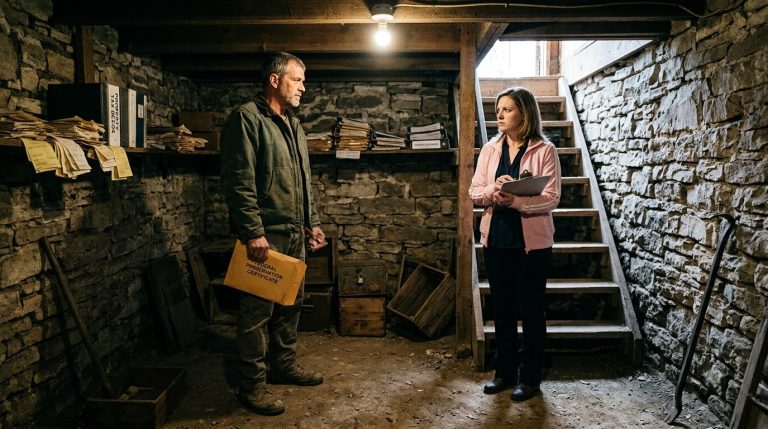
I took the envelope into my back office. The room was five feet by eight feet, lined with unpainted pine shelves holding old account ledgers, tractor manuals, and three jars of dried tobacco leaves my father had cured in 1994.
I slid a steel letter opener under the flap. The glue gave way with a dry tear.
The letterhead was gold foil. The Meadowlands Homeowners Association — Board of Directors. Below it was a line in black ink: Notice of Administrative Violation & Demand for Cessation.
It cited Article 7, Section 3 of their CC&Rs. It claimed my farm stand was an “unapproved commercial structure” that created an “unsightly public nuisance” and caused “unauthorized commercial traffic on private residential roadways.”
The fine was set at five hundred dollars, effective immediately, with an additional hundred dollars accruing every twenty-four hours until the structure was removed. At the bottom was a secondary clause, typed in a smaller font: Failure to remediate within ten calendar days will initiate municipal referral under Sector-9-Zoning-Audit procedures.
I read the line twice. Sector-9-Zoning-Audit.
The Meadowlands HOA didn’t have a Sector 9. Their residential plats were labeled Alpha through Delta. Sector 9 was an old county administrative code for unincorporated agricultural buffer zones—the land between the state highway and the creek.
I picked up the desk phone, dialed my daughter’s direct line in the city, and laid the paper flat under the desk lamp.
“Sarah,” I said when the line picked up.
“Dad? Is everything alright?” Her voice was clear, crisp, missing the background static of rural lines.
“Karen sent a certified letter,” I said. “Five hundred dollar fine. Mentioned a Sector 9 audit.”
There was a silence on the line while she pulled up her terminal. I could hear the rhythmic clatter of her mechanical keyboard.
“Sector 9 isn’t HOA jurisdiction, Dad,” she said after ten seconds. “That’s a county land-use classification. Who signed the notice?”
“Karen Peterson. President.”
“She can’t issue a municipal audit reference on an HOA notice,” Sarah said. Her tone shifted, the casual warmth dropping away into the sharp, flat cadence she used when analyzing court filings. “Unless she’s copying text from a county template. Or someone gave her the phrasing.”
“She wants the stand down in ten days,” I said.
“Send me a scan,” she said. “And Dad? Don’t pay a cent. Don’t call her. All communications go through writing from now on.”
“I know the drill,” I said.
I hung up, put the letter into a manila folder, and wrote the date on the tab with a grease pencil.
At noon, I drove the Ford tractor down to the south pasture along the creek. The dirt here was darker, heavy with river silt, perfect for late squash and autumn greens. On the far side of the creek bed, behind a line of scrub oak, sat Karen’s house. It was a two-story beige colonial with a manicured lawn that looked like green plastic.
A silver sedan I didn’t recognize was parked in her driveway next to the blue SUV. The driver’s door was open, and a man in a grey suit was standing on the lawn, holding a roll of blueprints under his arm while Karen talked to him, her hands moving fast in the air.
I throttled the tractor down, let the diesel engine idle with a steady, low thud, and watched them.
The man in the suit didn’t look like an HOA board member. He didn’t look like a resident. He had a heavy leather briefcase on the hood of his car with a black stencil across the corner: Apex-Subdivision-Holdings.
He didn’t notice me watching. Karen did.
She stopped talking mid-sentence, turned toward the creek, and pointed her finger directly at the tractor. The man in the suit glanced over his shoulder, took a pen from his breast pocket, and made a single mark on the blue sheet of paper before rolling it back up.
I engaged the PTO, raised the bushhog deck six inches, and turned the tractor back toward the barn.
At 1600, I loaded six wooden crates of heirloom tomatoes and three bushels of summer squash into the bed of my pickup.
The Northwood County Food Bank operated out of an old brick warehouse behind the train tracks on the west side of town. The loading dock was low, built for horse-drawn wagons fifty years ago, its concrete edges chipped down to the gravel aggregate.
Maria came out through the plastic strip curtain, a clipboard tucked under her arm.
“Jack,” she said, squinting against the late afternoon sun. “You’re early today. Tuesdays are usually six o’clock.”
“Had some business in town,” I said, dropping the tailgate. The heavy steel chains clanked against the bumper.
We unloaded the crates in silence. The warehouse was cool, smelling of damp cardboard, green apples, and bleach. In the corner near the office door, three large cardboard collection boxes were stacked under a banner that read: Annual Meadowlands HOA Community Drive.
“Karen came by yesterday,” Maria said, setting a crate of squash onto a hand truck.
I didn’t pause. I picked up the next box of tomatoes. “Did she?”
“Brought a photographer from the county gazette,” Maria said, her mouth turning down at the corners. “Stood by the collection boxes for twenty minutes holding a giant cardboard check for five thousand dollars. Asked me twice if we could put her picture on the front cover of our newsletter.”
“Did you?”
“I told her the printer was out of ink,” Maria said dryly. She looked at the crates I had just stacked. “She asked if I knew where we got our fresh produce. I told her it came from local farms.”
“Did she ask which ones?”
“No,” Maria said, her eyes narrowing slightly as she looked at me. “She didn’t care. She just wanted to make sure her check was deposited before the end of the month. Jack… is there something going on between you two?”
“Just a boundary line, Maria,” I said. I wiped my hands on my canvas trousers. “Just dirt.”
“Well, keep your dirt on your side,” she said gently. “Because if I lose this produce, seventy families in the valley don’t get fresh greens on Thursday.”
I drove back to the farm as the sun was dropping below the tree line. The sky was a pale, hard blue, fading into grey over the subdivision roofs.
When I turned into the gravel drive, I saw a white sheet of paper taped to the front frame of the farm stand.
It wasn’t a certified letter. It was a printed notice on standard paper, secured with three strips of clear duct tape that had pulled small splinters off the reclaimed barnwood.
FINAL WARNING: UNAUTHORIZED STRUCTURE SUBJECT TO IMMEDIATE MUNICIPAL CODE ENFORCEMENT AND PRIVATE LIEN PROCEEDINGS.
Below the text was a handwritten phone number and an escrow account reference: Escrow-Account-704.
I didn’t tear the paper off. I walked back to the house, retrieved my camera from the desk drawer, and took four clear photographs of the tape, the text, and the splinters pulled from the wood.
The paper was damp with the evening fog by the time I finished. I sat on the top step of the porch, pulled the Zippo from my pocket, and set it on my knee.
The Subdivision lights were coming on one by one across the creek, a neat grid of yellow squares cutting into the dark. On my side of the line, the fields were completely black, quiet except for the wind in the dry corn leaves.
They weren’t trying to enforce a rule. They were trying to build a record. And every piece of paper they taped to my wood was another brick in the wall I was going to drop on them.
CHAPTER 3: THE PARALLEL FRONT
The chill from the wet pine step worked through my denim within ten minutes. Across the creek bed, the grid of suburban porch lights burned a clean, sterile white against the tree line.
I set the camera on the porch table next to the Zippo. The flash memory card inside held four high-resolution frames of clear duct tape tearing splinters out of thirty-year-old barnwood, along with the printed demand citing Escrow-Account-704.
My thumb flicked the Zippo wheel. Sparks showered blue against the dark casing, illuminating the faint clover engraved into the brass before dying out.
By 0630, I was in the Ford, driving the gravel perimeter road that separated my acreage from the subdivision’s east flank. The morning air carried the smell of damp leaf litter and exhaust from early commuters leaving their two-car garages.
I pulled up along the ditch outside George Henderson’s five-acre woods. His cottage sat two hundred yards back, half-hidden behind overgrown white pines that Karen had spent three years trying to force him to trim.
George was on his side porch, rubbing linseed oil into the shaft of a split-hickory hoe handle. The oil smelled sharp and resinous in the cold air.
“She put tape on your wood, Jack,” he said without looking up from his work. His voice was like two river rocks grinding together.
“Clear duct tape,” I said, leaning against his porch rail. “Left a notice. Mentioned a municipal audit.”
George stopped his rag midway down the handle. He turned his head slowly, his grey eyes rheumy but sharp behind wire-rimmed glasses. “Sector 9?”
“Sector 9,” I said. “And an escrow account number.”
“She came by here Tuesday,” George said, setting the hoe down against the railing. He pulled a yellowed sheet of paper from his flannel shirt pocket, folded into four precise squares. “Left this under my door wiper. Claims my tree canopy overhangs the HOA emergency access road by eighteen inches. Said if I didn’t cut the timber back, the county would initiate an eminent domain easement.”
I took the paper. The header didn’t say Meadowlands HOA. It bore the same faint administrative watermark I’d seen on Karen’s notice: a small, stylized triangle with the letters A.S.H. printed inside the border.
Apex-Subdivision-Holdings.
“She’s bluffing you on the timber, George,” I said, folding the paper back along its creases. “Your trees have been here since the ’70s. The county easement ends at the ditch line.”
“I know she’s bluffing,” George said, picking up his rag again. “Problem isn’t the bluff. Problem is the neighbors believe her. She told the couple on Oak Street that my trees were dropping property values by five percent a year. Now they won’t even wave when I pull out the drive.”
I handed the paper back. “They’re isolated. Everyone she goes after thinks they’re the only one.”
“Until she picks a fight with a man who has nothing else to do,” George said with a dry, rustling laugh. “What’s the play, Jack?”
“We stop playing defense on our own dirt,” I said.
Forty-five minutes later, I parked the truck in front of a small, single-story ranch house on the cul-de-sac bordering my western hay field. The driveway held a young couple’s station wagon with a child’s car seat anchored in the back.
Tom Sterling opened the front door before I reached the top step. He was in his early thirties, wearing a faded work shirt, his eyes shadowed with the kind of fatigue that comes from two jobs and an infant who doesn’t sleep.
“Mr. Miller,” he said, holding the screen door open two inches. His gaze flicked nervously toward the street, scanning for Karen’s blue SUV. “I saw the truck. If this is about the farm stand…”
“It isn’t,” I said. I stood on the concrete step, keeping my hands visible, resting lightly on my belt buckle. “It’s about the playset in your backyard.”
Tom’s shoulder tightened. “She gave us until Friday. Said the green slide violates the color scheme in Section 4. Five hundred dollar fine, plus fifty a day.”
“Your lot isn’t in Section 4, Tom,” I said, my voice low and flat. “Section 4 is the townhomes by the main gate. Your deed was recorded under Plat B, which allows primary colors on temporary recreational structures.”
Tom blinked, his hand loosening on the screen door. “How do you know that?”
“I spent four hours reading the county clerk’s public filings last night,” I said. “She’s using Section 4 penalty rates on Plat B homes because nobody checks the deed book. She did it to Henderson on his fence, she did it to the Garcias on their house paint, and she’s doing it to you.”
A young woman appeared behind Tom, carrying a toddler on her hip. Her eyes were wide, defensive. “She told us the board would put a lien on our house if we didn’t pay by the fifteenth,” she said.
“She can’t file a lien without a court order signed by a county judge,” I said. “She’s using the HOA letterhead like a club because it works.”
I pulled a small index card from my pocket and laid it on the porch railing. Written on it was an email address Sarah had generated that morning: [email protected].
“There are six independent properties on the perimeter,” I told them. “And at least fourteen homes inside the subdivision that have received identical fine notices this month. Every one of them is being told they’re standing alone.”
“What are you doing with the email?” Tom asked, looking down at the card.
“Collecting the paper trail,” I said. “Every letter, every notice, every fine receipt. We’re putting them into a single file.”
Tom looked at his wife. She didn’t say anything, but her grip on the child tightened, and she gave a single, sharp nod.
Tom picked up the card. “My brother-in-law does IT for the county,” he said, his voice dropping an octave. “He can set up an anonymous submission form so people don’t have to put their names on the records right away. Folks are scared of her, Mr. Miller.”
“Fear only works when the room stays dark, Tom,” I said. “We turn the lights on.”
By 1800, the sun had dropped behind the mountain, casting long, dark shadows across my gravel lot. I stood by the farm stand, re-stacking three crates of butternut squash that had just come off the back field.
The air had turned cold enough to see my breath.
A dark blue sedan—not Karen’s SUV, but a late-model fleet vehicle with dark tinted windows—pulled off the asphalt road and stopped on the gravel shoulder, ten feet from my property line. The engine stayed idling, a low, wet purr.
The driver’s window rolled down three inches. Inside, I could see the silhouette of a man wearing a grey felt hat and a dark overcoat. He didn’t get out. He didn’t speak.
He simply rested a thick manila folder on the window frame, holding it there for five seconds—long enough for me to see the bold black text stamped across the cover: Sector-9-Zoning-Audit / Escrow-Account-704 / Apex-Subdivision-Holdings.
Then he pulled the folder back inside, rolled the window up, and accelerated down the road toward the state highway, throwing a cloud of fine gray dust over my front fence.
I didn’t run after the car. I didn’t write down the license plate.
I reached into my pocket, touched the cold, brass edge of Clara’s lighter, and felt the hard, unyielding steel beneath the metal casing.
They weren’t trying to hide the connection anymore. They were showing me the weapon, expecting me to count the cost of the fight and walk away from the dirt.
They had no idea how much I loved this ground.
CHAPTER 4: THE CLUBHOUSE AMBUSH
The dust from the sedan’s rear tires hadn’t fully settled over the cedar fence before I walked into the farmhouse, picked up my grease pencil, and marked the date on the manila folder.
Forty-eight hours later, the community clubhouse sat bathed in the buzzing yellow light of four sodium floodlights. The air inside smelled of stale industrial floor wax, damp wool coats, and cheap percolator coffee.
Seventy folding chairs had been set up in neat rows facing a long folding table. Every chair was taken. Another thirty people stood along the back wall, shoulders pressed against the wood-paneled plaster.
Behind the long table sat Karen, flanked by her vice president and treasurer. She wore a dark blue blazer with silver buttons, her hair pulled back into a rigid bun. A walnut gavel rested on a felt pad next to her right hand.
I sat in the middle row, flanked by George Henderson on my left and Tom Sterling on my right. My coat was buttoned to the collar. Inside the chest pocket lay a legal pad containing twenty-two verified statements collected through Tom’s encrypted portal.
Karen brought the gavel down once. The sharp wooden crack echoed off the concrete ceiling.
“The monthly meeting of the Meadowlands Homeowners Association is now in session,” she said. Her voice carried through the PA speaker with a tinny, metallic edge. “Before we review the committee reports, the board must address an ongoing administrative nuisance regarding commercial encroachment on our northern perimeter.”
She didn’t look at me. She picked up a single sheet of paper from her desk.
“As many of you received in Tuesday’s memorandum,” she continued, “an unapproved commercial operation has refused compliance with Article 7, Section 3. The board has initiated escalation procedures under Sector-9-Zoning-Audit guidelines to protect property values. Continued non-compliance will result in direct municipal intervention and civil assessment filings.”
She paused, leaning toward the microphone. “Our community’s fiscal health relies on strict adherence to covenants. Lawsuits and legal challenges from non-members directly threaten our operational reserve—and our annual charitable pledges, including our long-standing support for the Northwood County Food Bank.”
A quiet murmur rippled through the front three rows—homeowners who only knew what her email blasts told them.
George shifted his weight on the folding chair. His old joints gave a dry pop. “She’s laying the runway,” he muttered under his breath.
“Let her build it,” I whispered back.
Karen tapped the gavel twice. “We will now open the floor for member comments. Speakers are limited to two minutes.”
Tom Sterling stood up first. He didn’t wait for her to call his name. He stepped into the center aisle, holding a folded white sheet of paper.
“Tom Sterling, 124 Willow Creek,” he said. His voice started thin, but he planted his boots flat on the linoleum and held his ground. “I want to ask why my family received a five-hundred-dollar fine for a children’s playset under Section 4 regulations, when my property is deeded under Plat B.”
Karen’s brow furrowed. She didn’t pick up her gavel. “Mr. Sterling, architectural violations are handled by written appeal to the review committee—”
“I filed three appeals,” Tom cut in. “All three were rejected by an automated email originating from an administrative domain registered to Apex-Subdivision-Holdings.”
The treasurer at the end of the table twitched, his head snapping toward Karen. Karen’s posture remained rigid, but her right hand closed tightly around the wooden handle of her gavel.
“That is an internal management detail, Mr. Sterling,” she said, her voice dropping an octave into cold, controlled authority. “Your time is expired.”
“It’s not expired,” George Henderson said, standing up slowly beside me, relying on his oak cane for leverage. “Because I’m using my two minutes to ask why an HOA board is citing municipal zoning codes for properties outside its plat map.”
“Mr. Henderson, you are not a member of this association,” Karen snapped, bringing the gavel down hard. Crack. “You have no standing in this room.”
“He has standing as my guest,” I said.
I stood up. The room went dead quiet. The hum of the fluorescent lights overhead sounded like a buzzsaw in the silence.
I didn’t walk down the aisle. I stood right in front of my chair, looking past the three rows of heads directly at Karen.
“You told this room my farm stand threatens your charitable contributions,” I said. My voice was low, carrying without the mic. “You told them my legal defense drains your reserves.”
“Mr. Miller, you are out of order—”
“I don’t fall under your order, Karen,” I said flatly. “And neither does the food bank.”
I turned my head toward the back double doors.
The heavy steel door swung open. Maria Sanchez walked into the clubhouse, wearing her navy canvas work jacket over her grey sweater. She carried no papers, no clipboard. She walked down the center aisle, her rubber-soled boots making no sound on the polished linoleum.
She stopped right beside Tom Sterling.
Karen’s face lost its color. The red flush that usually climbed her neck drained away, leaving her skin a dull, chalky grey.
“Mrs. Peterson,” Maria said. She didn’t use a microphone, but every person in the room heard her. “I received your five-thousand-dollar donation check yesterday morning. The press release you drafted for the Gazette was attached to the envelope.”
Karen’s fingers twitched against the felt pad. “Ms. Sanchez, this is an administrative board meeting, not a public—”
“Jack Miller delivers four hundred pounds of fresh produce to my loading dock every Tuesday and Friday,” Maria interrupted smoothly. Her eyes stayed locked on Karen. “He has done so for two years. That produce accounts for forty percent of the fresh food we distribute to low-income families in this valley.”
A sudden, sharp intake of breath echoed across the room. Several homeowners in the front row turned around to look at me, then back at Maria.
“Your five-thousand-dollar check covers about three weeks of dry rice and canned beans,” Maria continued, her tone entirely stripped of emotion. “Jack’s produce is worth forty thousand dollars a year. If you shut down his farm stand using county zoning threats, you cut my fresh supply nearly in half. So if you plan on using my food bank as a shield for your land audit, Mrs. Peterson, you can take your check back right now.”
Maria reached into her coat pocket, pulled out the gold-embossed paper check, and laid it flat on the front edge of the board table.
The silence in the room wasn’t just quiet—it was suffocating.
The vice president looked down at the check, then slowly turned his chair three inches away from Karen. The treasurer stared straight ahead at the back wall, his jaw clamped shut.
Karen opened her mouth, closed it, and then gripped the gavel so hard her knuckles turned white.
“Meeting adjourned,” she whispered into the dead mic.
She didn’t wait for a second vote. She grabbed her binder, slammed it shut, and walked fast toward the side exit behind the stage, her heels clicking a desperate, ragged rhythm against the floorboards.
I didn’t cheer. Nobody in the room clapped.
George Henderson leaned over his cane, looking at the abandoned check on the table. “She’s backed into the corner now, Jack,” he said softly. “A creature like that don’t surrender when it’s cornered. It bites.”
“Let her bite,” I said, putting my hands back into my coat pockets and feeling the cold flint of the Zippo against my knuckles. “She’s running out of teeth.”
CHAPTER 5: THE MIDNIGHT TRESPASS
The side door of the clubhouse clicked shut with a sharp latch sound that lingered in the empty hall.
I didn’t follow Karen. I walked out to my truck with George, helping him down the two concrete steps as the remaining homeowners began gathering in small groups under the sodium parking lights, talking in hushed, urgent tones.
By 2300, the farm was pitch black. The temperature had dropped to thirty-six degrees, freezing the morning dew into a thin, crystalline crust on the grass along the ditch line.
I sat in the kitchen with a single desk lamp burning, reading through the thirty-two affidavits Tom Sterling had compiled into a single PDF document. Every record showed a pattern: fine notices printed on non-standard cardstock, demand letters referencing Escrow-Account-704, and threat assessments signed under the header of Sector-9-Zoning-Audit.
At 0252, the black rotary phone on the kitchen wall rang once.
I picked up the receiver before the second ring finished. “Miller.”
“Jack,” George’s voice came through, thin and sharp over the copper wire. “Look out your front window toward the road. Right now.”
I moved to the parlor window without turning on the overhead light.
Across the south pasture, three hundred yards away, amber strobe lights were rotating against the treeline. The dull, heavy thud of a commercial diesel engine rattled the glass pane in my hand.
I pulled my heavy wool coat over my shoulders, shoved the Zippo into my right pocket, and grabbed my five-cell flashlight from the door peg.
The frost crunched under my boots as I crossed the gravel drive. The air smelled of raw diesel fumes, cold dirt, and hot hydraulic fluid.
A flatbed commercial tow truck—a heavy ten-ton rig with dual rear axles—was backed fully onto my gravel apron. Its steel winch cable was slung around the main support timber of the farm stand.
Standing beside the truck’s hydraulic control levers was Karen.
She wore a tan trench coat over flannel pajamas, her hair loose around her face. Her hands were shaking as she pointed a heavy plastic flashlight at the wood joinery I’d cut by hand with my father thirty years ago.
“Hook the lower cross-beam!” she yelled at the driver. Her voice was thin, ragged, cracking on the upper notes. “Pull the whole frame off the footings!”
The driver, a burly man in a greasy blue jumpsuit, held the hydraulic lever, his face pale under the amber strobe. “Lady, you said this was an abandoned structure on township property—”
“I am the HOA president!” she screamed, stepping into the gravel between the truck and the stand. “I hold the administrative lien! Pull it!”
“Step back from the levers,” I said.
My voice wasn’t loud, but it cut straight through the whine of the hydraulic pump.
Karen spun around, her flashlight beam swinging wildly across my chest before blinding me in the eyes. “You don’t own this road, Miller! This structure is an illegal commercial hazard! Under Sector-9-Zoning-Audit protocol, I have emergency abatement authority!”
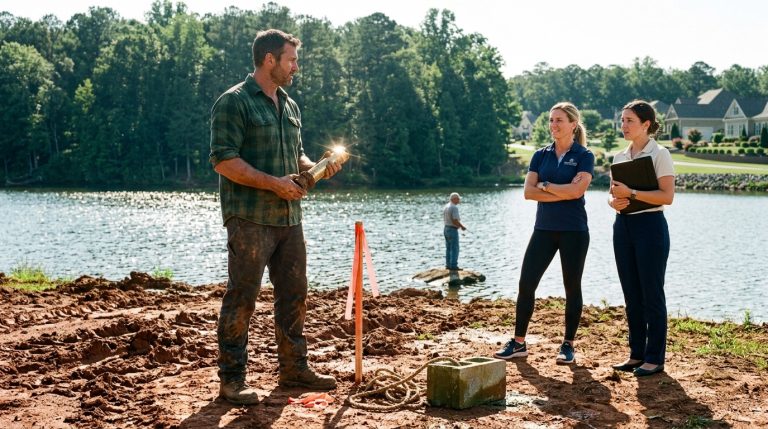
“You’re twelve feet past my property line, Karen,” I said, stepping forward until the gravel crunched under my soles. “The county monument marker is right there under your left heel.”
The tow truck driver let go of the control lever. The hydraulic pump dropped to a low, idle whine. “Wait a minute,” he said, looking at the stone boundary marker sticking out of the frozen grass. “Lady, is this private land?”
“I signed the authorization!” Karen yelled, her voice rising to a frantic shriek. “I have the escrow transfer from Apex-Subdivision-Holdings! We have a municipal clearance pending under Escrow-Account-704!”
She reached out, grabbing the winch lever herself, and slammed it backward.
The steel cable went bar-tight with a loud, metallic ping. The reclaimed barnwood frame groaned, the mortise-and-tenon joints straining against three thousand pounds of hydraulic tension.
“Stop the winch!” a voice barked from the darkness behind me.
A high-powered spotlight cut through the exhaust fog, pinning Karen and the truck against the barnwood.
Two vehicles pulled onto the gravel shoulder from opposite directions: George Henderson’s old pickup, and a Northwood County Sheriff’s cruiser, its blue and red LED bars flashing without the siren.
Deputy Banks stepped out of the cruiser, his broad brimmed hat low over his forehead, his hand resting flat on his duty belt.
“Turn off the rig, sir,” Banks told the driver.
The driver didn’t hesitate. He reached through the open door and cut the ignition. The diesel engine died instantly, leaving only the quiet ticking of the hot exhaust pipe in the freezing air.
“Deputy!” Karen stepped toward the cruiser, her hands waving wildly. “Thank God you’re here! This man is operating a rogue commercial enterprise in violation of county zoning! I am exercising emergency abatement—”
“Mrs. Peterson,” Deputy Banks interrupted, his voice dropping into a flat, professional register. “Whose land are we standing on right now?”
“The HOA holds an umbrella easement—”
“Whose land is this, ma’am?” Banks asked again, stepping into her path.
Karen stopped. Her jaw twitched. Her flashlight beam dropped down to the gravel. “It’s… it’s subject to an audit by Apex-Subdivision-Holdings—”
“It’s Jack Miller’s property,” Banks said. He pulled a clipboard from his front seat. “I have the county survey plat right here. And I have three calls from neighbors reporting an unauthorized commercial rig operating on private property at three in the morning.”
“I am the president of the board!” she shouted, her face twisting into a mask of pure, desperate rage. “You can’t stop a municipal audit!”
“You’re not a municipal officer, Mrs. Peterson,” Banks said calmly. He turned her around by her elbow and pulled her wrist behind her back. “And you don’t have a court order.”
The sharp, cold click of steel handcuffs echoed across the dark field.
Karen froze. The flashlight slipped from her fingers, hitting the gravel with a dull thud, its beam shining uselessly into the dirt.
“You’re under arrest for criminal trespass, attempted destruction of property, and reckless endangerment,” Banks said, guiding her toward the rear door of his cruiser.
She didn’t shout anymore. She didn’t quote the bylaws. As the deputy placed his hand over her head and slid her onto the vinyl back seat, she looked out through the glass at me. Her face was completely hollow, stripped of every piece of authority she had spent five years building.
George walked over to the stand, leaning heavily on his cane, and ran his thumb over the tightened winch cable.
“She pulled hard on that lever, Jack,” he said softly. “Wood held, though.”
“Wood was set in ’52, George,” I said. I pulled the Zippo from my coat, feeling the cold brass against my palm. “It takes more than a winch to move it.”
CHAPTER 6: THE RUSTED CLOSING
The tension in the steel winch cable gave way with a heavy, metallic clatter as the tow truck driver slacked the spool, unhooked his J-hooks, and drove off into the fog without saying another word.
George stood by the corner post of the stand, his thumb tracing the hair-line fissure where the mortise joint had bitten into the oak footing.
“She pulled hard, Jack,” George said quietly, the cold wind whipping his collar against his chin. “Feared she was going to tear the whole world down just to win an argument.”
“She wasn’t trying to win an argument, George,” I said. “She was trying to clear a title.”
I walked back to the kitchen, leaving the porch light burning. On the oak table, beside the stack of thirty-two affidavits, sat the subpoenaed financial ledger Sarah had pulled through the county clerk’s morning emergency filing.
The ledger didn’t belong to the Meadowlands Homeowners Association. It belonged to an administrative entity listed as Escrow-Account-704.
By 1000, the sun had burned through the valley fog, turning the frost on the corn stalks into clear, heavy water droplets that dripped steadily onto the dark earth.
A black municipal sedan pulled onto the gravel apron, followed by Tom Sterling’s station wagon and two squad cars from the state police commercial crimes unit.
The man who stepped out of the front passenger seat of the sedan wasn’t wearing a tracksuit. He wore a dark wool overcoat and carried a leather briefcase stamped with the county seal.
It was Commissioner Vance—the head of the regional planning board. Behind him stepped a man in a slate-grey suit whom I recognized immediately: the driver who had held the blueprint roll across Karen’s kitchen creek two weeks ago.
Sarah stepped out of my truck right behind them, holding a black leather binder under her arm.
“Mr. Miller,” Vance said, stopping six feet short of the gravel line, his hands buried deep in his coat pockets. “We’re here to review the administrative order issued by Mrs. Peterson.”
“There is no order, Commissioner,” Sarah said, stepping forward until her boots sat right on the boundary line. “There is a fraudulent paper trail.”
She opened her binder flat, laying three distinct documents over the hood of the sedan.
“For three years,” Sarah said, her voice cutting through the idling hum of the state police cruisers, “Mrs. Peterson operated under a consulting contract with Apex-Subdivision-Holdings. Every fine notice issued under Sector-9-Zoning-Audit was designed to create an artificial record of public nuisance on the agricultural buffer zone.”
Vance’s jaw tightened. He looked at the man in the grey suit, whose eyes flicked nervously toward the state troopers standing by the fence line.
“The HOA covenants don’t cover agricultural parcels, Commissioner,” Sarah continued, turning a page to reveal a bank wire transfer receipt. “And the five-hundred-dollar fines weren’t going into the community reserve fund. They were being deposited directly into Escrow-Account-704—a shell account set up by your zoning office to fund land acquisition options before the county master plan was published.”
The man in the grey suit took half a step backward, toward his car door.
“Don’t bother,” one of the state troopers said, stepping into his path. “The district attorney has already frozen the escrow accounts.”
Vance looked at me then—really looked at me—for the first time. He saw the grease pencil marks on my collar, the mud caked into the treads of my work boots, and the hand-carved oak frame of the farm stand behind my shoulder.
“It was a commercial development plan, Miller,” Vance said, his voice flat, stripped of its official cadence. “Four hundred acres of residential expansion. Your ten acres sat right in the throat of the access corridor. One holdout stops a forty-million-dollar sewer line.”
“This dirt isn’t a corridor,” I said. “It’s my home.”
“Everything has a price,” the man in the grey suit muttered, his knuckles white against his belt. “You could have taken the buyout. You could have moved three miles south and bought fifty acres of better soil.”
“My grandfather turned this dirt in ’52,” I said, walking up to the edge of the hood. “My wife planted those berries along the south fence before she passed. You can’t buy sixty years of sweat with an escrow check.”
The trooper led the man in the grey suit to the rear seat of the state car. Vance stayed by his sedan, signing three yellow surrender forms Sarah laid out on the warm metal hood—retracting every notice, dissolving every lien, and clearing every fine levied against the perimeter properties.
By 1400, the cars were gone. The gravel driveway was quiet again.
Tom Sterling walked up from his station wagon, holding a socket wrench and a small tin of wood filler.
“Tom,” I said, leaning against the counter of the stand.
“I brought the six-inch lag bolts, Mr. Miller,” he said, stepping over to the corner post where Karen’s winch cable had bitten into the timber. “Thought we ought to reinforce that lower cross-beam before the evening rush.”
We worked for an hour in silence. Tom held the timber steady while I drove two half-inch steel lag bolts through the mortise joint, the ratcheting sound of the wrench echoing crisp and clean against the quiet fields.
When the frame was tight again, I pulled a small rag from my pocket, dipped it into a jar of raw linseed oil, and rubbed it deep into the raw wood where the cable had scraped away the grey patina.
The oil darkened the oak, turning the scar into a rich, deep amber that matched the rest of the thirty-year-old beam.
At 1600, the first cars began pulling off the state highway—not HOA board members, but neighbors.
Tom’s wife brought their toddler, who ran straight for the strawberry crates. George Henderson walked down the ditch line, carrying two fresh jars of honey from his hives to trade for winter squash.
And at 1700, the old blue pickup from the Northwood County Food Bank turned into the drive. Maria Sanchez stepped out, pulled her gloves on, and helped Tom load four full crates of late-harvest kale into the back bed.
“No check today, Maria,” I said as we closed the tailgate together, the steel chains clanking home into their slots.
She looked out over the green rows of the south pasture, then back at the oak stand holding thirty baskets of red and gold heirloom tomatoes.
“The check was trash anyway, Jack,” she said with a faint, rare smile. “This dirt is what feeds people.”
When the sun finally dropped behind the mountain, casting long, dark blue shadows across the plowed ground, I sat alone on the top step of the porch.
The air was sharp, smelling of cold earth, wood smoke, and the clean, resinous scent of fresh linseed oil.
I reached into my wool coat pocket, pulled out Clara’s brass Zippo, and rested it on my knee. My thumb flicked the wheel once.
A small, bright flame caught on the wick, burning clear and steady against the gathering dark. I let it burn for three seconds, watching the light reflect off the faded clover engraved in the brass, before closing the lid with a soft, solid snap.
The farm was quiet. The boundary line was clear. And the dirt under my boots was still mine.